Home / Service areas / Broward County / Deerfield Beach
Broward County · Florida
Deerfield Beach dry ice blasting
Deerfield Beach work comes to us the same way most of it does: something is coated in build-up and cannot be sanded, soaked or dissolved.
The practical side
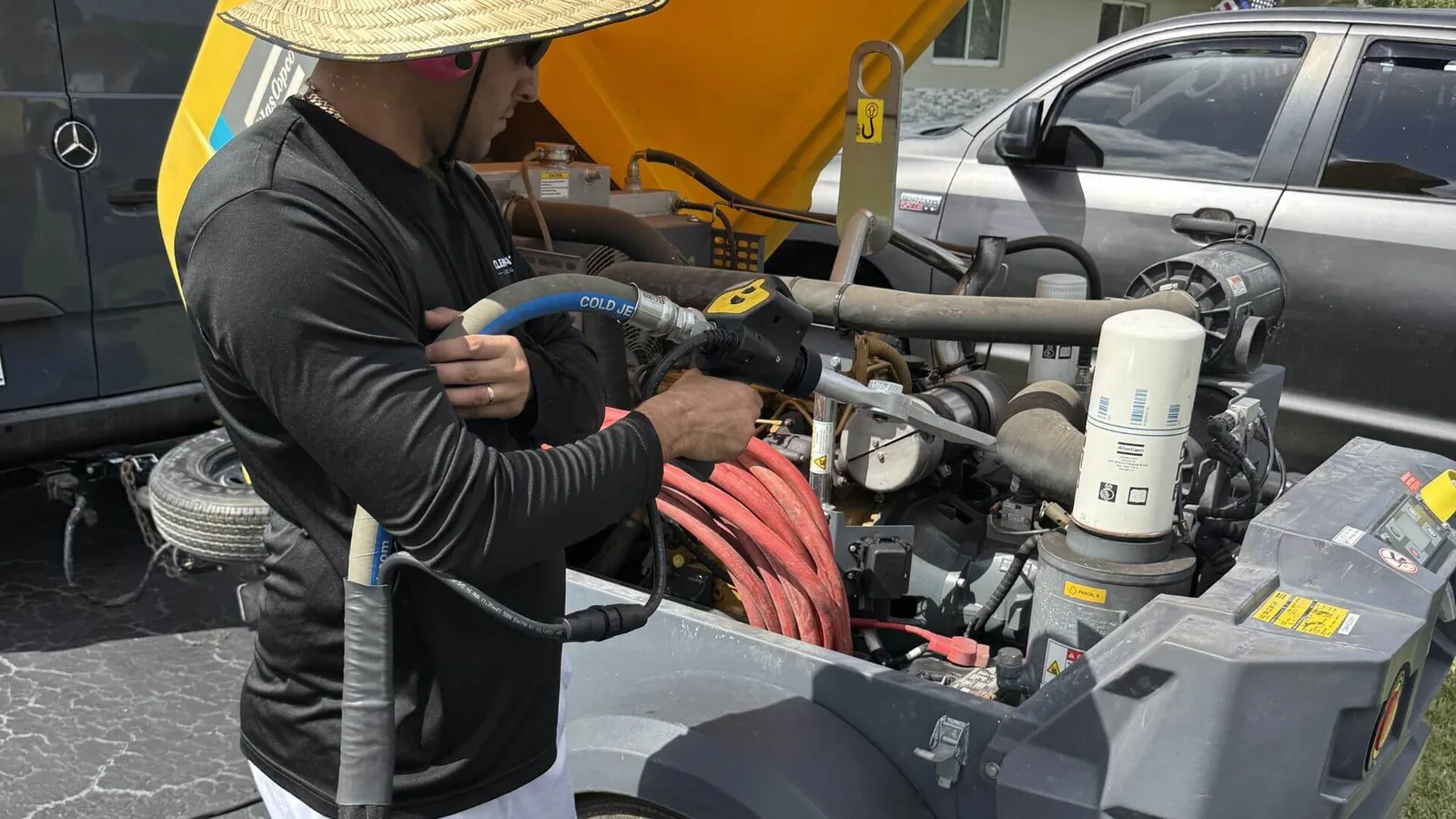
We work on driveways, in yards and inside shops that cannot take water on the floor. Which means no downtime spent in transit and no risk of damage moving it out of Deerfield Beach and back.
Dry ice sublimates on contact, so there is no grit, no slurry and no secondary media to sweep up afterward. What is left on the floor is the grease or carbon that came off, and collecting that is part of the job.
What we clean
The work we take on around Deerfield Beach
Nearby
Also working across Broward County
Questions from Deerfield Beach
What does the site need to have?
Just access and parking. There is no tap to find, no drain to use and nothing of yours to plug into.
Can you work around our schedule?
Nearly always. Give us the hours you can spare and we will say what genuinely fits inside them.
Who calls you around here?
Everything from an engine bay in a driveway to a production line at shutdown. The process is the same, pointed at a different problem.
Does distance affect the price?
It depends how far out the job is. We will be straight with you about it when you describe the work.
How do we book it in?
Describe the job and send a photo or two. Giancarlo or Kenny will call you, not a scheduler.
Is Deerfield Beach in your area?
Yes. Deerfield Beach is inside our regular working area, and the rig travels to the job rather than the other way round.
Why Deerfield Beach equipment ends up like this
Afternoon storms mean equipment that lives outside is wet, then hot, then wet again. It is also why an abrasive method costs you twice: once in the cleaning, again in the finish you removed.
Residential garages and small shops sit alongside the commercial work on any given week. Whatever the setting, the rig arrives with its own compressor and containment, so nothing about the site has to change to accommodate us.
Because the media sublimates, there is no slurry running toward a storm drain and no grit left in a machine. On a tight site in Broward County that is often the deciding factor.

What comes off
What comes off, and why
What the method removes depends less on the deposit and more on how it is attached. Here is what we take off most often, and why the cold works on each.
- Salt and corrosion product
Salt deposit and the oxidation it starts. Anything abrasive removes the protection along with the salt.
- Ink and printing residue
Dried ink and coating build-up on rollers and press components, where the surface texture is the product.
- Food residue
Carbonized product build-up in a plant where neither standing water nor a chemical film is acceptable.
- Grease and oil
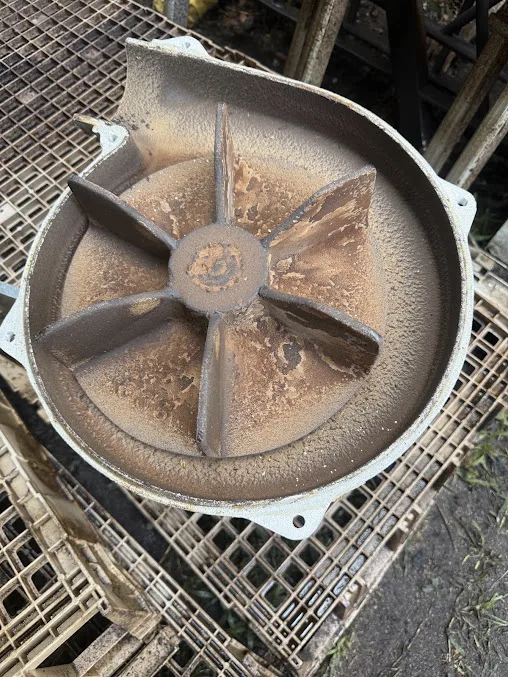
The greasy base coat that traps grit and dust. It releases early and takes the loose material with it.
- Carbon and soot
The deposit that forms wherever things run hot. Because heat bonded it, a sharp temperature drop is the quickest way to undo it.
- Adhesive and sealant
Whatever the last repair left stuck to the mating face: gasket, sealant, deadener or adhesive.
- Resin and mold release
Buildup on a mold face that shows up in every part it makes. Dry ice takes it off without wearing the texture of the tool.
How a job runs
Nothing about this should be a surprise
Nobody should have to guess what they booked. This is every stage of a job in the order it happens.
- We look at access and containment
Access drives the plan: reach, siting, masking, and the route the removed material takes off the job. It is the part customers think about least and we think about most.
- We test a small area
The first pellets go somewhere you will never see. Once that spot comes clean without marking, we know what pressure to use on the rest.
- We blast, then clean up
The ice is gone on impact. What is on the floor afterward came off your machine, and clearing it is ours to do.
- You look before we pack up
A second pass while everything is still connected is free in every sense. A return trip is not.
- You describe the job
The machine, the deposit and the downtime you can afford. Those three things decide the whole job, and we would rather know all of them before quoting.
The comparison
The other ways to do this
- Pressure washing
The water has to go somewhere, and on most equipment that somewhere is inside it.
- Solvent and degreaser
Trades the deposit for a residue, plus ventilation and waste to deal with, and it is hard on the finish.
- Hand scraping
Labor-intensive and uneven, and whatever you scrape with eventually marks what you are scraping.
- Media blasting
Cuts into the substrate by design. Fine on structural steel, wrong on aluminum, plating, machined faces or anything with a tolerance.
- Dry ice
Thermal contraction cracks the bond between deposit and surface, then the pellet gasses off. Nothing abrasive, nothing wet, nothing left.
What to expect on site
Cold is the one leftover. We will tell you which pieces need a short wait and which might fog up with condensation before they are back to normal.
Everything the rig needs arrives with it. No tap, no drain, no outlet.
Masking happens first. Whatever is adjacent and vulnerable gets covered before the hose is picked up.
There is nothing toxic in the media and no residue afterward. What we watch is the room itself: an enclosed space needs moving air, and we arrange it up front.
Send us the job.
What is it, where is it, and what is stuck to it? That is enough to start. Giancarlo or Kenny will answer personally.