What builds up, and why it matters
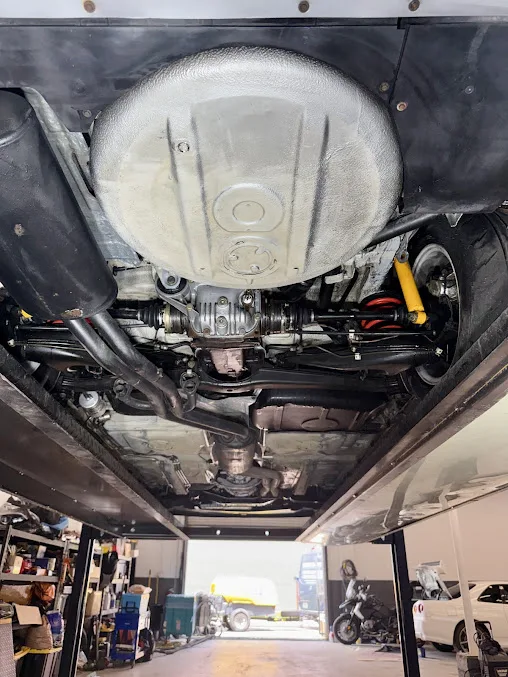
On this kind of work the problem is salt, corrosion product, oil, exhaust soot and bilge residue. South Florida salt air never stops working on a vessel. Abrasive cleaning takes the protective finish with the salt; dry ice removes the contamination and leaves the coating.
Work happens dockside, in the yard or aboard. The people who call us about boat are usually captains, yards and vessel owners, and the thing they are actually worried about is stripping a coating that was the only thing holding corrosion back.
The method
Why dry ice and not the alternatives
- Non-abrasive
Cold does most of the work here. The contaminant shrinks and lets go, and the surface below it is left as it was.
- Low moisture
Nothing gets wet, so nothing has to sit and dry. The time saved goes straight back into running the equipment.
- No secondary waste
The pellets turn to gas, so you are left with one thing to deal with: the dirt we took off.
- Often no teardown
Panels, guards and assemblies can often stay put. The nozzle reaches into recesses, so the hours normally spent stripping a machine down go back to production.
More marine work
Related jobs we get called for
Questions we get asked first
Will it damage the surface underneath?
Rarely, and we take the risk out up front. Pressure and pellet size are set on a spot nobody will look at, so if a surface reacts badly we find out there and stop.
Do you have to take the equipment apart for boat?
Minimal disassembly is one of the main reasons people call us. Most work is done in place, and the occasional panel we do remove is usually a quick job.
How much mess does it make?
It depends on how much is caked on, since that is all that comes off. The ice adds nothing to the pile, and we clean up what is there.
Do you come to us?
We do. Everything runs out of our truck, so you never haul anything to us. We work from Miami across South Florida, out to about a hundred miles.
What does a job cost?
We need to understand the job before we can put a number on it, so the first step is you telling us about it. Photos make that faster. The figure you get back comes from one of the owners and reflects the actual work.
How soon can you look at it?
As soon as we have seen what the job is. Send a description and a photo, an owner reads it and comes back with a date, and because the rig travels to you there is nothing of yours to ship first.
The comparison
The other ways to do this
- Solvent and degreaser
Trades the deposit for a residue, plus ventilation and waste to deal with, and it is hard on the finish.
- Hand scraping
Hours of work for an inconsistent result, with gouges where the blade slipped.
- Media blasting
Effective and indiscriminate. On soft metal or a finished surface it does damage you then have to fix.
- Pressure washing
Pressure pushes moisture past seals and into connectors, and then you wait. Panels and motors rule it out.
- Dry ice
The pellet is soft and the mechanism is temperature, not abrasion. It turns to gas on impact, so the only thing left to sweep up is what came off.
What comes off
What this takes off
The method does not care much what the contaminant is, only that it sits on top of something. Here is the usual list.
- Adhesive and sealant
The stubborn film under old tape, or the gasket that tore and left half of itself behind.
- Resin and mold release
Release agent and resin build-up on tooling, where a solvent fix trades one residue for another.
- Paint and coatings
Selective removal, layer by layer, on parts where media blasting would cut into the substrate.
- Salt and corrosion product
Salt deposit and the oxidation it starts. Anything abrasive removes the protection along with the salt.
- Ink and printing residue
Dried ink on precision roller faces, cleaned without altering the cell structure that does the work.
- Food residue
Carbonized product, fat, starch and sugar build-up on processing equipment, cleaned without chemicals touching a food contact surface.
- Grease and oil
The greasy base coat that traps grit and dust. It releases early and takes the loose material with it.
How a job runs
The sequence, start to finish
There is no mystery to how these jobs run, and no part of it we would rather you did not ask about.
- We test a small area
Aluminum, chrome and painted steel each have their own limits. We find each one’s limit on a corner out of sight, then work the visible areas inside it.
- We blast, then clean up
Nothing is left of the pellet, so the only thing to collect is what was on your equipment. That collection is part of the work we quoted.
- You look before we pack up
If something needs another pass we do it then, on site, while the rig is still running. That is a better outcome for everyone than a callback.
- You describe the job
We start with what it is and what is on it. Whether it can come offline matters as much as the contaminant, and a wrong-tool answer is one we give up front rather than after the invoice.
- We look at access and containment
Anything that should not be blasted gets covered first. On a control cabinet that might be a few components, and on a food line it might be most of what surrounds the area we are cleaning.
Before we turn the rig on
This is not a quiet method. Ear defenders are standard issue on site for anyone nearby.
Cold surfaces are the one aftereffect. Depending on the piece that is either a few minutes of patience or some condensation while it returns to room temperature.
Your shop air stays yours. Our compressor rides on the truck, so nothing on your side gets tied up while we clean.
Masking happens first. Whatever is adjacent and vulnerable gets covered before the hose is picked up.
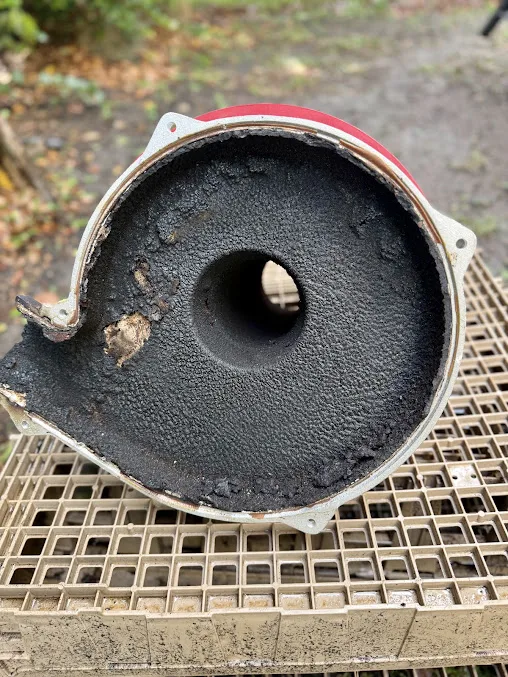
Send us the job.
Tell us what the equipment is and where it sits. A photo helps a lot. Giancarlo or Kenny will get back to you themselves.