Home / Service areas / Miami-Dade County / Leisure City
Miami-Dade County · Florida
Leisure City dry ice blasting
Leisure City work comes to us the same way most of it does: something is coated in build-up and cannot be sanded, soaked or dissolved.
What a job looks like locally
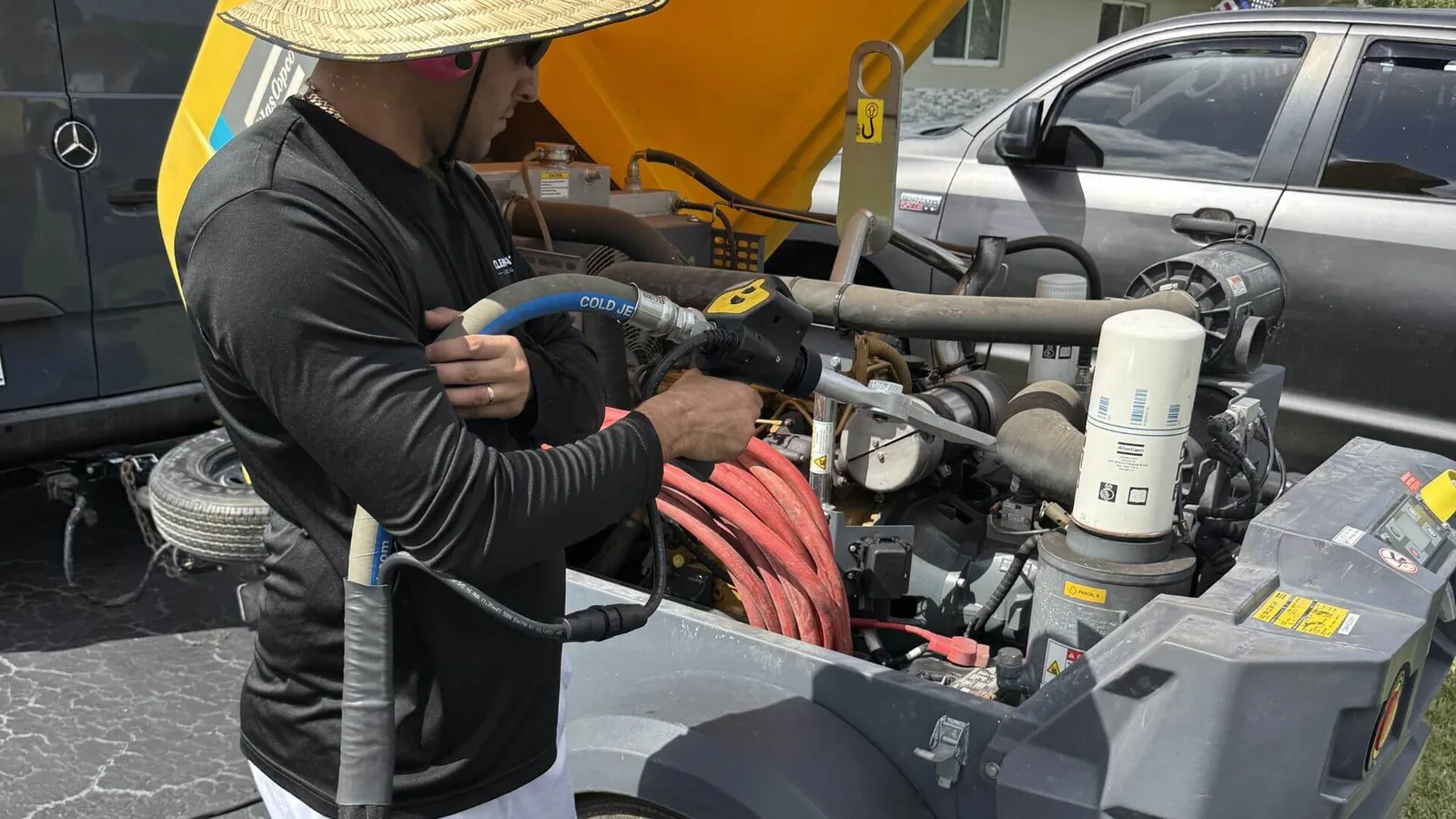
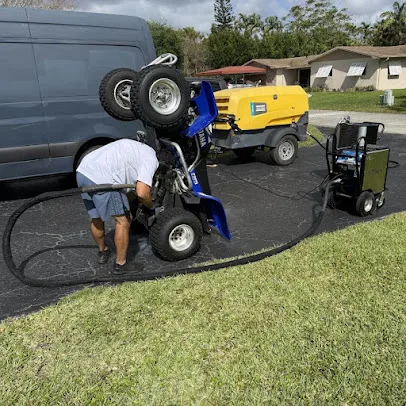
Nothing about the setup needs a drain, a hookup or a bay. That is the practical reason a mobile rig beats hauling equipment somewhere: the machine never leaves Leisure City.
The media is gone by the time it has done its work, so there is no sand to vacuum and no water to mop. Only the contaminant is left, and that leaves with us.
What we clean
What we clean in and around Leisure City
Nearby
Also working across Miami-Dade County
Questions from Leisure City
What does the site need to have?
Just access and parking. There is no tap to find, no drain to use and nothing of yours to plug into.
Can you work around our schedule?
Most of the time. Shutdowns and after-hours work are normal for us; what matters is knowing the window early.
Who calls you around here?
A mix, vehicle work, shop equipment, marine and light industrial. Same rig, different constraint each time.
Does distance affect the price?
Distance can factor in. You will hear about it up front, not on the invoice.
How do we book it in?
A short description and a couple of pictures is enough to start. An owner rings you back.
Is Leisure City in your area?
Yes, Leisure City is well within range, and the compressor comes on the truck with everything else.
Why Leisure City equipment ends up like this
Afternoon storms mean equipment that lives outside is wet, then hot, then wet again. It is also why an abrasive method costs you twice: once in the cleaning, again in the finish you removed.
Residential garages and small shops sit alongside the commercial work on any given week. Site type barely matters when the air, the hose and the collection all arrive together.
No runoff and no residual grit, which matters more than it sounds on a Miami-Dade County job with neighbors close by.
What comes off
What this takes off
The method does not care much what the contaminant is, only that it sits on top of something. Here is the usual list.
- Resin and mold release
Release agent and resin build-up on tooling, where a solvent fix trades one residue for another.
- Paint and coatings
Taken off in a controlled way when what is underneath matters more than speed.
- Salt and corrosion product
The year-round problem on the coast. The finish holding corrosion back has to survive the cleaning.
- Ink and printing residue
Ink and coating on anilox and press rollers, surfaces where changing the texture changes the print.
- Food residue
Carbonized product, fat, starch and sugar build-up on processing equipment, cleaned without chemicals touching a food contact surface.
- Grease and oil
Oil film is the layer everything else sticks to. Remove it and half the job is already done.
- Carbon and soot
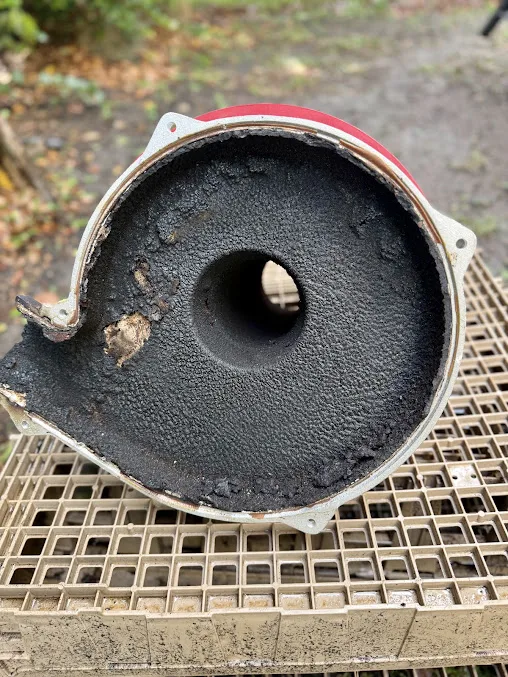
The hard black crust on a housing, an oven or a weld cell. Bonded by heat, and the first thing to release under thermal shock.
How a job runs
The sequence, start to finish
There is no mystery to how these jobs run, and no part of it we would rather you did not ask about.
- We test a small area
An out-of-sight patch comes first so pressure and pellet size are proven before anything that shows. Soft alloys, older paint and bare metal each want different numbers.
- We blast, then clean up
Nothing is left of the pellet, so the only thing to collect is what was on your equipment. That collection is part of the work we quoted.
- You look before we pack up
We would rather you find the missed spot while we are standing there than a week later. Another pass on the day is the cheapest fix available.
- You describe the job
The machine, the deposit and the downtime you can afford. Those three things decide the whole job, and we would rather know all of them before quoting.
- We look at access and containment
Siting the compressor, masking what must not be touched, and catching what comes off, settled before the first pellet.
The comparison
The other ways to do this
- Hand scraping
Fine on a patch, hopeless on a machine, and the blade leaves its own evidence.
- Media blasting
Effective and indiscriminate. On soft metal or a finished surface it does damage you then have to fix.
- Pressure washing
Forces water where water should not go, looms, bearings, seams, and then the job stops while it dries.
- Solvent and degreaser
Chemistry works, but you inherit ventilation, waste handling and a film on the surface.
- Dry ice
The deposit shrinks away from the surface it is stuck to and releases. The ice is gone before it can do any harm.
Before we turn the rig on
Masking happens first. Whatever is adjacent and vulnerable gets covered before the hose is picked up.
The media is solid CO2, nothing toxic and nothing left behind, but it pushes oxygen out of a closed room. Ventilation gets planned before the hose is connected.
This is not a quiet method. Ear defenders are standard issue on site for anyone nearby.
Surfaces come out cold. On some jobs that means waiting a few minutes before handling, and on others it means condensation as the part returns to ambient temperature.
Tell us what needs cleaning.
Send the equipment, the location and a short description. Photos help. You will hear back from Giancarlo or Kenny, not a call center.