Home / Service areas / Miami-Dade County / Miami Shores
Miami-Dade County · Florida
Miami Shores dry ice blasting
Most of what we clean around Miami Shores is equipment somebody cannot afford to damage.
How we work in this area
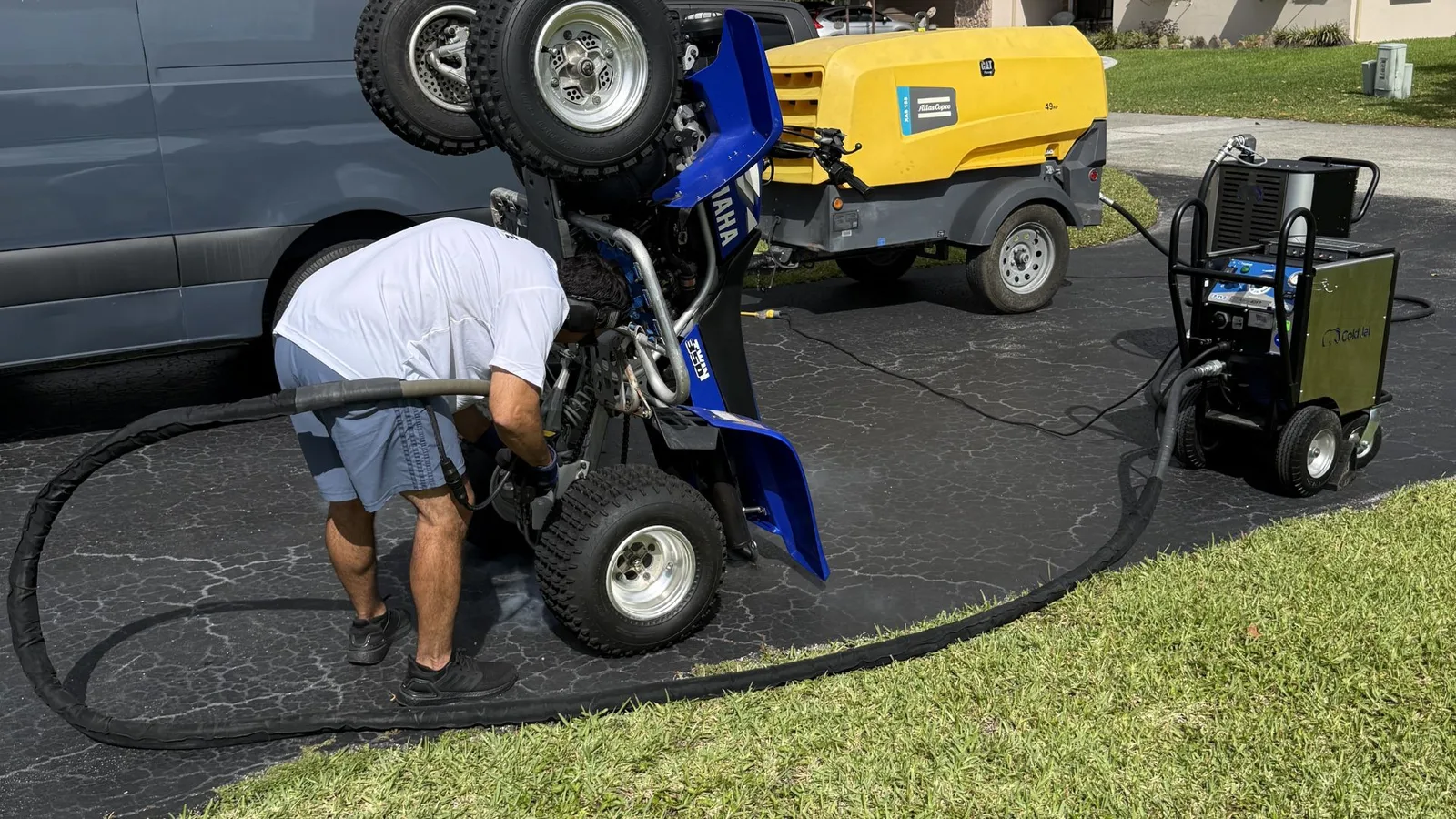
Nothing about the setup needs a drain, a hookup or a bay. So the equipment stays put. Everything that has to move arrives on the truck instead.
The pellet turns straight to gas when it hits, which means no sand in the machine and no sludge on the floor. The only thing to collect is the contaminant itself, and that is included.
What we clean
What we get called for in Miami Shores
Nearby
Also working across Miami-Dade County
Questions from Miami Shores
Will you travel to Miami Shores?
Yes. Miami Shores is inside our regular working area, and the rig travels to the job rather than the other way round.
Do you need anything set up before you arrive?
Just access and parking. There is no tap to find, no drain to use and nothing of yours to plug into.
Can you come outside business hours?
Generally yes. Weekend and overnight work is routine, and the limiting factor is usually noise, not us.
What do most jobs look like?
It ranges from a single restoration project to a plant maintenance window. The method does not change much.
Do you charge for the drive?
Distance can factor in. You will hear about it up front, not on the invoice.
How do we book it in?
Describe the job and send a photo or two. Giancarlo or Kenny will call you, not a scheduler.
The local conditions
The heat matters more than people expect: baked-on residue cures harder in a South Florida summer. That is why so much of the work is removing what has bonded to a surface without taking the surface with it.
Light industrial, automotive and marine make up most of what we are called out for. Driveway or plant floor, the requirement is the same: room for the rig and access to the machine.
The pellet turns to gas, so nothing runs off toward a drain and nothing abrasive stays behind in a bearing. On a cramped Miami-Dade County site that usually decides it.

What comes off
What dry ice actually removes
The rule of thumb is simple: anything stuck on rather than built in. These are the deposits we see most.
- Ink and printing residue
Ink and coating on anilox and press rollers, surfaces where changing the texture changes the print.
- Food residue
Carbonized product build-up in a plant where neither standing water nor a chemical film is acceptable.
- Grease and oil
Oil film is the layer everything else sticks to. Remove it and half the job is already done.
- Carbon and soot
Heat-bonded black deposit. Because heat put it there, a sudden cold front is what breaks its grip.
- Adhesive and sealant
Cured sealant, old gasket, tape glue and sound deadening, the residue left when something was removed but its bond was not.
- Resin and mold release
Buildup on a mold face that shows up in every part it makes. Dry ice takes it off without wearing the texture of the tool.
- Paint and coatings
Selective removal, layer by layer, on parts where media blasting would cut into the substrate.
How a job runs
How a job actually runs
People ask what they are actually paying for. This is the full order of work, so you can picture the day before it arrives.
- We look at access and containment
Hose run, compressor position, what needs masking, and where the contaminant is collected. For food and electrical jobs the containment plan takes longer to settle than the blasting does.
- We test a small area
Some coatings are meant to stay. A test on an unseen spot shows whether the ice takes only the grime or starts to work on the finish underneath.
- We blast, then clean up
Cleanup is short because there is so little of it. With no blasting media to recover, the work at the end is gathering the contaminant and leaving the space usable.
- You look before we pack up
The job is not finished because we say so. It is finished when you have looked at it.
- You describe the job
What it is, what is on it and whether it can stop. If the answer is that dry ice is wrong for it, you get that answer first, not last.
The comparison
Why not just pressure wash it
- Solvent and degreaser
Chemistry works, but you inherit ventilation, waste handling and a film on the surface.
- Hand scraping
Labor-intensive and uneven, and whatever you scrape with eventually marks what you are scraping.
- Media blasting
Abrasive by definition. Anything with a tolerance or a finish worth keeping comes out changed.
- Pressure washing
Drives water into harnesses, bearings, panels and seams, then everything waits to dry. On electrical work it is simply not an option.
- Dry ice
Cold breaks the bond and the media vanishes. The substrate is untouched and there is no second mess to clean up.
What the job is like to stand next to
Expect it to be loud while the hose is running. If people on your site are still working nearby, we plan for that before we start.
Dry ice cleans with cold, so the cold stays in the metal for a while afterward. Small parts recover fast. Heavier pieces can carry a light film of moisture until they reach room temperature.
Your shop air stays yours. Our compressor rides on the truck, so nothing on your side gets tied up while we clean.
Masking happens first. Whatever is adjacent and vulnerable gets covered before the hose is picked up.
Send us the job.
Where is it, and how easy is it to get to? Add the equipment and the contaminant, and we have what we need to call you back.