Home / Service areas / Broward County / Margate
Broward County · Florida
Margate dry ice blasting
Margate calls tend to arrive with a constraint attached, which is exactly where this method earns its keep.
How we work in this area
Everything arrives on the van: compressor, hose, operator and containment. So the equipment stays put. Everything that has to move arrives on the truck instead.
Solid to gas on impact. Nothing settles into a bearing, nothing runs toward a drain, and the only residue is what was already on the part.
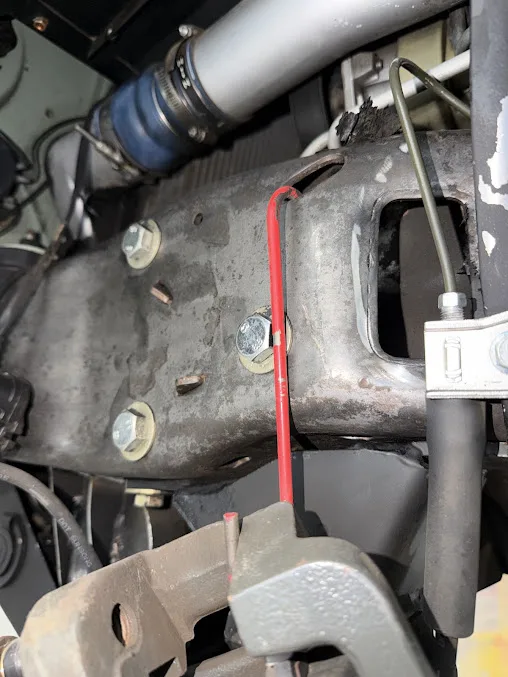
What we clean
What we get called for in Margate
Nearby
Also working across Broward County
Questions from Margate
How do we book it in?
Send the equipment, the location and a short description with photos if you have them. One of the owners calls you back.
Do you actually come out to Margate?
Yes. Margate is inside our regular working area, and the rig travels to the job rather than the other way round.
What do you need from us on site?
Just access and parking. There is no tap to find, no drain to use and nothing of yours to plug into.
How flexible are the hours?
Generally yes. Weekend and overnight work is routine, and the limiting factor is usually noise, not us.
What sort of work do you get called for?
It ranges from a single restoration project to a plant maintenance window. The method does not change much.
Do you charge for the drive?
Distance can factor in. You will hear about it up front, not on the invoice.
What the climate does here
Afternoon storms mean equipment that lives outside is wet, then hot, then wet again. It is also why an abrasive method costs you twice: once in the cleaning, again in the finish you removed.
Residential garages and small shops sit alongside the commercial work on any given week. In every case the truck brings its own air and its own containment, so you are not adapting the site to suit the method.
The pellet turns to gas, so nothing runs off toward a drain and nothing abrasive stays behind in a bearing. On a cramped Broward County site that usually decides it.

What comes off
What dry ice actually removes
The rule of thumb is simple: anything stuck on rather than built in. These are the deposits we see most.
- Carbon and soot
Heat-bonded black deposit. Because heat put it there, a sudden cold front is what breaks its grip.
- Adhesive and sealant
The stubborn film under old tape, or the gasket that tore and left half of itself behind.
- Resin and mold release
Vents and fine details on a mold are where residue hides. The pellet stream reaches into them without rounding over a single edge.
- Paint and coatings
Selective removal, layer by layer, on parts where media blasting would cut into the substrate.
- Salt and corrosion product
Salt deposit and the oxidation it starts. Anything abrasive removes the protection along with the salt.
- Ink and printing residue
Dried ink on precision roller faces, cleaned without altering the cell structure that does the work.
- Food residue
Burnt-on product, fat and sugar on processing gear, with no chemical residue left on a contact surface.
How a job runs
How a job actually runs
You should know what you are agreeing to before the truck shows up. This is exactly how we run a job.
- We blast, then clean up
There is no spent media to recover, only the deposit, which we collect before packing up.
- You look before we pack up
The job is not finished because we say so. It is finished when you have looked at it.
- You describe the job
Start with the machine and what is caked on it. A phone photo from a couple of angles saves a lot of back and forth. Tell us whether it can come offline and for how long, because that shapes the whole plan, and if another method suits it better you hear that first.
- We look at access and containment
If the space is enclosed, we sort out airflow before we start. Dry ice turns to gas as it works, so open doors or fans are part of the plan from the beginning.
- We test a small area
The hidden test also shows how fast the buildup comes off, which tells us how long the full job should take and whether the plan still makes sense.
The comparison
What the alternatives actually do
- Pressure washing
It is fast and it is wet, which is fine outdoors and unusable on anything with a winding in it.
- Solvent and degreaser
Softens the contaminant but leaves a film, fumes and a disposal problem, and attacks finishes you meant to keep.
- Hand scraping
Hours of work for an inconsistent result, with gouges where the blade slipped.
- Media blasting
Grit removes material to do its job, so a machined face or a plated part pays for the cleaning.
- Dry ice
Thermal shock breaks the bond. The pellet sublimates, so nothing abrasive touches the part and nothing is left to collect but the contaminant.
What the job is like to stand next to
Dry ice is carbon dioxide in solid form. It is non-toxic and leaves no residue, but it does displace oxygen in an enclosed space, so ventilation is part of the setup rather than an afterthought.
If the job is somewhere people live or work close by, they may hear us. Let us know if there is a time of day that works better for them.
Handle with a bit of patience. Freshly cleaned surfaces are cold, and in warm air they may sweat lightly before they settle at room temperature.
There is no hookup to arrange before we come. We arrive with our own air and start once the hose reaches the job.
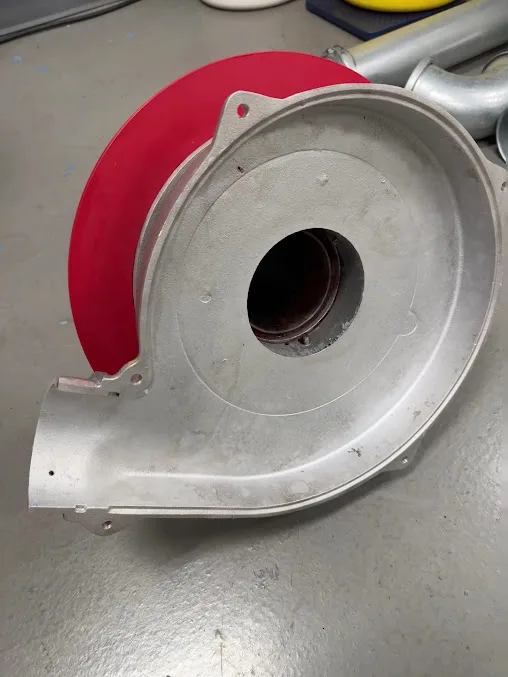
Describe what you are dealing with.
A short description and a location is enough to start. Add photos if you can. You will speak to an owner, not a scheduler.