What builds up, and why it matters
On this kind of work the problem is salt, corrosion product, oil, exhaust soot and bilge residue. South Florida salt air never stops working on a vessel. Abrasive cleaning takes the protective finish with the salt; dry ice removes the contamination and leaves the coating.
Work happens dockside, in the yard or aboard. The people who call us about ship are usually captains, yards and vessel owners, and the thing they are actually worried about is stripping a coating that was the only thing holding corrosion back.
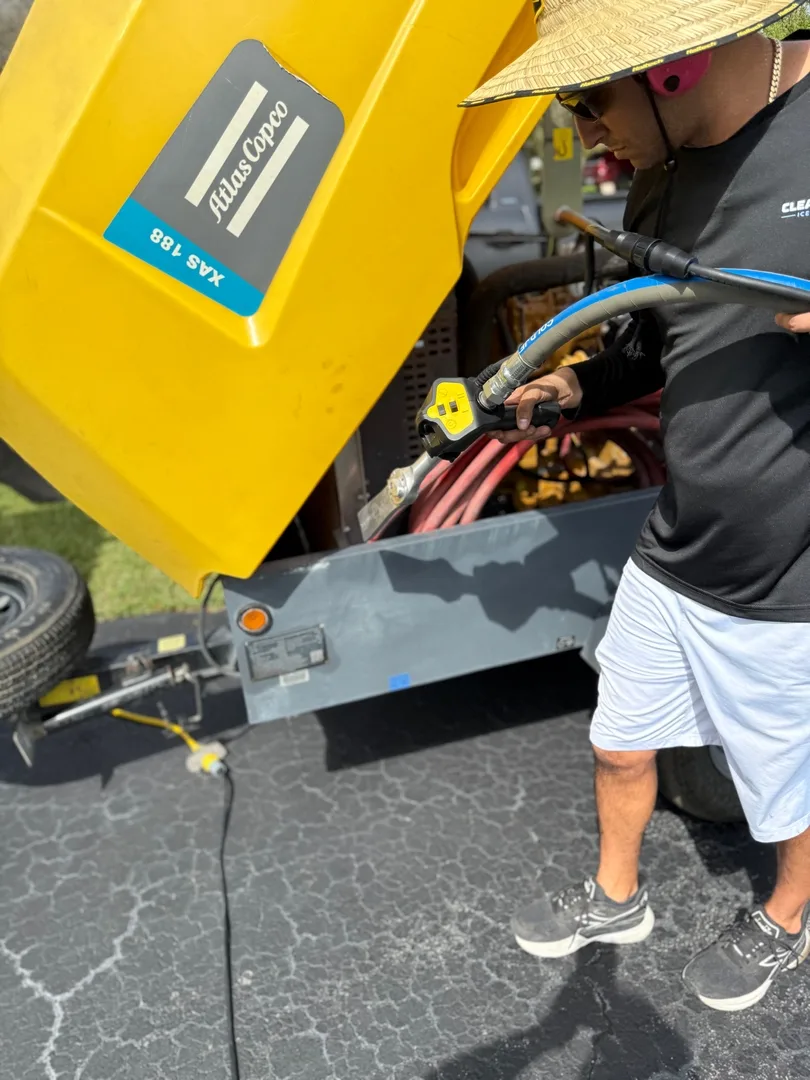
The method
Why dry ice and not the alternatives
- Non-abrasive
The pellet is soft and sublimates on impact, so the work is thermal rather than mechanical. Machined faces, plating, paint and gaskets survive it.
- Low moisture
A panel or motor can be cleaned without soaking anything, which is why the method suits electrical work.
- No secondary waste
Other blast media becomes a second mess. Dry ice sublimates on contact, so nothing extra is left to dispose of.
- Often no teardown
No water and no grit means nothing has to be protected by taking it out first. Most parts stay installed while we work.
More marine work
Related jobs we get called for
Questions we get asked first
Will it damage the surface underneath?
That is the whole reason people pick this method. Machined faces, plating, paint and gaskets generally come through untouched, and we prove the setting on a small test patch before working anything you will see.
Do you have to take the equipment apart for ship?
Usually not, and that is where most customers save. Equipment cleaned in place goes back to work sooner, without the hours of taking it down and putting it back together.
How much mess does it make?
Far less than the alternatives, because the blasting media disappears. What is left is the contaminant itself, which we contain and clean up.
Do you come to us?
We do. Everything runs out of our truck, so you never haul anything to us. We work from Miami across South Florida, out to about a hundred miles.
What does a job cost?
Most of the price is time on site, and time depends on how much buildup there is and how easy it is to reach. Send photos and a description and you get an actual number back, not a range pulled out of the air.
How soon can you look at it?
The first answer comes quickly even when it is a no. If dry ice is the wrong fit for your job, we will tell you on that first call so you are not waiting on us for nothing.
The comparison
How this compares to the usual methods
- Hand scraping
Fine on a patch, hopeless on a machine, and the blade leaves its own evidence.
- Media blasting
It takes the top off whatever it touches. That is the point on rusted plate and the problem everywhere else.
- Pressure washing
Drives water into harnesses, bearings, panels and seams, then everything waits to dry. On electrical work it is simply not an option.
- Solvent and degreaser
Chemistry works, but you inherit ventilation, waste handling and a film on the surface.
- Dry ice
Thermal contraction cracks the bond between deposit and surface, then the pellet gasses off. Nothing abrasive, nothing wet, nothing left.
What comes off
What dry ice actually removes
The rule of thumb is simple: anything stuck on rather than built in. These are the deposits we see most.
- Resin and mold release
Production buildup on tooling and fixtures. Solvent trades one film for another; the pellet removes the residue and disappears.
- Paint and coatings
Selective removal, layer by layer, on parts where media blasting would cut into the substrate.
- Salt and corrosion product
A constant in South Florida. Removing it without stripping the protective finish is the whole trick.
- Ink and printing residue
Dried ink on precision roller faces, cleaned without altering the cell structure that does the work.
- Food residue
Burnt-on product, fat and sugar on processing gear, with no chemical residue left on a contact surface.
- Grease and oil
Almost every job has some. Oil and grease hold every bit of dust that lands on them, so taking the film off is what makes a part feel clean in your hand.
- Carbon and soot
The dark scale on ovens and exhaust parts. Of everything we remove, this is often the quickest to release, because the bond is a heat bond.
How a job runs
How a job actually runs
People ask what they are actually paying for. This is the full order of work, so you can picture the day before it arrives.
- We test a small area
Some coatings are meant to stay. A test on an unseen spot shows whether the ice takes only the grime or starts to work on the finish underneath.
- We blast, then clean up
Nothing is left of the pellet, so the only thing to collect is what was on your equipment. That collection is part of the work we quoted.
- You look before we pack up
Inspect it with the rig still set up. Anything you are not happy with gets another go before we leave.
- You describe the job
The machine, the deposit and the downtime you can afford. Those three things decide the whole job, and we would rather know all of them before quoting.
- We look at access and containment
Access drives the plan: reach, siting, masking, and the route the removed material takes off the job. It is the part customers think about least and we think about most.
What the job is like to stand next to
There is no chemical in this and nothing to wipe off afterward. The gas from the ice still displaces air in a sealed room, so we keep air moving for as long as we are blasting.
Expect noise. Everybody inside the working area wears hearing protection, us included.
The part will be cold when we finish. Sometimes that means a short wait before handling; sometimes it means a film of condensation as it warms back up.
Everything the rig needs arrives with it. No tap, no drain, no outlet.
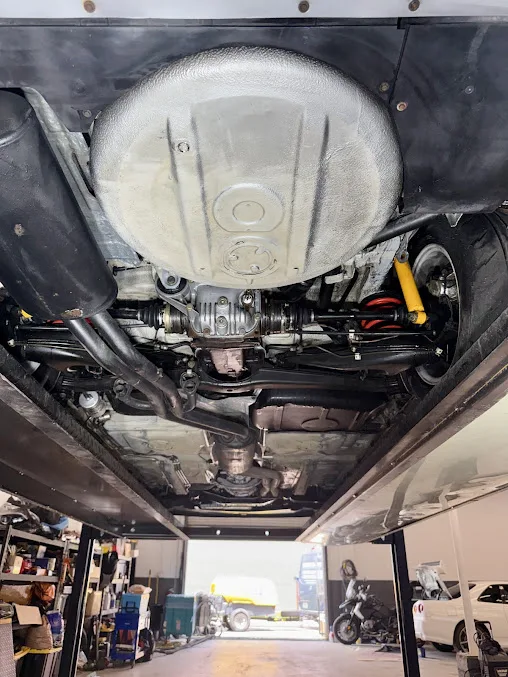
Tell us what needs cleaning.
Tell us what you have and where it is. If you can snap a picture, send it. Giancarlo or Kenny will be the one who calls.