Home / Service areas / Miami-Dade County / Palmetto Bay
Miami-Dade County · Florida
Palmetto Bay dry ice blasting
Most of what we clean around Palmetto Bay is equipment somebody cannot afford to damage.
The practical side
Everything arrives on the van: compressor, hose, operator and containment. Which means no downtime spent in transit and no risk of damage moving it out of Palmetto Bay and back.
The media is gone by the time it has done its work, so there is no sand to vacuum and no water to mop. Only the contaminant is left, and that leaves with us.
What we clean
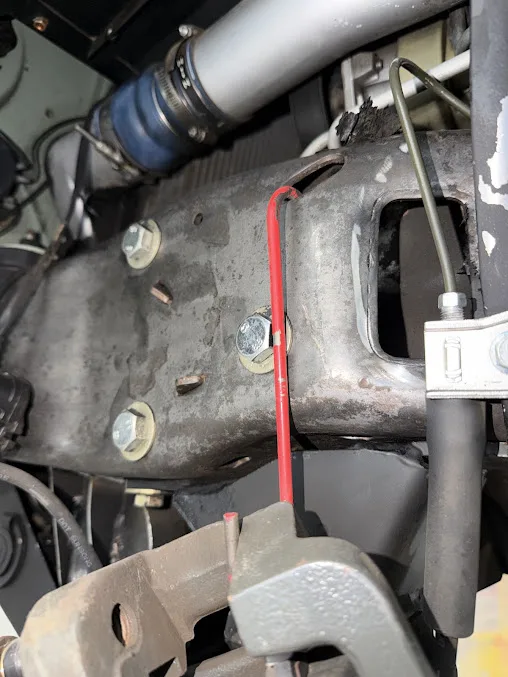
The work we take on around Palmetto Bay
Nearby
Also working across Miami-Dade County
Questions from Palmetto Bay
What is the first step?
A short description and a couple of pictures is enough to start. An owner rings you back.
Do you actually come out to Palmetto Bay?
Yes, Palmetto Bay is well within range, and the compressor comes on the truck with everything else.
What do you need from us on site?
Access to the equipment and somewhere to park the compressor. No water hookup, no drain and no wash bay.
How flexible are the hours?
Often yes, a lot of industrial work happens overnight or during a planned outage. Give us the window and we will say straight away whether it is realistic.
What sort of work do you get called for?
A mix, vehicle work, shop equipment, marine and light industrial. Same rig, different constraint each time.
Does distance affect the price?
Sometimes, on the longer runs. Either way it is discussed before anyone commits.
What the climate does here
The heat matters more than people expect: baked-on residue cures harder in a South Florida summer. That is why so much of the work is removing what has bonded to a surface without taking the surface with it.
Light industrial, automotive and marine make up most of what we are called out for. None of those settings need modifying: the compressor, hose and collection all come with us.
Because the media sublimates, there is no slurry running toward a storm drain and no grit left in a machine. On a tight site in Miami-Dade County that is often the deciding factor.
What comes off
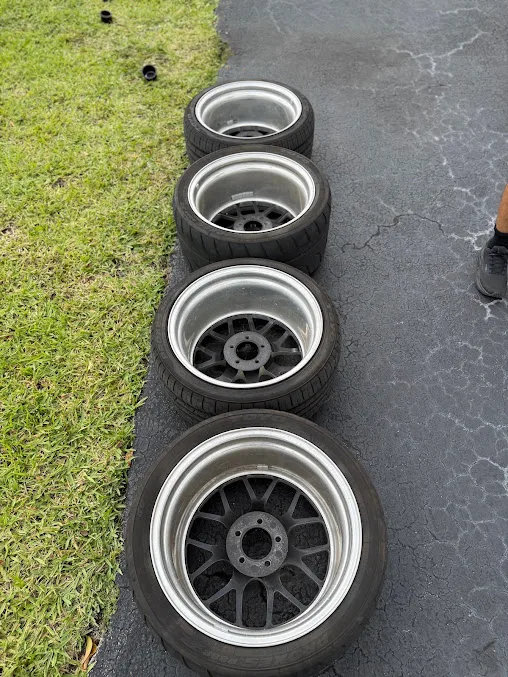
What comes off, and why
Here is the short version of what comes off. Anything layered onto metal or tooling is a likely candidate, and the list covers the requests we see most.
- Carbon and soot
The layer of black on anything that runs hot, from an engine to a fryer. Scraping it gouges the surface; the cold pops it off instead.
- Adhesive and sealant
The stubborn film under old tape, or the gasket that tore and left half of itself behind.
- Resin and mold release
Cured residue on molds and fixtures. Abrasives would change the tool’s surface; dry ice removes the buildup and leaves the tooling as it was.
- Paint and coatings
Taken off in a controlled way when what is underneath matters more than speed.
- Salt and corrosion product
A constant in South Florida. Removing it without stripping the protective finish is the whole trick.
- Ink and printing residue
Dried ink and coating build-up on rollers and press components, where the surface texture is the product.
- Food residue
Carbonized product build-up in a plant where neither standing water nor a chemical film is acceptable.
How a job runs
Nothing about this should be a surprise
Nobody should have to guess what they booked. This is every stage of a job in the order it happens.
- We blast, then clean up
No water means no runoff and nothing to mop. What we leave behind is a clean part and a swept floor, and getting the area there is our job.
- You look before we pack up
Inspect it with the rig still set up. Anything you are not happy with gets another go before we leave.
- You describe the job
What the equipment is, what is on it, where it lives, and whether it can be shut down. Photos tell us more than a paragraph. If dry ice is the wrong tool we say so on that call rather than after taking your money.
- We look at access and containment
Siting the compressor, masking what must not be touched, and catching what comes off, settled before the first pellet.
- We test a small area
Two parts that look identical can be different underneath. One may have been repainted and one may be bare, so we check before we commit, starting low and only stepping up as far as the surface allows.
The comparison
What the alternatives actually do
- Pressure washing
Forces water where water should not go, looms, bearings, seams, and then the job stops while it dries.
- Solvent and degreaser
Softens the contaminant but leaves a film, fumes and a disposal problem, and attacks finishes you meant to keep.
- Hand scraping
Labor-intensive and uneven, and whatever you scrape with eventually marks what you are scraping.
- Media blasting
Cuts into the substrate by design. Fine on structural steel, wrong on aluminum, plating, machined faces or anything with a tolerance.
- Dry ice
It is the only one on this list where the media stops existing the moment it has worked.
What to expect on site
Nothing wet goes onto your equipment, but cold metal in warm air can still pick up condensation. It clears as the part comes back up to temperature.
Everything the rig needs arrives with it. No tap, no drain, no outlet.
We cover what should not be hit before anything gets blasted. It takes minutes and saves arguments.
If the space has no windows and no door that opens to the outside, tell us before the visit. Airflow in a closed room is settled before the first pellet goes in.

Describe what you are dealing with.
If you are not sure dry ice is the answer, ask anyway. We will tell you straight if it is the wrong method.