What builds up, and why it matters
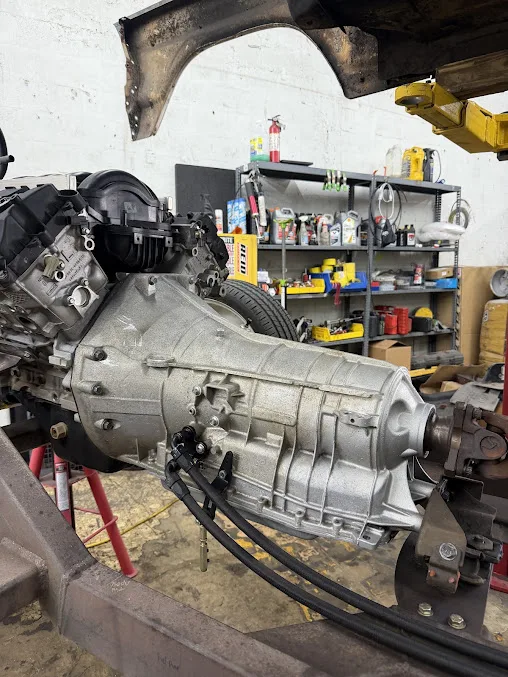
On this kind of work the problem is grease, carbon, adhesive and production residue across every kind of substrate. Most cleaning problems arrive with a constraint attached: it cannot get wet, it cannot be scratched, it cannot be taken apart, or it has to be back in service the same shift.
A mobile rig means the compressor, hose and operator arrive at your shop, plant or driveway. The people who call us about co₂ snow blasting are usually anyone who has been told their part is too delicate to clean properly, and the thing they are actually worried about is that the cleaning does more harm than the dirt did.
The method
Why dry ice and not the alternatives
- Non-abrasive
There is no grit in the stream, only ice that turns to gas on impact. That is why finishes and machined surfaces come through without scratching.
- Low moisture
Moisture is where rust and electrical faults start. Cleaning with dry ice keeps water off the part from start to finish.
- No secondary waste
Abrasive media has to be contained, swept and thrown away. With dry ice there is nothing to recover except what came off your equipment.
- Often no teardown
Hard-to-reach spots get cleaned without pulling the equipment apart. That alone often matters more than how fast the blasting goes.
More core work
Related jobs we get called for
Questions we get asked first
Will it damage the surface underneath?
Done right, no. The risk is in the wrong settings, which is why we start gentle on a test spot and work up instead of opening up on the part itself.
Do you have to take the equipment apart for co₂ snow blasting?
Usually far less than you would expect, and often not at all. Cleaning in place is where most of the saving comes from, because the labor is normally in the teardown and reassembly.
How much mess does it make?
Less than you would think. There is no water, so there is no runoff, and no media, so there is nothing to recover except the dirt.
Do you come to us?
Every job is on site. Your car can stay in your garage and your boat at the dock while we work. We cover South Florida, from Miami out to about a hundred miles.
What does a job cost?
It depends on the equipment, the contaminant and the access, so we will not throw a number at you over the phone without understanding the work. Describe the job and we will give you a real figure.
How soon can you look at it?
A plant that is down and losing money is a different call from a car project in a garage. Tell us which one you have and we will be upfront about where it fits.
The comparison
What the alternatives actually do
- Media blasting
Effective and indiscriminate. On soft metal or a finished surface it does damage you then have to fix.
- Pressure washing
Water gets into everything and has to come out again before the equipment runs. Around electrics it is off the table entirely.
- Solvent and degreaser
Trades the deposit for a residue, plus ventilation and waste to deal with, and it is hard on the finish.
- Hand scraping
Hours of work for an inconsistent result, with gouges where the blade slipped.
- Dry ice
The pellet is soft and the mechanism is temperature, not abrasion. It turns to gas on impact, so the only thing left to sweep up is what came off.
What comes off
The deposits we see most
This list covers the bulk of what people ask us about. All of it is buildup sitting on top of something worth keeping.
- Grease and oil
Machinery runs on lubricant, and the overspray collects lint and metal fines around every bearing and housing. The ice takes the film and the dirt stuck in it together.
- Carbon and soot
Hard black buildup on weld cells, ovens and engine parts. Fast cooling cracks it loose from the surface instead of grinding it off.
- Adhesive and sealant
Cured sealant, old gasket, tape glue and sound deadening, the residue left when something was removed but its bond was not.
- Resin and mold release
Release agent and resin build-up on tooling, where a solvent fix trades one residue for another.
- Paint and coatings
Selective removal, layer by layer, on parts where media blasting would cut into the substrate.
- Salt and corrosion product
Salt deposit and the oxidation it starts. Anything abrasive removes the protection along with the salt.
- Ink and printing residue
Dried ink on precision roller faces, cleaned without altering the cell structure that does the work.
How a job runs
What happens once you call
Here is what a job looks like from our side. Ask about any of it; none of it is a trade secret.
- We test a small area
Old paint can be fragile in ways that don’t show until it is hit. A small patch out of view tells us how it will behave.
- We blast, then clean up
The ice is gone on impact. What is on the floor afterward came off your machine, and clearing it is ours to do.
- You look before we pack up
If something needs another pass we do it then, on site, while the rig is still running. That is a better outcome for everyone than a callback.
- You describe the job
Describe the equipment and the mess. If it cannot come offline that changes the plan, so say so early.
- We look at access and containment
Siting the compressor, masking what must not be touched, and catching what comes off, settled before the first pellet.
What happens in your space
Expect noise. Everybody inside the working area wears hearing protection, us included.
Thick castings hold the cold longer than thin panels. On heavy pieces, plan on a short wait before anyone works on them.
Power, water and air are not things you need to provide. The truck covers the air, and the process needs no water at all.
Masking happens first. Whatever is adjacent and vulnerable gets covered before the hose is picked up.
Describe what you are dealing with.
A short description and a location is enough to start. Add photos if you can. You will speak to an owner, not a scheduler.