Home / Service areas / Collier County / Everglades City
Collier County · Florida
Everglades City dry ice blasting
Most of what we clean around Everglades City is equipment somebody cannot afford to damage.
How the work runs here
Everything arrives on the van: compressor, hose, operator and containment. It is also why nothing has to be crated up and driven across town, the work happens where the machine already sits in Everglades City.
Nothing of the ice survives the blast. That removes the entire cleanup problem every other method creates, leaving only the deposit that came off the equipment.
What we clean
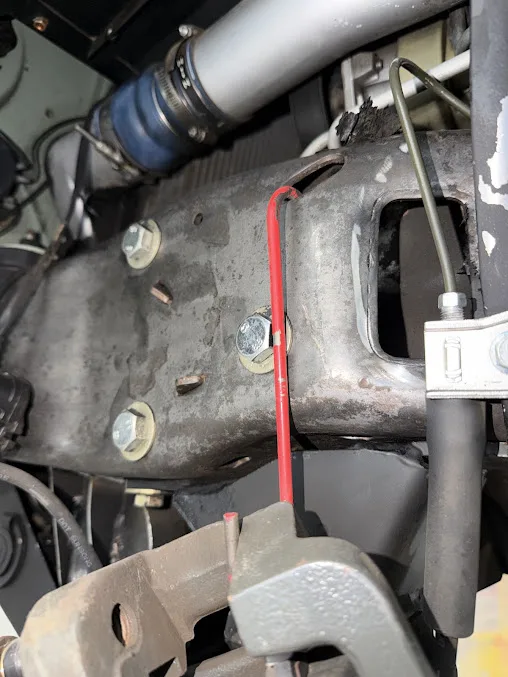
Where this method earns its keep in Everglades City
Nearby
Also working across Collier County
Questions from Everglades City
What is the first step?
A short description and a couple of pictures is enough to start. An owner rings you back.
Do you actually come out to Everglades City?
We do. The whole point of a mobile setup is that Everglades City is no further than any other stop on the schedule.
What do you need from us on site?
Access to the equipment and somewhere to park the compressor. No water hookup, no drain and no wash bay.
How flexible are the hours?
Yes, within reason. Planned outages are easiest because everybody already knows the window.
What sort of work do you get called for?
Everything from an engine bay in a driveway to a production line at shutdown. The process is the same, pointed at a different problem.
Do you charge for the drive?
It depends how far out the job is. We will be straight with you about it when you describe the work.
What the climate does here
Humidity is the constant. Anything bare oxidizes faster than it would almost anywhere else. So the job is usually less about scrubbing harder and more about not making the underlying problem worse.
The mix here runs from vehicle work in driveways to production equipment inside industrial units. Driveway or plant floor, the requirement is the same: room for the rig and access to the machine.
With no slurry to contain and no media to recover, a confined Collier County site stops being a problem.
What comes off
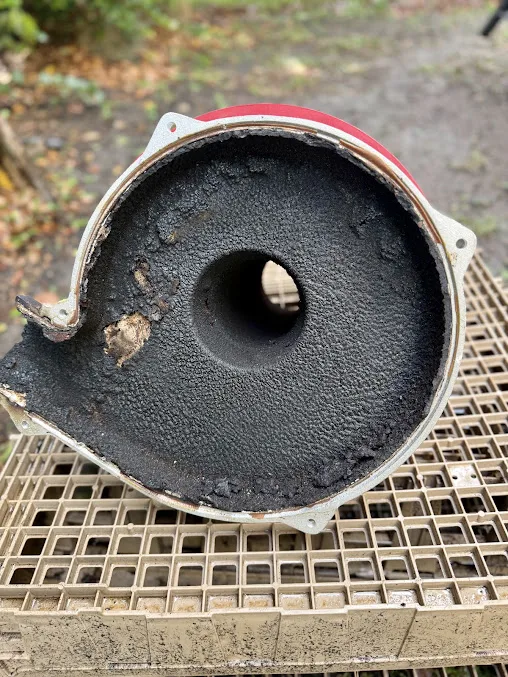
The deposits we see most
Most calls involve one of the following. The common factor is a bond between two things that should not be bonded.
- Salt and corrosion product
Salt deposit and the oxidation it starts. Anything abrasive removes the protection along with the salt.
- Ink and printing residue
Dried ink on precision roller faces, cleaned without altering the cell structure that does the work.
- Food residue
Carbonized product build-up in a plant where neither standing water nor a chemical film is acceptable.
- Grease and oil
The soft film that holds dust and swarf against metal. It is what makes a part feel dirty long after it looks clean, and it comes off first.
- Carbon and soot
The hard black crust on a housing, an oven or a weld cell. Bonded by heat, and the first thing to release under thermal shock.
- Adhesive and sealant
Sound deadening, tape residue, gasket material and sealant that has cured onto a face it was never meant to stay on.
- Resin and mold release
Release agent and resin build-up on tooling, where a solvent fix trades one residue for another.
How a job runs
What happens once you call
If you have not seen this done before, the process is worth reading once. Nothing below is hidden in a footnote.
- You describe the job
What it is, what is on it and whether it can stop. If the answer is that dry ice is wrong for it, you get that answer first, not last.
- We look at access and containment
How close the truck can get, how far the hose must run, what needs covering, and where the debris goes. That is the bulk of the planning on a tight site.
- We test a small area
Settings get proven somewhere nobody looks before they get used somewhere everybody does. What is correct on cast iron will mark aluminum, so the test is not a formality.
- We blast, then clean up
Nothing is left of the pellet, so the only thing to collect is what was on your equipment. That collection is part of the work we quoted.
- You look before we pack up
We would rather you find the missed spot while we are standing there than a week later. Another pass on the day is the cheapest fix available.
The comparison
What the alternatives actually do
- Pressure washing
Forces water where water should not go, looms, bearings, seams, and then the job stops while it dries.
- Solvent and degreaser
It dissolves the deposit and often the finish underneath, then leaves a film behind either way.
- Hand scraping
Hours of work for an inconsistent result, with gouges where the blade slipped.
- Media blasting
Abrasive by definition. Anything with a tolerance or a finish worth keeping comes out changed.
- Dry ice
It is the only one on this list where the media stops existing the moment it has worked.
What happens in your space
The media is solid CO2, nothing toxic and nothing left behind, but it pushes oxygen out of a closed room. Ventilation gets planned before the hose is connected.
This is not a quiet method. Ear defenders are standard issue on site for anyone nearby.
The part will be cold when we finish. Sometimes that means a short wait before handling; sometimes it means a film of condensation as it warms back up.
Everything the rig needs arrives with it. No tap, no drain, no outlet.
Describe what you are dealing with.
A short description and a location is enough to start. Add photos if you can. You will speak to an owner, not a scheduler.