What builds up, and why it matters
On this kind of work the problem is fine dust and particulate loading on switchgear, busway, fans and mechanical plant. A data hall cannot take water and cannot take downtime. Cleaning has to be dry, contained, and finished inside the window you were given.
Work is planned around the maintenance window and the containment the facility requires. The people who call us about data center bus duct are usually critical facility and data center operations teams, and the thing they are actually worried about is particulate migrating somewhere it should not, or a window overrunning.
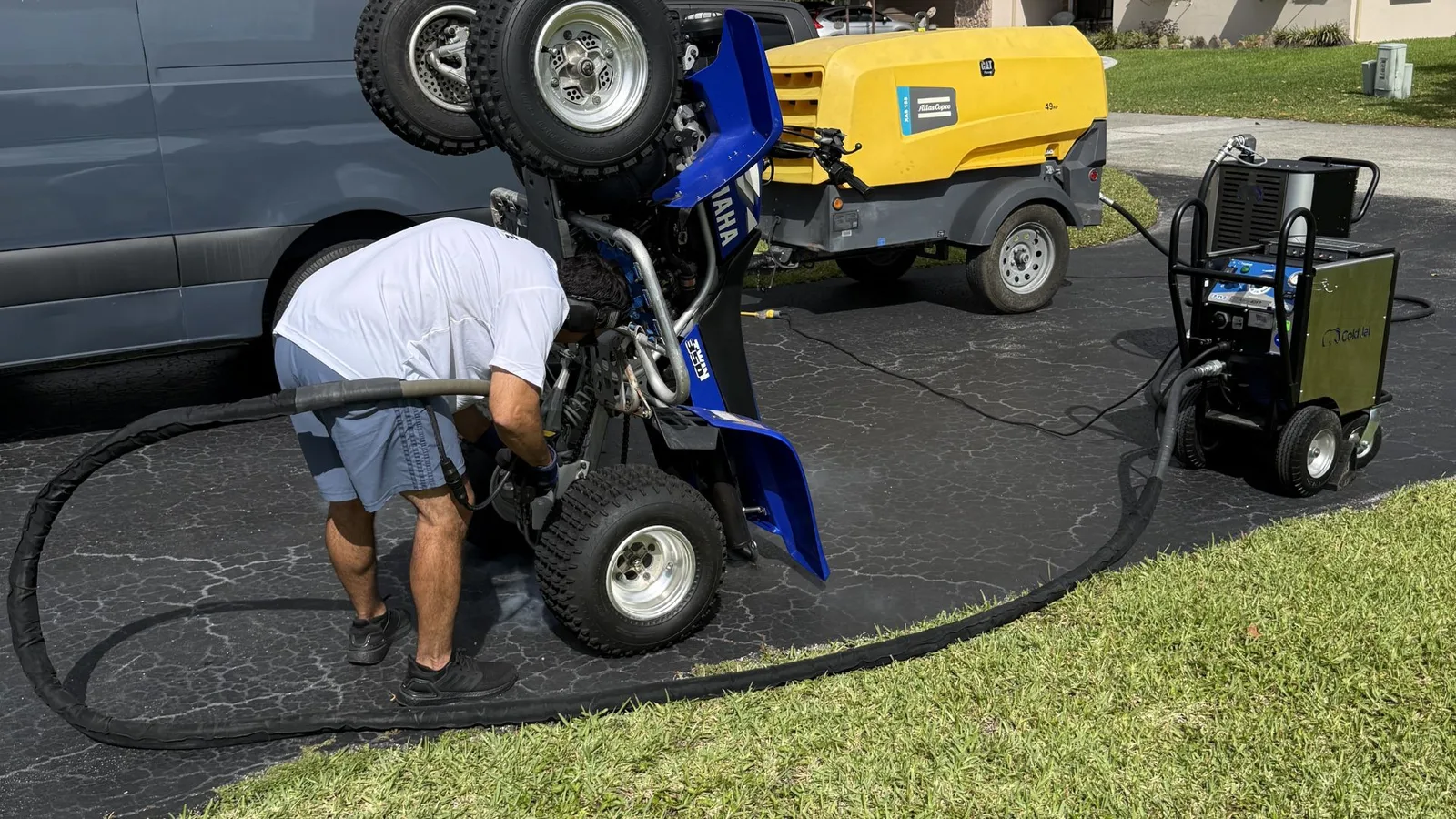
The method
Why dry ice and not the alternatives
- Non-abrasive
Tolerances stay where they were. Nothing hard hits the part, so a mold face or a bearing seat is not worn by the cleaning.
- Low moisture
Moisture is where rust and electrical faults start. Cleaning with dry ice keeps water off the part from start to finish.
- No secondary waste
No pile of sand in the corners afterward. The pellet is gone on impact, and only the original contaminant needs cleaning up.
- Often no teardown
Hard-to-reach spots get cleaned without pulling the equipment apart. That alone often matters more than how fast the blasting goes.
More data work
Related jobs we get called for
Questions we get asked first
Will it damage the surface underneath?
Generally not. The pellet works by temperature rather than friction, so the surface underneath is left alone. If there is any doubt about a finish, we test it before anyone sees the result.
Do you have to take the equipment apart for data center bus duct?
Sometimes a guard or a cover comes off so we can get the nozzle where it needs to go. Full teardown is rare. We will tell you which parts, if any, before the day of the job.
How much mess does it make?
Far less than sandblasting or soda. Those leave grit in every seam, while dry ice leaves nothing of its own, only what it removed.
Do you come to us?
Always. The truck carries the compressor and hose, so we come to wherever the equipment already sits. That covers shops, plants, homes and docks across South Florida, roughly a hundred miles out from Miami.
What does a job cost?
It depends on the equipment, the contaminant and the access, so we will not throw a number at you over the phone without understanding the work. Describe the job and we will give you a real figure.
How soon can you look at it?
Send a description today, photos if you have them. An owner looks at it and comes back to you, and if your timeline is tight we will say whether it is doable before you plan around us.
The comparison
How this compares to the usual methods
- Solvent and degreaser
It dissolves the deposit and often the finish underneath, then leaves a film behind either way.
- Hand scraping
Labor-intensive and uneven, and whatever you scrape with eventually marks what you are scraping.
- Media blasting
It works by removing material, which is the problem. Acceptable on heavy steel, damaging on soft alloy, plating or a machined surface.
- Pressure washing
Forces water where water should not go, looms, bearings, seams, and then the job stops while it dries.
- Dry ice
Cold breaks the bond and the media vanishes. The substrate is untouched and there is no second mess to clean up.
What comes off
What dry ice actually removes
The rule of thumb is simple: anything stuck on rather than built in. These are the deposits we see most.
- Ink and printing residue
Dried ink and coating build-up on rollers and press components, where the surface texture is the product.
- Food residue
Burnt-on product, fat and sugar on processing gear, with no chemical residue left on a contact surface.
- Grease and oil
Oil film is the layer everything else sticks to. Remove it and half the job is already done.
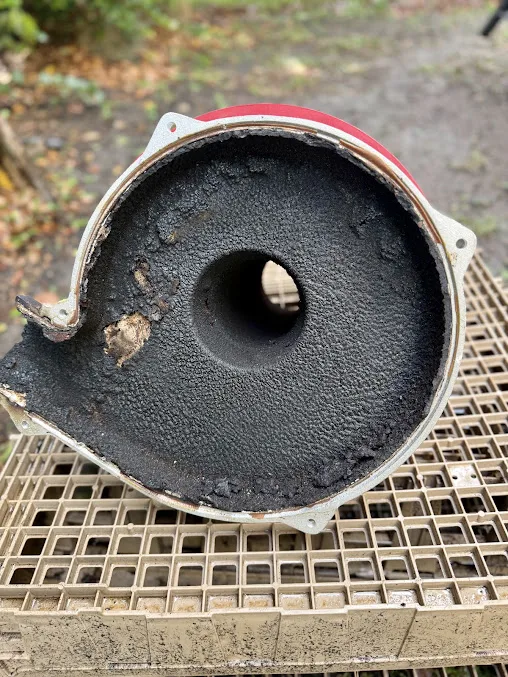
- Carbon and soot
Heat-bonded black deposit. Because heat put it there, a sudden cold front is what breaks its grip.
- Adhesive and sealant
Cured sealant, old gasket, tape glue and sound deadening, the residue left when something was removed but its bond was not.
- Resin and mold release
Residue from production that has hardened onto molds. We remove it with cold instead of chemistry, so there is nothing to rinse away afterward.
- Paint and coatings
Selective removal, layer by layer, on parts where media blasting would cut into the substrate.
How a job runs
How a job actually runs
Here is how a typical job goes, from the first call to the cleanup. We would rather you know it all before booking.
- You describe the job
The useful details are practical ones: what is stuck to the piece, and whether it has to keep running while we work. Send a photo or two. If another method would serve you better, we would rather tell you now than find out on site.
- We look at access and containment
Hose run, compressor position, what needs masking, and where the contaminant is collected. For food and electrical jobs the containment plan takes longer to settle than the blasting does.
- We test a small area
Old paint can be fragile in ways that don’t show until it is hit. A small patch out of view tells us how it will behave.
- We blast, then clean up
One mess instead of two: the pellet vanishes and we take away what it removed.
- You look before we pack up
If something needs another pass we do it then, on site, while the rig is still running. That is a better outcome for everyone than a callback.
What the job is like to stand next to
Some dampness on the surface after we stop is normal. It is the part coming back to air temperature, and it clears without wiping.
There is no hookup to arrange before we come. We arrive with our own air and start once the hose reaches the job.
Anything nearby that should not be touched gets masked before we start. That is quicker than explaining it afterward.
Working outdoors, ventilation takes care of itself. Indoors, in a small room or a cabinet, we plan how air will move before the hose is ever connected, because the gas displaces oxygen.
Describe what you are dealing with.
Start with the location and the problem. Photos are a bonus. Every call back comes from Giancarlo or Kenny, the two firefighters who own the company.