Home / Services / Automotive / Suspension
Automotive · Miami, FL
Suspension Ice Blasting
Suspension is one of the jobs dry ice blasting was made for. We clean it without water, without chemicals and without anything abrasive touching the surface.
What builds up, and why it matters
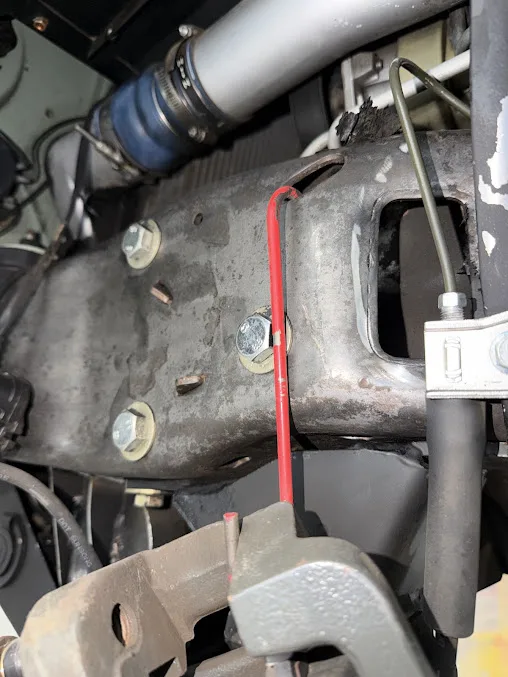
On this kind of work the problem is baked grease, road film, undercoating, sound deadening, adhesive and brake dust. Media blasting will cut into aluminum and pit a frame. Pressure washing drives water into looms and bearings. Solvent strips the finishes you wanted to keep. Dry ice takes the contamination and leaves the part.
Engine bays, frames and undercarriages are cleaned on a lift, on stands or in your driveway. The people who call us about suspension are usually restorers, shops and owners who actually care about the vehicle, and the thing they are actually worried about is damage to a car that took years to put together.
The method
Why dry ice and not the alternatives
- Non-abrasive
Rubber seals, wiring and plastic covers can be cleaned in place. With no abrasive in the mix, they are not worn away in the process.
- Low moisture
A panel or motor can be cleaned without soaking anything, which is why the method suits electrical work.
- No secondary waste
Cleanup is just the buildup itself. The media vanishes, so nothing ends up in seams, drains or bearings that needs flushing out later.
- Often no teardown
No water and no grit means nothing has to be protected by taking it out first. Most parts stay installed while we work.
More automotive work
Related jobs we get called for
Questions we get asked first
Will it damage the surface underneath?
On metal, painted parts and most finishes, it does not. The process is non-abrasive. Where we are less sure, an old coating or a soft alloy for example, we try it somewhere hidden and look before going further.
Do you have to take the equipment apart for suspension?
For most jobs, no. Reassembly is where time and money normally go, and cleaning in place skips both. If a part has to come off, we raise it when we look at the job, never halfway through.
How much mess does it make?
The only debris is what was on the part to begin with. We lay down protection before we start and gather it up when we finish.
Do you come to us?
We come to you. Moving a machine is usually the expensive part, so we skip it and bring the cleaning to the machine instead, anywhere across South Florida within about a hundred miles of Miami.
What does a job cost?
There is no flat rate, because no two jobs carry the same buildup or the same access. Tell us what it is and where it sits, and send a photo. We will come back with a real price, never a teaser to get us through the door.
How soon can you look at it?
As soon as we have seen what the job is. Send a description and a photo, an owner reads it and comes back with a date, and because the rig travels to you there is nothing of yours to ship first.
The comparison
Why not just pressure wash it
- Solvent and degreaser
Good at softening, bad at leaving. There is always a residue and always a drum to get rid of.
- Hand scraping
It is the fallback when nothing else is available, and it shows on the surface afterward.
- Media blasting
It works by removing material, which is the problem. Acceptable on heavy steel, damaging on soft alloy, plating or a machined surface.
- Pressure washing
Pressure pushes moisture past seals and into connectors, and then you wait. Panels and motors rule it out.
- Dry ice
The deposit shrinks away from the surface it is stuck to and releases. The ice is gone before it can do any harm.
What comes off
The deposits we see most
What follows is the short list of regulars. Every one of them is a crust or film bonded to a working surface.
- Ink and printing residue
Dried ink on precision roller faces, cleaned without altering the cell structure that does the work.
- Food residue
Burnt-on product, fat and sugar on processing gear, with no chemical residue left on a contact surface.
- Grease and oil
Oil film is the layer everything else sticks to. Remove it and half the job is already done.
- Carbon and soot
Heat-bonded black deposit. Because heat put it there, a sudden cold front is what breaks its grip.
- Adhesive and sealant
Sound deadening, tape residue, gasket material and sealant that has cured onto a face it was never meant to stay on.
- Resin and mold release
Release agent and resin build-up on tooling, where a solvent fix trades one residue for another.
- Paint and coatings
Taken off in a controlled way when what is underneath matters more than speed.
How a job runs
What happens once you call
We explain the whole job up front. If something below does not make sense, ask, and one of the owners will walk you through it.
- You describe the job
What it is, what is on it and whether it can stop. If the answer is that dry ice is wrong for it, you get that answer first, not last.
- We look at access and containment
The planning is mostly logistics. Can the truck get near the equipment, and if not, how much hose do we need to cover the gap?
- We test a small area
Aluminum, chrome and painted steel each have their own limits. We find each one’s limit on a corner out of sight, then work the visible areas inside it.
- We blast, then clean up
The ice is gone the moment it does its work. What stays behind is the grease or carbon that came off, and collecting that is part of the job, not an extra.
- You look before we pack up
If something needs another pass we do it then, on site, while the rig is still running. That is a better outcome for everyone than a callback.
What happens in your space
Working in a garage? Expect the door to be open while we blast. The ice leaves no residue behind, but the gas it gives off needs somewhere to go.
Expect noise. Everybody inside the working area wears hearing protection, us included.
Nothing wet goes onto your equipment, but cold metal in warm air can still pick up condensation. It clears as the part comes back up to temperature.
Everything the rig needs arrives with it. No tap, no drain, no outlet.
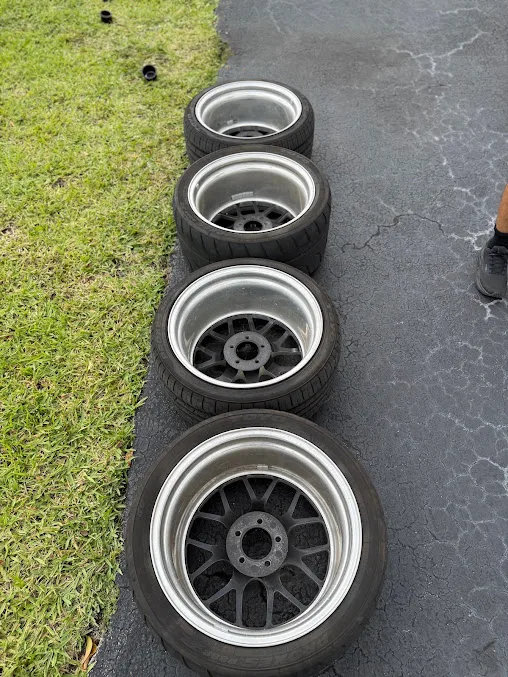
Describe what you are dealing with.
Snap a couple of photos of the dirty area and send them over with a sentence or two. Seeing the buildup tells us more than a long description could.