Home / Service areas / Palm Beach County / Wellington
Palm Beach County · Florida
Wellington dry ice blasting
When we take a job in Wellington, the rig comes to the machine rather than the other way round.
What a job looks like locally
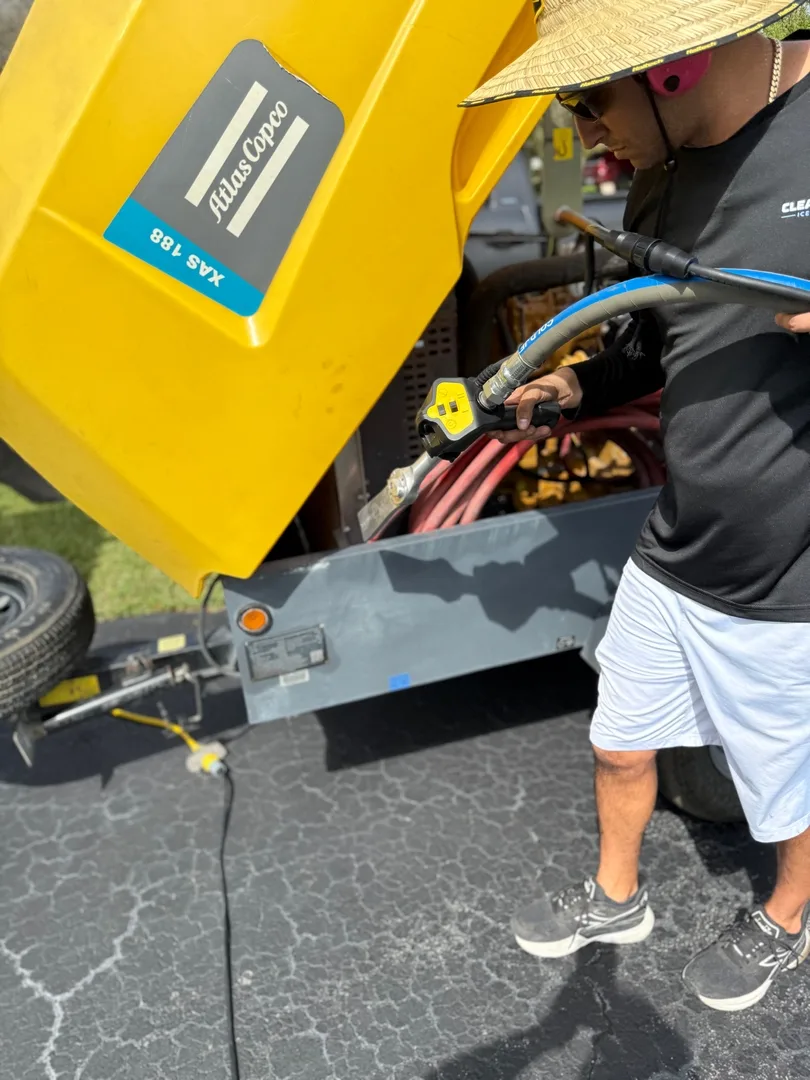
We work on driveways, in yards and inside shops that cannot take water on the floor. That is the practical reason a mobile rig beats hauling equipment somewhere: the machine never leaves Wellington.
Because the media disappears on impact, there is nothing abrasive left in a bearing and nothing to shovel up afterward. Whatever came off the surface is ours to gather before we leave.
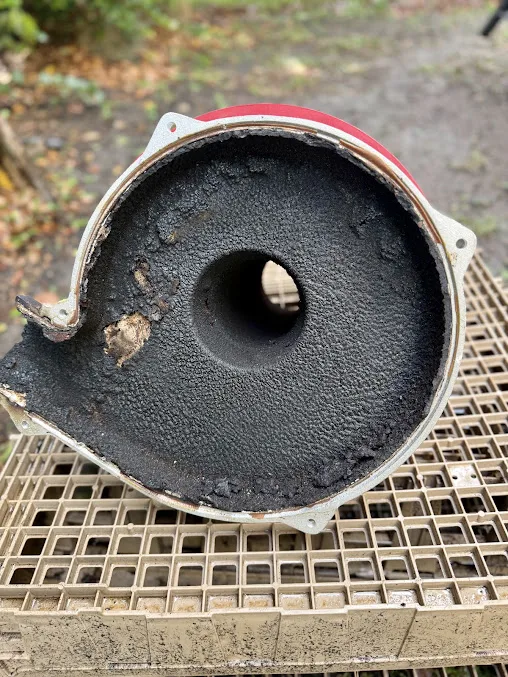
What we clean
What we clean in and around Wellington
Nearby
Also working across Palm Beach County
Questions from Wellington
Can you work around our schedule?
Most of the time. Shutdowns and after-hours work are normal for us; what matters is knowing the window early.
Who calls you around here?
Everything from an engine bay in a driveway to a production line at shutdown. The process is the same, pointed at a different problem.
Does distance affect the price?
It depends how far out the job is. We will be straight with you about it when you describe the work.
How do we book it in?
A short description and a couple of pictures is enough to start. An owner rings you back.
Is Wellington in your area?
Yes. Wellington is inside our regular working area, and the rig travels to the job rather than the other way round.
What does the site need to have?
Space for the rig and a way to reach the machine. Everything else arrives with us.
Why Wellington equipment ends up like this
Salt carries a long way inland here, and it keeps working on metal every day of the year. Which is exactly the situation where a non-abrasive, low-moisture method is worth the call.
Shops, marine yards, warehouses and home garages all end up with the same problem in different forms. None of those settings need modifying: the compressor, hose and collection all come with us.
No runoff and no residual grit, which matters more than it sounds on a Palm Beach County job with neighbors close by.

What comes off
What this takes off
The method does not care much what the contaminant is, only that it sits on top of something. Here is the usual list.
- Adhesive and sealant
Cured sealant, old gasket, tape glue and sound deadening, the residue left when something was removed but its bond was not.
- Resin and mold release
Vents and fine details on a mold are where residue hides. The pellet stream reaches into them without rounding over a single edge.
- Paint and coatings
Selective removal, layer by layer, on parts where media blasting would cut into the substrate.
- Salt and corrosion product
The year-round problem on the coast. The finish holding corrosion back has to survive the cleaning.
- Ink and printing residue
Ink and coating on anilox and press rollers, surfaces where changing the texture changes the print.
- Food residue
Carbonized product, fat, starch and sugar build-up on processing equipment, cleaned without chemicals touching a food contact surface.
- Grease and oil
The soft film that holds dust and swarf against metal. It is what makes a part feel dirty long after it looks clean, and it comes off first.
How a job runs
The sequence, start to finish
There is no mystery to how these jobs run, and no part of it we would rather you did not ask about.
- You look before we pack up
The job is not finished because we say so. It is finished when you have looked at it.
- You describe the job
What it is, what is on it and whether it can stop. If the answer is that dry ice is wrong for it, you get that answer first, not last.
- We look at access and containment
The layout decides the method more often than the contaminant does. We work out reach and containment before quoting anything.
- We test a small area
A factory finish, a repaint and bare steel can all sit on the same piece of equipment. Each one gets checked in a hidden spot first, because a setting that is safe on one can mark the next.
- We blast, then clean up
One mess instead of two: the pellet vanishes and we take away what it removed.
The comparison
The other ways to do this
- Solvent and degreaser
Chemistry works, but you inherit ventilation, waste handling and a film on the surface.
- Hand scraping
Hours of work for an inconsistent result, with gouges where the blade slipped.
- Media blasting
It works by removing material, which is the problem. Acceptable on heavy steel, damaging on soft alloy, plating or a machined surface.
- Pressure washing
Drives water into harnesses, bearings, panels and seams, then everything waits to dry. On electrical work it is simply not an option.
- Dry ice
Cold breaks the bond and the media vanishes. The substrate is untouched and there is no second mess to clean up.
Before we turn the rig on
Ventilation is part of how we plan the job from the first conversation. It is never a step we add halfway through after the room starts to feel stuffy.
This is not a quiet method. Ear defenders are standard issue on site for anyone nearby.
Thick castings hold the cold longer than thin panels. On heavy pieces, plan on a short wait before anyone works on them.
Everything the rig needs arrives with it. No tap, no drain, no outlet.
Tell us what needs cleaning.
Tell us about the job in your own words and attach photos if you can. One of the two owners, Giancarlo or Kenny, calls you back.