Home / Services / Automotive / Transmission
Automotive · Miami, FL
Transmission Ice Blasting
When people call about transmission, the constraint is usually the same. We clean it without water, without chemicals and without anything abrasive touching the surface.
What builds up, and why it matters
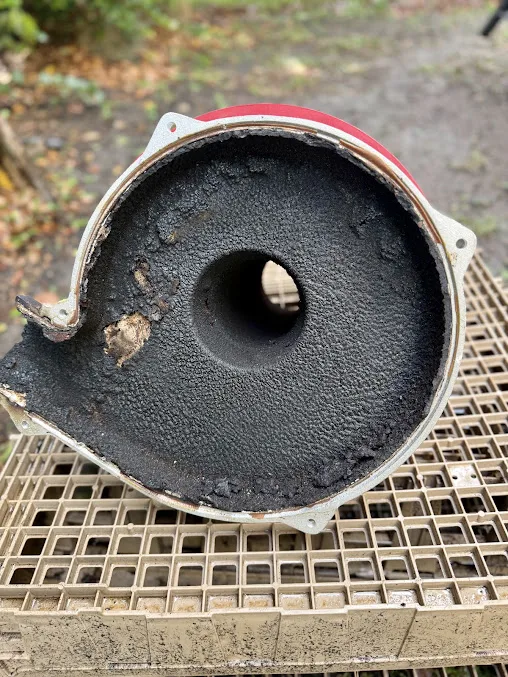
On this kind of work the problem is baked grease, road film, undercoating, sound deadening, adhesive and brake dust. Media blasting will cut into aluminum and pit a frame. Pressure washing drives water into looms and bearings. Solvent strips the finishes you wanted to keep. Dry ice takes the contamination and leaves the part.
Engine bays, frames and undercarriages are cleaned on a lift, on stands or in your driveway. The people who call us about transmission are usually restorers, shops and owners who actually care about the vehicle, and the thing they are actually worried about is damage to a car that took years to put together.
The method
Why dry ice and not the alternatives
- Non-abrasive
The pellets are frozen carbon dioxide, softer than the metal they hit. They break up and vanish, taking the bond with them and leaving the surface intact.
- Low moisture
Because no water goes on, none has to be drained, wiped or blown out of the equipment afterward.
- No secondary waste
Walnut shell and soda end up in every crack of a machine. Dry ice leaves no media behind, only the removed deposit.
- Often no teardown
In-place cleaning is the norm. Minimal disassembly means less time with the equipment offline and fewer parts to put back.
More automotive work
Related jobs we get called for
Questions we get asked first
Will it damage the surface underneath?
It should not. Unlike sand or grit, the pellet does not cut into the material. It shocks the deposit loose with cold and then turns to gas. On anything delicate or unusual we try a hidden area first.
Do you have to take the equipment apart for transmission?
Often you can leave it as it is. We look at the photos, work out what blocks the nozzle, and only ask for something to come apart if there is no other way in.
How much mess does it make?
Your floor stays dry and the corners stay free of grit. What does come off is collected by us before we pack up the rig.
Do you come to us?
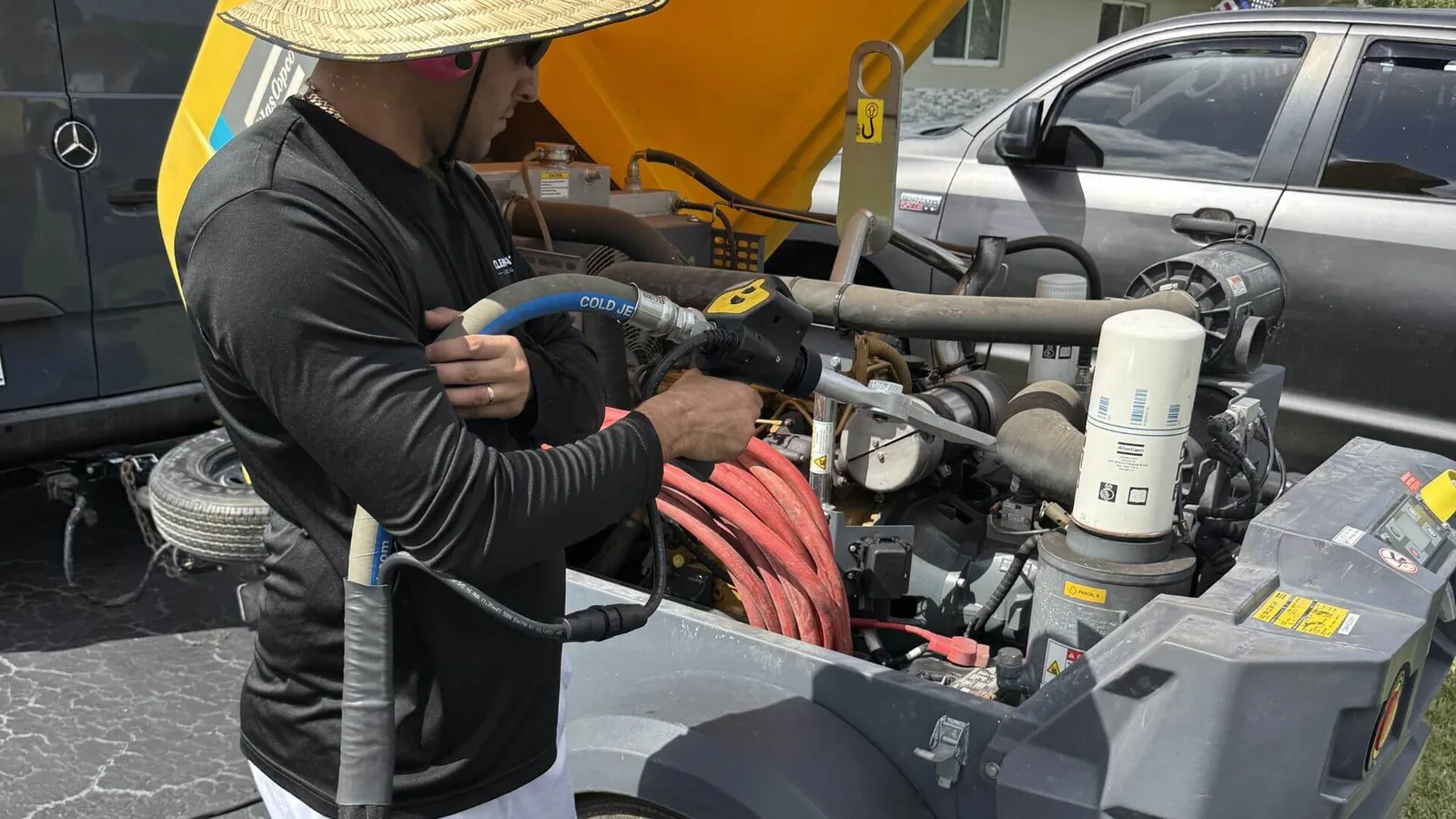
Yes. The rig is fully mobile and supplies its own air, so a driveway works as well as a plant floor. Our range runs from Miami out roughly a hundred miles through South Florida.
What does a job cost?
Price follows the work: how much is on the surface and what it takes to get the rig close. Once we have seen photos and know the setup, we give you a real figure.
How soon can you look at it?
Send a description today, photos if you have them. An owner looks at it and comes back to you, and if your timeline is tight we will say whether it is doable before you plan around us.
The comparison
How this compares to the usual methods
- Solvent and degreaser
Trades the deposit for a residue, plus ventilation and waste to deal with, and it is hard on the finish.
- Hand scraping
It is the fallback when nothing else is available, and it shows on the surface afterward.
- Media blasting
Cuts into the substrate by design. Fine on structural steel, wrong on aluminum, plating, machined faces or anything with a tolerance.
- Pressure washing
Pressure pushes moisture past seals and into connectors, and then you wait. Panels and motors rule it out.
- Dry ice
Thermal shock breaks the bond. The pellet sublimates, so nothing abrasive touches the part and nothing is left to collect but the contaminant.
What comes off
The deposits we see most
If you are not sure what you are dealing with, start here. These are the deposits most of our jobs come down to.
- Adhesive and sealant
Whatever the last repair left stuck to the mating face: gasket, sealant, deadener or adhesive.
- Resin and mold release
Release agent and resin build-up on tooling, where a solvent fix trades one residue for another.
- Paint and coatings
Selective removal, layer by layer, on parts where media blasting would cut into the substrate.
- Salt and corrosion product
The year-round problem on the coast. The finish holding corrosion back has to survive the cleaning.
- Ink and printing residue
Dried ink and coating build-up on rollers and press components, where the surface texture is the product.
- Food residue
Burnt-on product, fat and sugar on processing gear, with no chemical residue left on a contact surface.
- Grease and oil
Oil film is the layer everything else sticks to. Remove it and half the job is already done.
How a job runs
What happens once you call
If this is your first time hiring dry ice blasting, here is how a job goes from the first call to the last pass.
- We look at access and containment
Siting the compressor, masking what must not be touched, and catching what comes off, settled before the first pellet.
- We test a small area
Rubber, plastic trim and wiring insulation react differently from metal. If any of that sits near the dirty area, the test checks it too, so we know where to back the pressure off or mask instead.
- We blast, then clean up
Once the blasting stops, the only thing on the floor is what came off your equipment. We sweep and collect it before we pack up, and that is included.
- You look before we pack up
We would rather you find the missed spot while we are standing there than a week later. Another pass on the day is the cheapest fix available.
- You describe the job
Tell us the machine, the mess and the constraint. A couple of photos answers more than a long description, and if the honest answer is that something else suits it better, we say so.
What happens in your space
Masking happens first. Whatever is adjacent and vulnerable gets covered before the hose is picked up.
Before starting indoors we check how air gets in and out of the space. The ice is non-toxic and leaves no residue, but the CO2 it releases displaces oxygen in a closed area, so that airflow is planned, never improvised.
Expect noise. Everybody inside the working area wears hearing protection, us included.
Right after the work, the surface is chilled through. Depending on its size, that means a few minutes before it is comfortable to handle, or some moisture while it recovers.
Tell us what needs cleaning.
The quickest way in is a short description, a location and a photo. The reply comes from an owner, either Giancarlo or Kenny.