Home / Service areas / Martin County
8 communities · Florida
Dry ice blasting across Martin County
We are mobile, so the job site is wherever the machine is. The compressor, hose and operator come to you anywhere in Martin County.
Working in Martin County
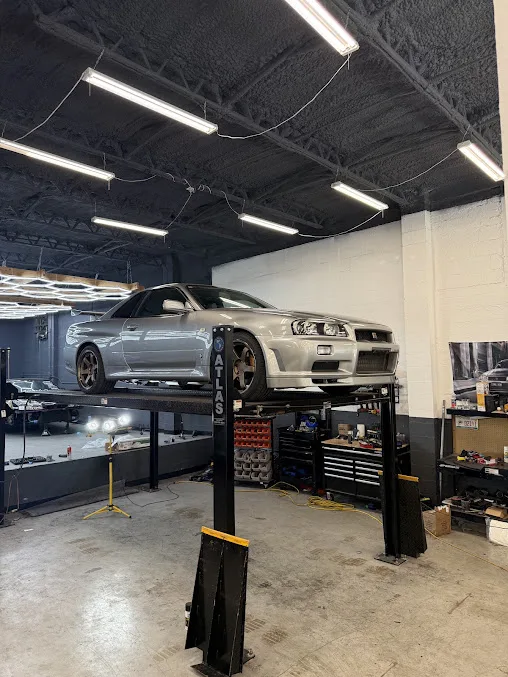
Everything we do runs off our own compressor, so there is no wash pad to find and no drain to worry about. That matters in Martin County, where a lot of the work happens on a driveway, in a yard, or inside a shop that cannot be flooded.
South Florida salt air keeps corrosion moving all year, which is why so much of the work here is about removing what has bonded to a surface without taking the surface with it.
Where we work
Communities across Martin County
Questions we get from around here
What do you need from us on site?
Space for the rig and a way to reach the machine. Everything else arrives with us.
How flexible are the hours?
Often yes, a lot of industrial work happens overnight or during a planned outage. Give us the window and we will say straight away whether it is realistic.
What sort of work do you get called for?
A mix, vehicle work, shop equipment, marine and light industrial. Same rig, different constraint each time.
Does distance affect the price?
It depends how far out the job is. We will be straight with you about it when you describe the work.
What is the first step?
A short description and a couple of pictures is enough to start. An owner rings you back.
Do you actually come out to Martin County?
We do. The whole point of a mobile setup is that Martin County is no further than any other stop on the schedule.
What comes off
The deposits we see most
Most calls involve one of the following. The common factor is a bond between two things that should not be bonded.
- Salt and corrosion product
The year-round problem on the coast. The finish holding corrosion back has to survive the cleaning.
- Ink and printing residue
Dried ink on precision roller faces, cleaned without altering the cell structure that does the work.
- Food residue
Burnt-on product, fat and sugar on processing gear, with no chemical residue left on a contact surface.
- Grease and oil
The greasy base coat that traps grit and dust. It releases early and takes the loose material with it.
- Carbon and soot
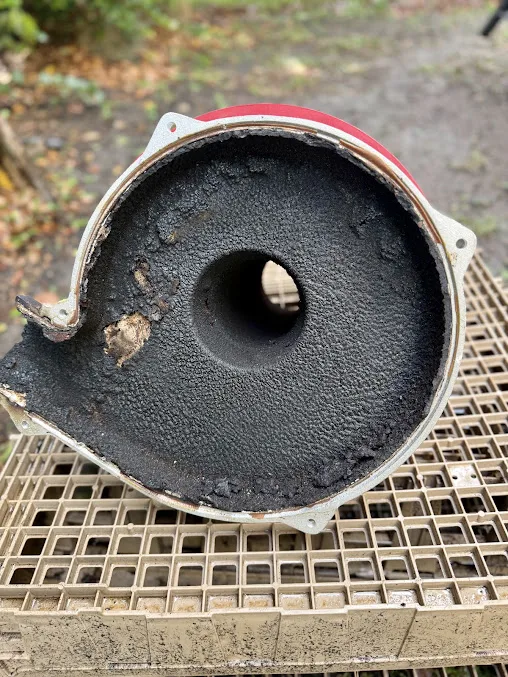
Baked carbon on a manifold, oven or weld fixture. Thermal shock is exactly the wrong thing for the bond holding it on, which is why this works.
- Adhesive and sealant
The stubborn film under old tape, or the gasket that tore and left half of itself behind.
- Resin and mold release
Release agent and resin build-up on tooling, where a solvent fix trades one residue for another.
How a job runs
What happens once you call
If you have not seen this done before, the process is worth reading once. Nothing below is hidden in a footnote.
- You look before we pack up
The job is not finished because we say so. It is finished when you have looked at it.
- You describe the job
The machine, the deposit and the downtime you can afford. Those three things decide the whole job, and we would rather know all of them before quoting.
- We look at access and containment
Hose run, compressor position, what needs masking, and where the contaminant is collected. For food and electrical jobs the containment plan takes longer to settle than the blasting does.
- We test a small area
Pressure and pellet size get dialed in on an inconspicuous spot before we touch anything visible. Painted parts, soft alloys and older finishes all behave differently, and the right setting on one is the wrong setting on another.
- We blast, then clean up
One mess instead of two: the pellet vanishes and we take away what it removed.
The comparison
What the alternatives actually do
- Pressure washing
Drives water into harnesses, bearings, panels and seams, then everything waits to dry. On electrical work it is simply not an option.
- Solvent and degreaser
Trades the deposit for a residue, plus ventilation and waste to deal with, and it is hard on the finish.
- Hand scraping
Labor-intensive and uneven, and whatever you scrape with eventually marks what you are scraping.
- Media blasting
It works by removing material, which is the problem. Acceptable on heavy steel, damaging on soft alloy, plating or a machined surface.
- Dry ice
It is the only one on this list where the media stops existing the moment it has worked.
Why us
How we do business
- The rig comes to you
Shop, yard, driveway or dockside, the van carries the whole setup, so nothing has to be moved.
- We clean up after ourselves
Nothing of the blasting media remains, so the only cleanup is the dirt itself, and that is ours to handle.
- Firefighter owned and operated
Both founders came up in the fire service. That background is about preparation, accountability and performing under pressure, and it is how every job gets approached.
- You speak to an owner
Giancarlo or Kenny answers, quotes the work and turns up to do it. There is no call center and no handoff where the details get lost.
- We will tell you no
Some jobs want a different method. We would rather say that up front than discover it on your machine.
- We test before we commit
Every substrate reacts differently, so settings get proven on a spot nobody sees first.
What happens in your space
Surfaces come out cold. On some jobs that means waiting a few minutes before handling, and on others it means condensation as the part returns to ambient temperature.
The rig needs compressed air, which the truck supplies. There is no hookup to find and nothing of yours to plug into.
Anything nearby that should not be touched gets masked before we start. That is quicker than explaining it afterward.
The media is solid CO2, nothing toxic and nothing left behind, but it pushes oxygen out of a closed room. Ventilation gets planned before the hose is connected.
Describe what you are dealing with.
A short description and a location is enough to start. Add photos if you can. You will speak to an owner, not a scheduler.