Home / Service areas / Miami-Dade County
62 communities · Florida
Dry ice blasting across Miami-Dade County
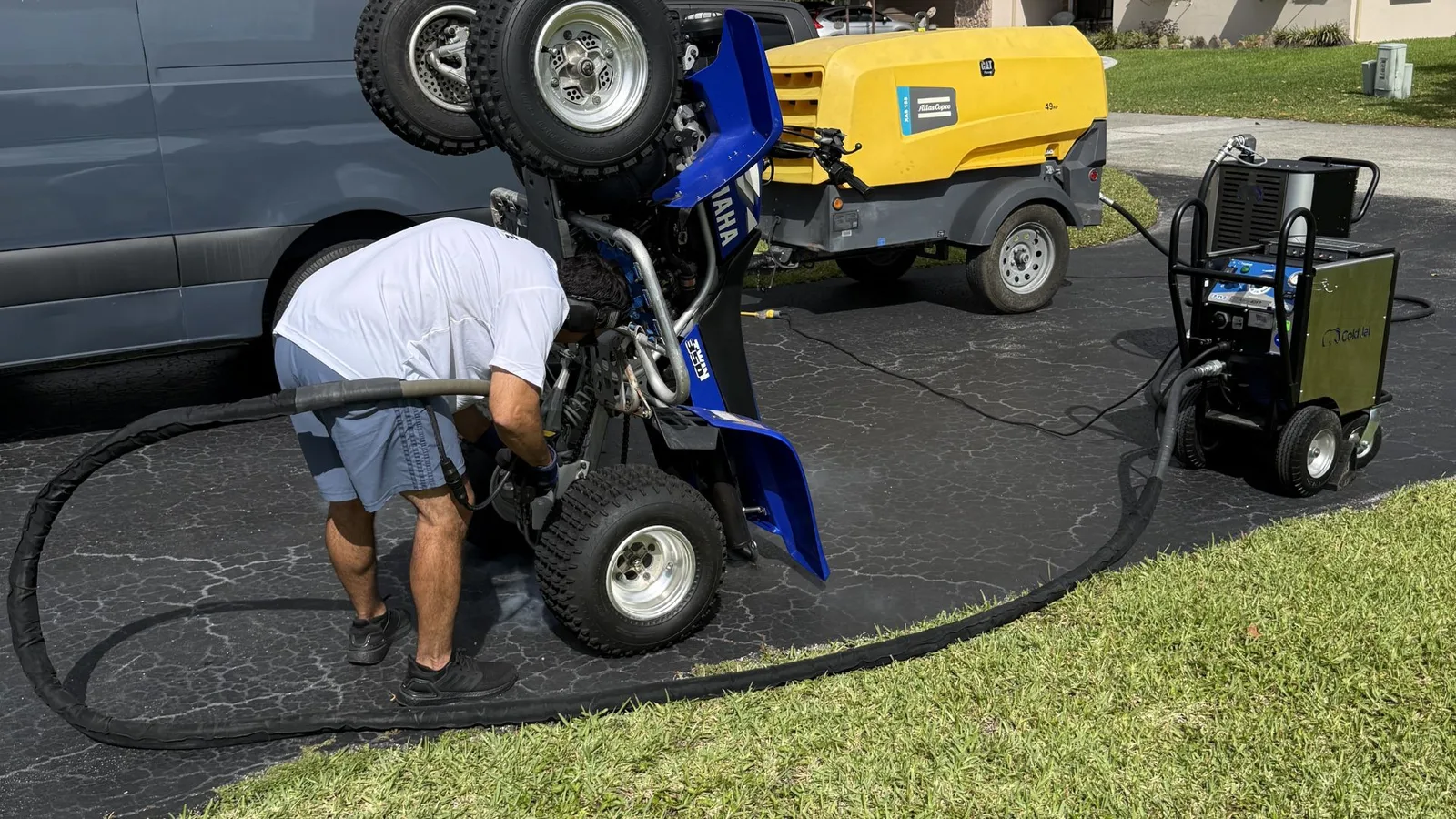
We are mobile, so the job site is wherever the machine is. The compressor, hose and operator come to you anywhere in Miami-Dade County.
Working in Miami-Dade County
Everything we do runs off our own compressor, so there is no wash pad to find and no drain to worry about. That matters in Miami-Dade County, where a lot of the work happens on a driveway, in a yard, or inside a shop that cannot be flooded.
South Florida salt air keeps corrosion moving all year, which is why so much of the work here is about removing what has bonded to a surface without taking the surface with it.
Where we work
Communities across Miami-Dade County
Questions about working in this area
Can you work around our schedule?
Usually. Tell us the window you have, including overnight or a planned shutdown, and we will tell you honestly what fits in it.
Who calls you around here?
It ranges from a single restoration project to a plant maintenance window. The method does not change much.
Does distance affect the price?
Sometimes, on the longer runs. Either way it is discussed before anyone commits.
What is the first step?
Describe the job and send a photo or two. Giancarlo or Kenny will call you, not a scheduler.
Is Miami-Dade County in your area?
We do. The whole point of a mobile setup is that Miami-Dade County is no further than any other stop on the schedule.
What does the site need to have?
Just access and parking. There is no tap to find, no drain to use and nothing of yours to plug into.
What comes off
What comes off, and why
If it is bonded to the surface rather than part of it, there is a good chance this takes it off. The list below covers most of what we are called out for.
- Grease and oil
The greasy base coat that traps grit and dust. It releases early and takes the loose material with it.
- Carbon and soot
Heat-bonded black deposit. Because heat put it there, a sudden cold front is what breaks its grip.
- Adhesive and sealant
Sound deadening, tape residue, gasket material and sealant that has cured onto a face it was never meant to stay on.
- Resin and mold release
Cured process residue on a mold or fixture. The surface has to come out dimensionally unchanged, which rules out anything abrasive.
- Paint and coatings
Selective removal, layer by layer, on parts where media blasting would cut into the substrate.
- Salt and corrosion product
Salt deposit and the oxidation it starts. Anything abrasive removes the protection along with the salt.
- Ink and printing residue
Dried ink on precision roller faces, cleaned without altering the cell structure that does the work.
How a job runs
Nothing about this should be a surprise
Nobody should have to guess what they booked. This is every stage of a job in the order it happens.
- You describe the job
What it is, what is on it and whether it can stop. If the answer is that dry ice is wrong for it, you get that answer first, not last.
- We look at access and containment
Where the compressor sits, how far the hose has to reach, what gets masked or moved, and where the removed contaminant ends up. On food and electrical work this is most of the planning.
- We test a small area
Settings get proven somewhere nobody looks before they get used somewhere everybody does. What is correct on cast iron will mark aluminum, so the test is not a formality.
- We blast, then clean up
Nothing is left of the pellet, so the only thing to collect is what was on your equipment. That collection is part of the work we quoted.
- You look before we pack up
The job is not finished because we say so. It is finished when you have looked at it.
The comparison
The other ways to do this
- Media blasting
Abrasive by definition. Anything with a tolerance or a finish worth keeping comes out changed.
- Pressure washing
Drives water into harnesses, bearings, panels and seams, then everything waits to dry. On electrical work it is simply not an option.
- Solvent and degreaser
Softens the contaminant but leaves a film, fumes and a disposal problem, and attacks finishes you meant to keep.
- Hand scraping
Hours of work for an inconsistent result, with gouges where the blade slipped.
- Dry ice
Thermal shock breaks the bond. The pellet sublimates, so nothing abrasive touches the part and nothing is left to collect but the contaminant.
Why us
How we work
- We clean up after ourselves
Nothing of the blasting media remains, so the only cleanup is the dirt itself, and that is ours to handle.
- Firefighter owned and operated
Both founders came up in the fire service. That background is about preparation, accountability and performing under pressure, and it is how every job gets approached.
- You speak to an owner
The person who picks up is the person doing the work. Nothing gets lost between the quote and the job.
- We will tell you no
Not everything should be dry ice blasted. Being told that early is worth more than being sold the job.
- We test before we commit
Anything unusual gets an inconspicuous test area first. Painted parts, soft alloys and older finishes all behave differently.
- The rig comes to you
We are mobile. The equipment stays where it is and we bring everything needed to it.
What to expect on site
Cold surfaces are the one aftereffect. Depending on the piece that is either a few minutes of patience or some condensation while it returns to room temperature.
Air comes from our own compressor. You do not need to provide power, water or a connection of any kind.
Anything nearby that should not be touched gets masked before we start. That is quicker than explaining it afterward.
Solid carbon dioxide leaves no residue at all. What it does do is displace air, so an enclosed space gets ventilated as part of the job rather than as a precaution added later.
Describe what you are dealing with.
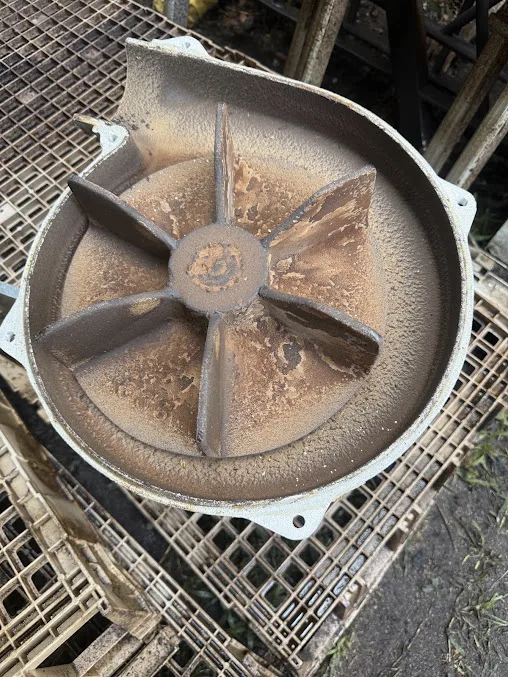
Send the equipment, the location and a short description. Photos help. You will hear back from Giancarlo or Kenny, not a call center.