What builds up, and why it matters
On this kind of work the problem is oil, carbon, scale and hydrocarbon residue on generation and process equipment. Energy equipment is large, awkward to access and costly to take out of service, so cleaning in place during an outage is worth far more than a faster method that requires teardown.
Work is planned around outages and turnaround schedules. The people who call us about oil & gas equipment are usually operations and maintenance planners, and the thing they are actually worried about is extending an outage that was already tightly planned.
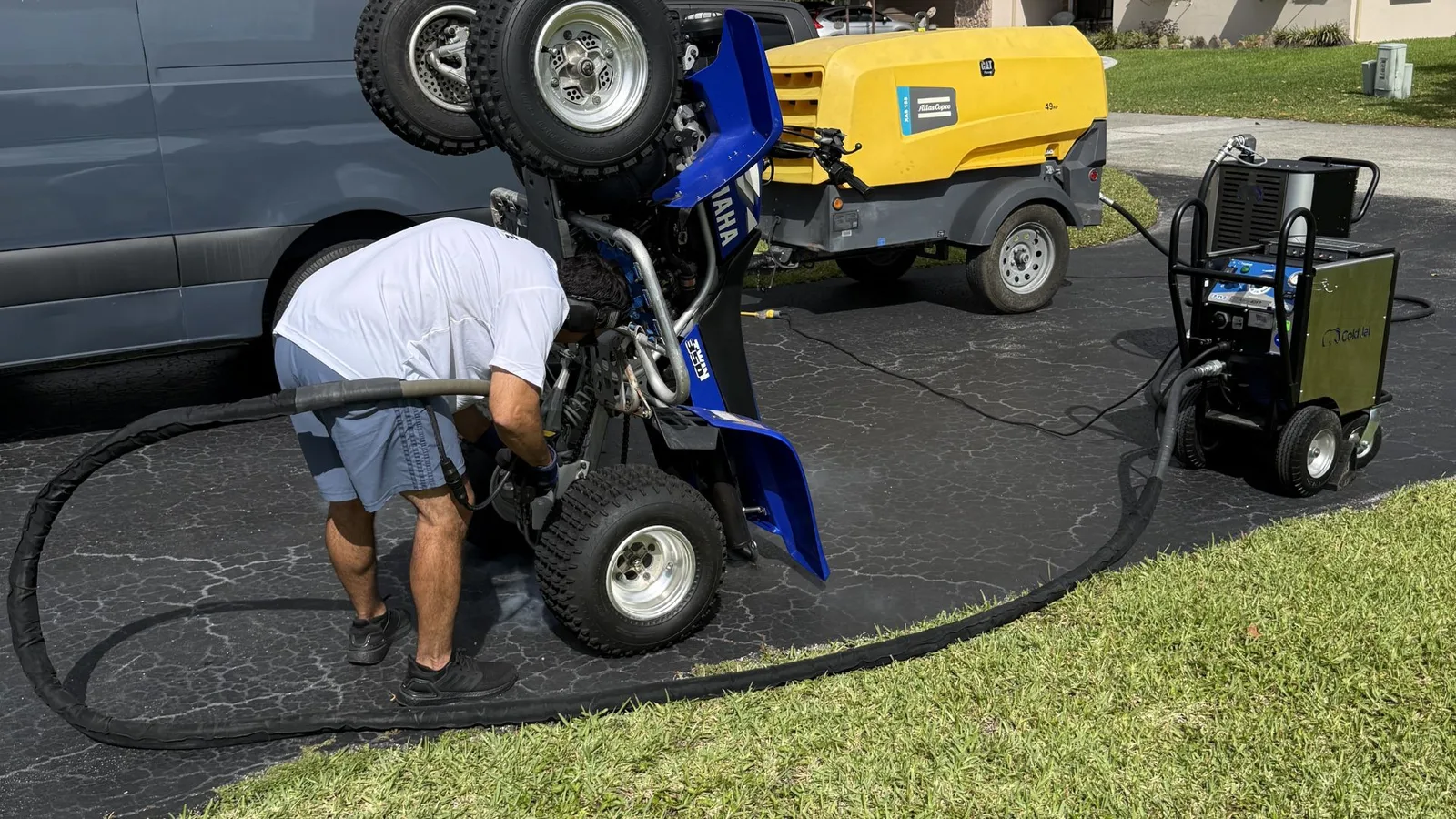
The method
Why dry ice and not the alternatives
- Non-abrasive
There is no grit in the stream, only ice that turns to gas on impact. That is why finishes and machined surfaces come through without scratching.
- Low moisture
Because no water goes on, none has to be drained, wiped or blown out of the equipment afterward.
- No secondary waste
Walnut shell and soda end up in every crack of a machine. Dry ice leaves no media behind, only the removed deposit.
- Often no teardown
Leave it bolted together. Most of what we clean stays assembled, and skipping the teardown is usually worth more than the cleaning itself.
More energy work
Related jobs we get called for
Questions we get asked first
Will it damage the surface underneath?
Not on the vast majority of surfaces. The cleaning comes from the cold breaking the bond, with nothing scraping at the part. Soft or older finishes get a test spot before we commit.
Do you have to take the equipment apart for oil & gas equipment?
Often you can leave it as it is. We look at the photos, work out what blocks the nozzle, and only ask for something to come apart if there is no other way in.
How much mess does it make?
Less than you would think. There is no water, so there is no runoff, and no media, so there is nothing to recover except the dirt.
Do you come to us?
Every job is on site. Your car can stay in your garage and your boat at the dock while we work. We cover South Florida, from Miami out to about a hundred miles.
What does a job cost?
The figure is tied to the work itself, so we price it once we know what it is. Keep in mind the bigger saving is often the teardown you no longer pay for. Tell us about the job and we will put a real number on it.
How soon can you look at it?
Pictures get you an answer fastest. A few clear shots of the equipment and the buildup usually tell us enough to talk timing on the first call, before anyone drives out.
The comparison
The other ways to do this
- Media blasting
Abrasive by definition. Anything with a tolerance or a finish worth keeping comes out changed.
- Pressure washing
Forces water where water should not go, looms, bearings, seams, and then the job stops while it dries.
- Solvent and degreaser
It dissolves the deposit and often the finish underneath, then leaves a film behind either way.
- Hand scraping
Labor-intensive and uneven, and whatever you scrape with eventually marks what you are scraping.
- Dry ice
It is the only one on this list where the media stops existing the moment it has worked.
What comes off
What comes off, and why
The rule of thumb is simple. If something is stuck on top of the material rather than being the material, dry ice has a good chance of lifting it. These are the deposits we get called about most.
- Paint and coatings
Removed selectively where the substrate underneath has to survive, which rules out most abrasive approaches.
- Salt and corrosion product
A constant in South Florida. Removing it without stripping the protective finish is the whole trick.
- Ink and printing residue
Dried ink on precision roller faces, cleaned without altering the cell structure that does the work.
- Food residue
Carbonized product build-up in a plant where neither standing water nor a chemical film is acceptable.
- Grease and oil
Machinery runs on lubricant, and the overspray collects lint and metal fines around every bearing and housing. The ice takes the film and the dirt stuck in it together.
- Carbon and soot
Heat-bonded black deposit. Because heat put it there, a sudden cold front is what breaks its grip.
- Adhesive and sealant
Cured sealant, old gasket, tape glue and sound deadening, the residue left when something was removed but its bond was not.
How a job runs
Nothing about this should be a surprise
Nobody should have to guess what they booked. This is every stage of a job in the order it happens.
- You look before we pack up
Inspect it with the rig still set up. Anything you are not happy with gets another go before we leave.
- You describe the job
What it is, what is on it and whether it can stop. If the answer is that dry ice is wrong for it, you get that answer first, not last.
- We look at access and containment
Siting the compressor, masking what must not be touched, and catching what comes off, settled before the first pellet.
- We test a small area
A factory finish, a repaint and bare steel can all sit on the same piece of equipment. Each one gets checked in a hidden spot first, because a setting that is safe on one can mark the next.
- We blast, then clean up
Once the blasting stops, the only thing on the floor is what came off your equipment. We sweep and collect it before we pack up, and that is included.
What to expect on site
Everything the rig needs arrives with it. No tap, no drain, no outlet.
Masking happens first. Whatever is adjacent and vulnerable gets covered before the hose is picked up.
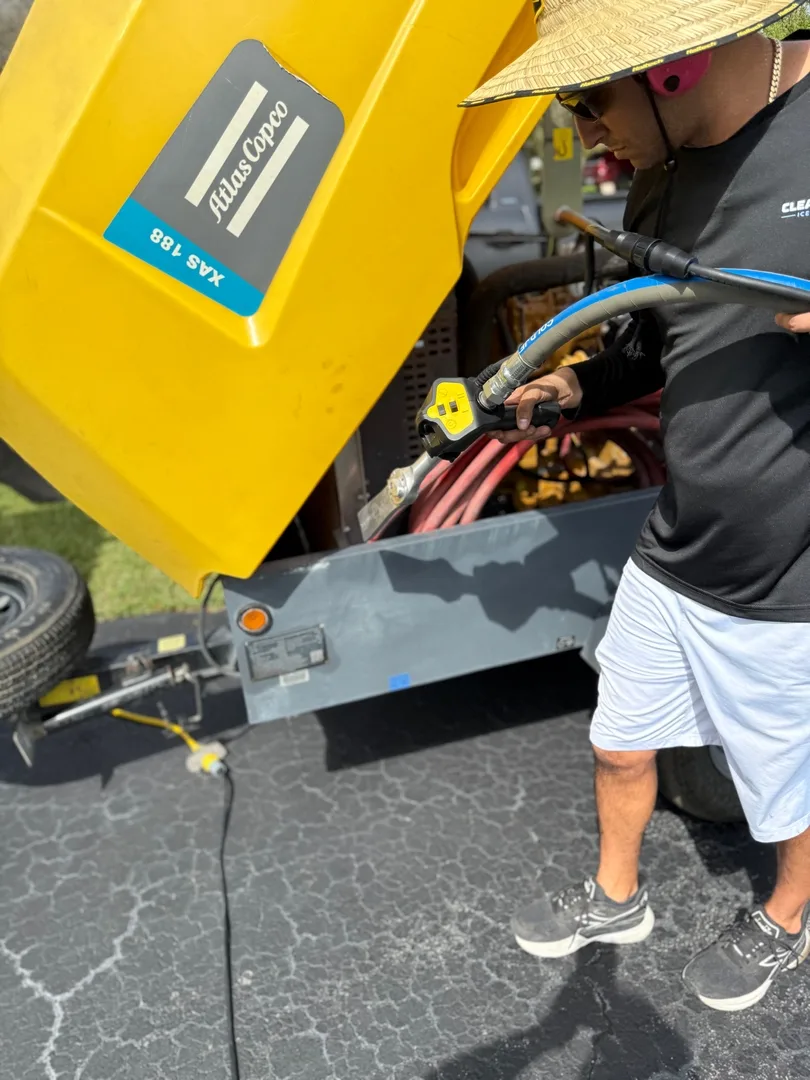
Solid carbon dioxide leaves no residue at all. What it does do is displace air, so an enclosed space gets ventilated as part of the job rather than as a precaution added later.
This is not a quiet method. Ear defenders are standard issue on site for anyone nearby.
Describe what you are dealing with.
Give us the location and a description of the problem. Photos speed things up. Giancarlo or Kenny handles every inquiry.