Home / Service areas / Miami-Dade County / Medley
Miami-Dade County · Florida
Medley dry ice blasting
Medley work comes to us the same way most of it does: something is coated in build-up and cannot be sanded, soaked or dissolved.
How we work in this area
The compressor runs off the truck, so there is no wash pad to find and no runoff to manage. So the equipment stays put. Everything that has to move arrives on the truck instead.
Solid to gas on impact. Nothing settles into a bearing, nothing runs toward a drain, and the only residue is what was already on the part.
What we clean
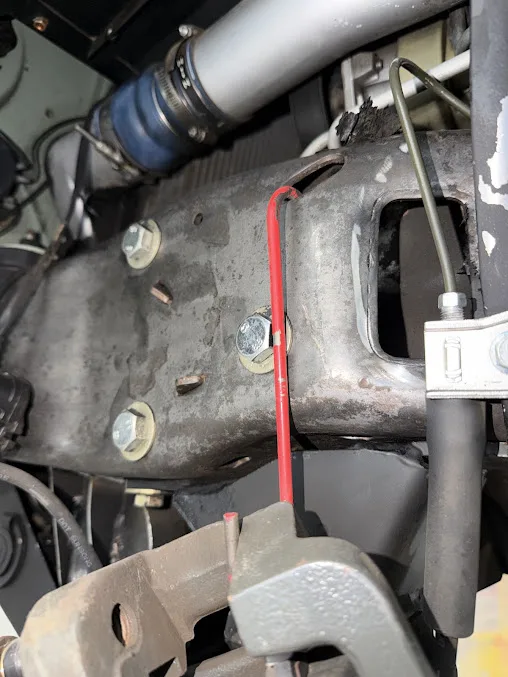
What we get called for in Medley
Nearby
Also working across Miami-Dade County
Questions from Medley
Will you work during a shutdown?
Most of the time. Shutdowns and after-hours work are normal for us; what matters is knowing the window early.
What kinds of jobs do you take here?
A mix, vehicle work, shop equipment, marine and light industrial. Same rig, different constraint each time.
Do you charge for the drive?
Sometimes, on the longer runs. Either way it is discussed before anyone commits.
How do I get started?
A short description and a couple of pictures is enough to start. An owner rings you back.
Do you cover Medley?
Yes. Medley is inside our regular working area, and the rig travels to the job rather than the other way round.
What do we have to provide?
Access to the equipment and somewhere to park the compressor. No water hookup, no drain and no wash bay.
Conditions around Medley
Humidity is the constant. Anything bare oxidizes faster than it would almost anywhere else. So the job is usually less about scrubbing harder and more about not making the underlying problem worse.
The mix here runs from vehicle work in driveways to production equipment inside industrial units. The setup is the same in all of them, because everything the job needs turns up on the van.
The pellet turns to gas, so nothing runs off toward a drain and nothing abrasive stays behind in a bearing. On a cramped Miami-Dade County site that usually decides it.
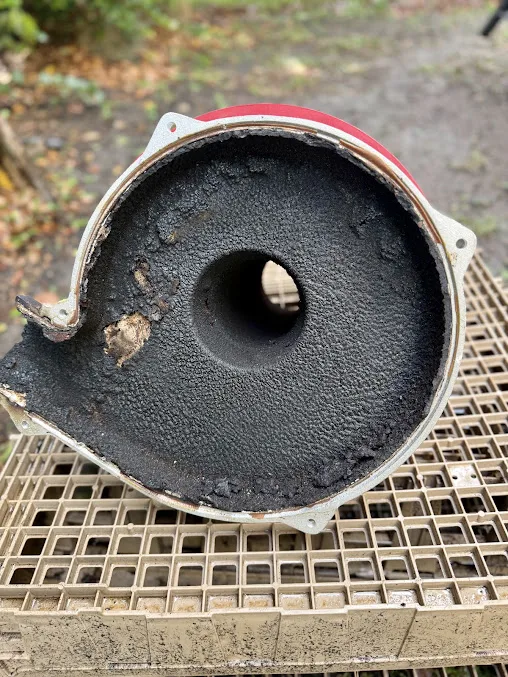
What comes off
What dry ice actually removes
The rule of thumb is simple: anything stuck on rather than built in. These are the deposits we see most.
- Paint and coatings
Removed selectively where the substrate underneath has to survive, which rules out most abrasive approaches.
- Salt and corrosion product
The year-round problem on the coast. The finish holding corrosion back has to survive the cleaning.
- Ink and printing residue
Dried ink and coating build-up on rollers and press components, where the surface texture is the product.
- Food residue
Carbonized product build-up in a plant where neither standing water nor a chemical film is acceptable.
- Grease and oil
The greasy base coat that traps grit and dust. It releases early and takes the loose material with it.
- Carbon and soot
Heat-bonded black deposit. Because heat put it there, a sudden cold front is what breaks its grip.
- Adhesive and sealant
The stubborn film under old tape, or the gasket that tore and left half of itself behind.
How a job runs
How a job actually runs
Most people have never watched dry ice blasting happen and are not sure what they are agreeing to. Here is the whole sequence, start to finish.
- We look at access and containment
Hose run, compressor position, what needs masking, and where the contaminant is collected. For food and electrical jobs the containment plan takes longer to settle than the blasting does.
- We test a small area
An out-of-sight patch comes first so pressure and pellet size are proven before anything that shows. Soft alloys, older paint and bare metal each want different numbers.
- We blast, then clean up
The ice is gone on impact. What is on the floor afterward came off your machine, and clearing it is ours to do.
- You look before we pack up
We would rather you find the missed spot while we are standing there than a week later. Another pass on the day is the cheapest fix available.
- You describe the job
What the equipment is, what is on it, where it lives, and whether it can be shut down. Photos tell us more than a paragraph. If dry ice is the wrong tool we say so on that call rather than after taking your money.
The comparison
How this compares to the usual methods
- Media blasting
Grit removes material to do its job, so a machined face or a plated part pays for the cleaning.
- Pressure washing
Pressure pushes moisture past seals and into connectors, and then you wait. Panels and motors rule it out.
- Solvent and degreaser
Softens the contaminant but leaves a film, fumes and a disposal problem, and attacks finishes you meant to keep.
- Hand scraping
Fine on a patch, hopeless on a machine, and the blade leaves its own evidence.
- Dry ice
Cold breaks the bond and the media vanishes. The substrate is untouched and there is no second mess to clean up.
What the job is like to stand next to
The rig needs compressed air, which the truck supplies. There is no hookup to find and nothing of yours to plug into.
Anything nearby that should not be touched gets masked before we start. That is quicker than explaining it afterward.
The media is solid CO2, nothing toxic and nothing left behind, but it pushes oxygen out of a closed room. Ventilation gets planned before the hose is connected.
Expect noise. Everybody inside the working area wears hearing protection, us included.
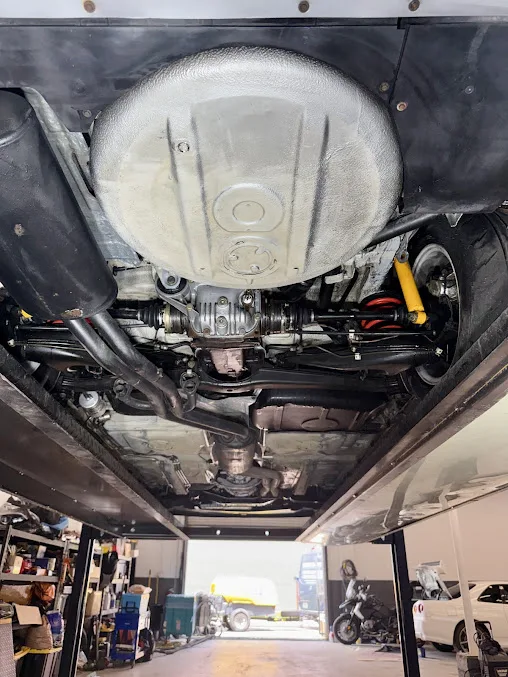
Describe what you are dealing with.
Give us the job, the address and a rough description, pictures if you have them. The call back comes from Giancarlo or Kenny directly.