Home / Services / Electrical / Busway
Electrical · Miami, FL
Busway Ice Blasting
Busway comes to us when the usual cleaning methods are too harsh for the part. We clean it without water, without chemicals and without anything abrasive touching the surface.
What builds up, and why it matters
On this kind of work the problem is conductive dust, carbon tracking, oil mist and contamination on insulators and bus. This is the work that makes the low-moisture part of the process matter. You cannot wash a panel. You cannot blast grit into a motor. Dry ice leaves no standing water in a harness, a winding or a cabinet.
Equipment is de-energized and the area ventilated before anything starts. The people who call us about busway are usually facility electricians and reliability engineers, and the thing they are actually worried about is a flashover, or moisture left where moisture should never be.
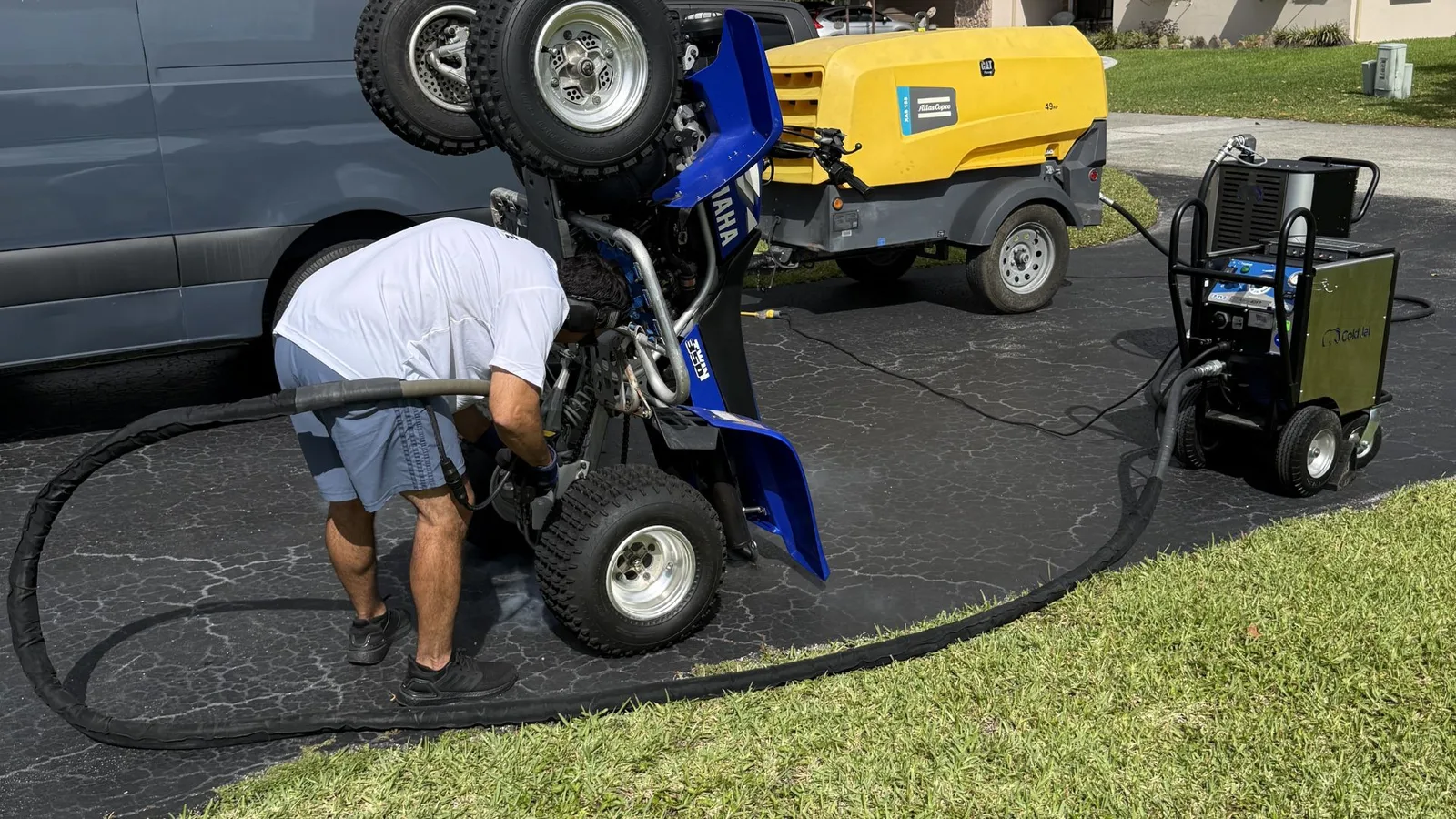
The method
Why dry ice and not the alternatives
- Non-abrasive
Sand and soda wear the surface down along with the dirt. Dry ice uses cold to break the bond, so the metal under it stays as it was.
- Low moisture
Nothing is left wet, so no water sits in seams, channels or behind covers. The equipment goes back into service dry.
- No secondary waste
The pellets turn to gas, so you are left with one thing to deal with: the dirt we took off.
- Often no teardown
Panels, guards and assemblies can often stay put. The nozzle reaches into recesses, so the hours normally spent stripping a machine down go back to production.
More electrical work
Related jobs we get called for
Questions we get asked first
Will it damage the surface underneath?
That is the whole reason people pick this method. Machined faces, plating, paint and gaskets generally come through untouched, and we prove the setting on a small test patch before working anything you will see.
Do you have to take the equipment apart for busway?
Minimal disassembly is one of the main reasons people call us. Most work is done in place, and the occasional panel we do remove is usually a quick job.
How much mess does it make?
Most of the mess is the buildup coming off in flakes and dust. We contain it while we work and clean it up before we leave.
Do you come to us?
We do. Everything runs out of our truck, so you never haul anything to us. We work from Miami across South Florida, out to about a hundred miles.
What does a job cost?
Most of the price is time on site, and time depends on how much buildup there is and how easy it is to reach. Send photos and a description and you get an actual number back, not a range pulled out of the air.
How soon can you look at it?
We would rather tell you no than promise a date we can’t keep. Give us your deadline when you first reach out, and you will get an honest yes or no on it.
The comparison
Why not just pressure wash it
- Pressure washing
Drives water into harnesses, bearings, panels and seams, then everything waits to dry. On electrical work it is simply not an option.
- Solvent and degreaser
Softens the contaminant but leaves a film, fumes and a disposal problem, and attacks finishes you meant to keep.
- Hand scraping
Fine on a patch, hopeless on a machine, and the blade leaves its own evidence.
- Media blasting
Effective and indiscriminate. On soft metal or a finished surface it does damage you then have to fix.
- Dry ice
The pellet is soft and the mechanism is temperature, not abrasion. It turns to gas on impact, so the only thing left to sweep up is what came off.
What comes off
What dry ice actually removes
The rule of thumb is simple: anything stuck on rather than built in. These are the deposits we see most.
- Salt and corrosion product
Salt deposit and the oxidation it starts. Anything abrasive removes the protection along with the salt.
- Ink and printing residue
Dried ink on precision roller faces, cleaned without altering the cell structure that does the work.
- Food residue
Carbonized product, fat, starch and sugar build-up on processing equipment, cleaned without chemicals touching a food contact surface.
- Grease and oil
On a motor or generator, oily dust packs into the cooling fins and around the housing. Ice takes it off without putting water anywhere near the electrical parts.
- Carbon and soot
Carbon on parts that run hot all day. It is bonded by heat, which is exactly why a blast of cold undoes it.
- Adhesive and sealant
Cured sealant, old gasket, tape glue and sound deadening, the residue left when something was removed but its bond was not.
- Resin and mold release
Production residue cured onto tooling. Solvent softens it and leaves its own film; the ice lifts it and takes nothing with it.
How a job runs
How a job actually runs
The process is short to explain. These are the stages, start to finish, so you know where we are at any point in the job.
- You look before we pack up
Walk it with us before the hose goes away. A second pass while the compressor is still running costs nothing; a return visit costs us both.
- You describe the job
Tell us the machine, the mess and the constraint. A couple of photos answers more than a long description, and if the honest answer is that something else suits it better, we say so.
- We look at access and containment
In a small enclosed bay, the question is mostly where the dust and grime will settle. We protect the floor and nearby surfaces, then point everything we remove toward one spot.
- We test a small area
Aluminum, cast iron and painted steel all want different settings, and guessing is how surfaces get marked. A small hidden test settles it before the real work starts.
- We blast, then clean up
The media disappears on contact; the contaminant does not. Gathering what came off is included, not a line added afterward.
What the job is like to stand next to
Bring us to the equipment and we handle the rest. The air supply is ours and it travels with us.
Masking happens first. Whatever is adjacent and vulnerable gets covered before the hose is picked up.
Carbon dioxide is what you breathe out, frozen solid. It is non-toxic and leaves no residue, but in an enclosed space it pushes out oxygen. So on indoor work we decide how air will move through the area before the rig starts.
This is not a quiet method. Ear defenders are standard issue on site for anyone nearby.
Tell us what needs cleaning.
Where is it, and how easy is it to get to? Add the equipment and the contaminant, and we have what we need to call you back.