Home / Service areas / Martin County / Jupiter Island
Martin County · Florida
Jupiter Island dry ice blasting
When we take a job in Jupiter Island, the rig comes to the machine rather than the other way round.
How we work in this area
The compressor runs off the truck, so there is no wash pad to find and no runoff to manage. So the equipment stays put. Everything that has to move arrives on the truck instead.
Nothing of the ice survives the blast. That removes the entire cleanup problem every other method creates, leaving only the deposit that came off the equipment.
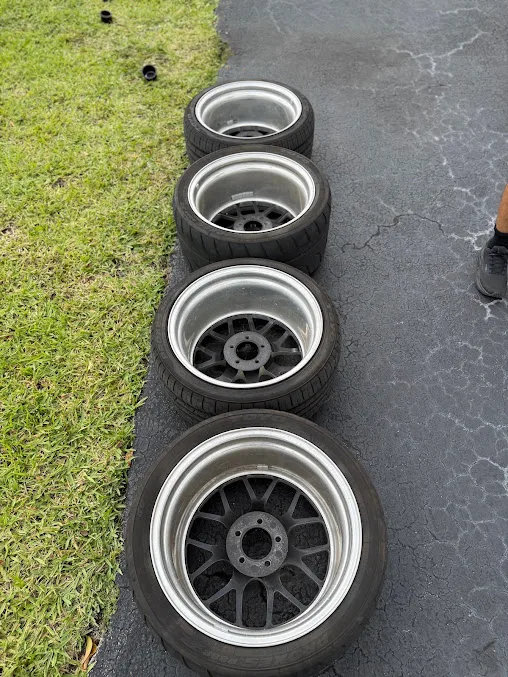
What we clean
What we get called for in Jupiter Island
Nearby
Also working across Martin County
Questions from Jupiter Island
What does the site need to have?
Space for the rig and a way to reach the machine. Everything else arrives with us.
Can you work around our schedule?
Nearly always. Give us the hours you can spare and we will say what genuinely fits inside them.
Who calls you around here?
It ranges from a single restoration project to a plant maintenance window. The method does not change much.
Do you charge for the drive?
It depends how far out the job is. We will be straight with you about it when you describe the work.
How do I get started?
Describe the job and send a photo or two. Giancarlo or Kenny will call you, not a scheduler.
Is Jupiter Island in your area?
We do. The whole point of a mobile setup is that Jupiter Island is no further than any other stop on the schedule.
Why Jupiter Island equipment ends up like this
The heat matters more than people expect: baked-on residue cures harder in a South Florida summer. That is why so much of the work is removing what has bonded to a surface without taking the surface with it.
Light industrial, automotive and marine make up most of what we are called out for. In every case the truck brings its own air and its own containment, so you are not adapting the site to suit the method.
The pellet turns to gas, so nothing runs off toward a drain and nothing abrasive stays behind in a bearing. On a cramped Martin County site that usually decides it.
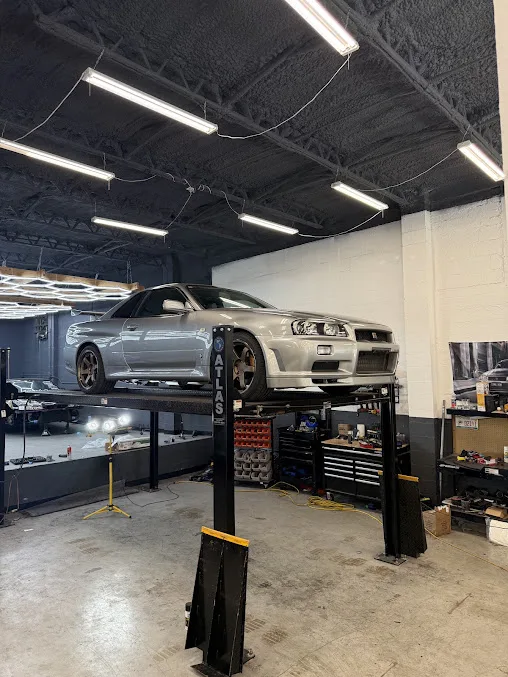
What comes off
What dry ice actually removes
The rule of thumb is simple: anything stuck on rather than built in. These are the deposits we see most.
- Resin and mold release
Production residue cured onto tooling. Solvent softens it and leaves its own film; the ice lifts it and takes nothing with it.
- Paint and coatings
Taken off in a controlled way when what is underneath matters more than speed.
- Salt and corrosion product
A constant in South Florida. Removing it without stripping the protective finish is the whole trick.
- Ink and printing residue
Dried ink on precision roller faces, cleaned without altering the cell structure that does the work.
- Food residue
Burnt-on product, fat and sugar on processing gear, with no chemical residue left on a contact surface.
- Grease and oil
The greasy base coat that traps grit and dust. It releases early and takes the loose material with it.
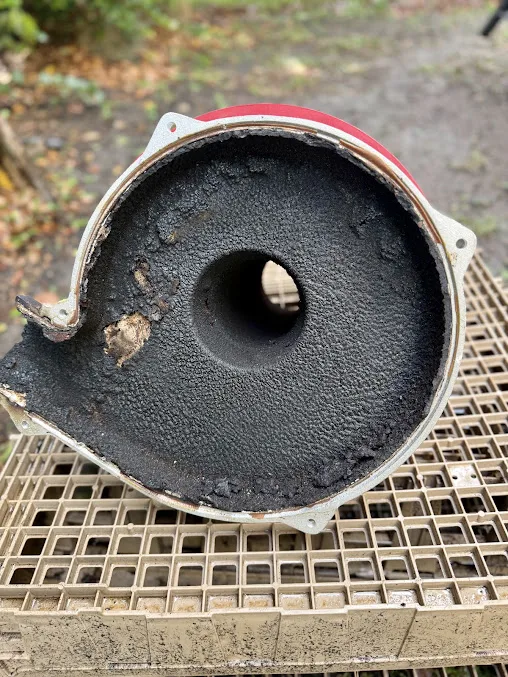
- Carbon and soot
Baked carbon on a manifold, oven or weld fixture. Thermal shock is exactly the wrong thing for the bond holding it on, which is why this works.
How a job runs
How a job actually runs
Most people have never watched dry ice blasting happen and are not sure what they are agreeing to. Here is the whole sequence, start to finish.
- You look before we pack up
The job is not finished because we say so. It is finished when you have looked at it.
- You describe the job
Tell us the machine, the mess and the constraint. A couple of photos answers more than a long description, and if the honest answer is that something else suits it better, we say so.
- We look at access and containment
Hose run, compressor position, what needs masking, and where the contaminant is collected. For food and electrical jobs the containment plan takes longer to settle than the blasting does.
- We test a small area
Settings get proven somewhere nobody looks before they get used somewhere everybody does. What is correct on cast iron will mark aluminum, so the test is not a formality.
- We blast, then clean up
The media disappears on contact; the contaminant does not. Gathering what came off is included, not a line added afterward.
The comparison
The other ways to do this
- Hand scraping
Labor-intensive and uneven, and whatever you scrape with eventually marks what you are scraping.
- Media blasting
Cuts into the substrate by design. Fine on structural steel, wrong on aluminum, plating, machined faces or anything with a tolerance.
- Pressure washing
Pressure pushes moisture past seals and into connectors, and then you wait. Panels and motors rule it out.
- Solvent and degreaser
Chemistry works, but you inherit ventilation, waste handling and a film on the surface.
- Dry ice
Thermal contraction cracks the bond between deposit and surface, then the pellet gasses off. Nothing abrasive, nothing wet, nothing left.
What the job is like to stand next to
Expect noise. Everybody inside the working area wears hearing protection, us included.
Surfaces come out cold. On some jobs that means waiting a few minutes before handling, and on others it means condensation as the part returns to ambient temperature.
Air comes from our own compressor. You do not need to provide power, water or a connection of any kind.
Anything nearby that should not be touched gets masked before we start. That is quicker than explaining it afterward.
Describe what you are dealing with.
Send the equipment, the location and a short description. Photos help. You will hear back from Giancarlo or Kenny, not a call center.