Home / Services / Data / Data Center Cooling Equipment
Data · Miami, FL
Data Center Cooling Equipment Ice Blasting
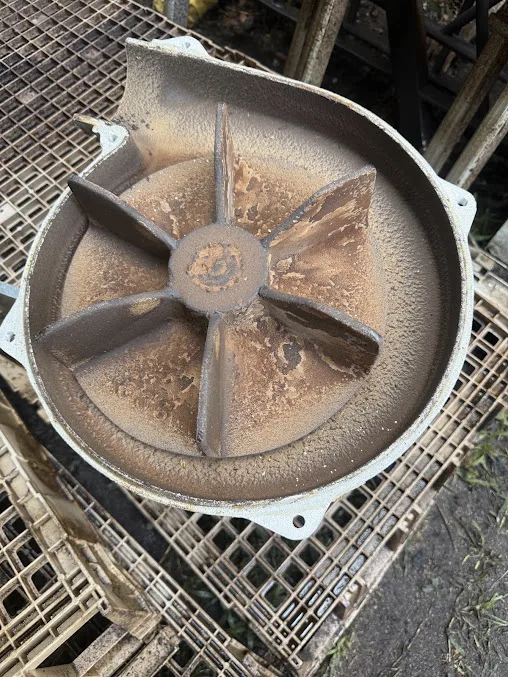
Data Center Cooling Equipment comes to us when the usual cleaning methods are too harsh for the part. We clean it without water, without chemicals and without anything abrasive touching the surface.
What builds up, and why it matters
On this kind of work the problem is fine dust and particulate loading on switchgear, busway, fans and mechanical plant. A data hall cannot take water and cannot take downtime. Cleaning has to be dry, contained, and finished inside the window you were given.
Work is planned around the maintenance window and the containment the facility requires. The people who call us about data center cooling equipment are usually critical facility and data center operations teams, and the thing they are actually worried about is particulate migrating somewhere it should not, or a window overrunning.
The method
Why dry ice and not the alternatives
- Non-abrasive
Chrome, anodizing and powder coat are the finishes people worry about most. On most of them the ice removes the dirt and leaves the coating.
- Low moisture
Moisture is where rust and electrical faults start. Cleaning with dry ice keeps water off the part from start to finish.
- No secondary waste
Abrasive media has to be contained, swept and thrown away. With dry ice there is nothing to recover except what came off your equipment.
- Often no teardown
Hard-to-reach spots get cleaned without pulling the equipment apart. That alone often matters more than how fast the blasting goes.
More data work
Related jobs we get called for
Questions we get asked first
Will it damage the surface underneath?
It should not. Unlike sand or grit, the pellet does not cut into the material. It shocks the deposit loose with cold and then turns to gas. On anything delicate or unusual we try a hidden area first.
Do you have to take the equipment apart for data center cooling equipment?
Sometimes a guard or a cover comes off so we can get the nozzle where it needs to go. Full teardown is rare. We will tell you which parts, if any, before the day of the job.
How much mess does it make?
Customers are usually surprised at how little there is. Without blasting media to recover, the pile at the end is small, and we take care of it.
Do you come to us?
Always. The truck carries the compressor and hose, so we come to wherever the equipment already sits. That covers shops, plants, homes and docks across South Florida, roughly a hundred miles out from Miami.
What does a job cost?
The figure is tied to the work itself, so we price it once we know what it is. Keep in mind the bigger saving is often the teardown you no longer pay for. Tell us about the job and we will put a real number on it.
How soon can you look at it?
There is no dispatcher in the middle. Giancarlo or Kenny reads what you send and calls you back, so the conversation about timing starts with the people doing the work.
The comparison
The other ways to do this
- Solvent and degreaser
Chemistry works, but you inherit ventilation, waste handling and a film on the surface.
- Hand scraping
Slow enough to be uneconomic on a machine, and the tool always leaves a trace.
- Media blasting
It takes the top off whatever it touches. That is the point on rusted plate and the problem everywhere else.
- Pressure washing
Forces water where water should not go, looms, bearings, seams, and then the job stops while it dries.
- Dry ice
Cold breaks the bond and the media vanishes. The substrate is untouched and there is no second mess to clean up.
What comes off
What this takes off
The method does not care much what the contaminant is, only that it sits on top of something. Here is the usual list.
- Ink and printing residue
Ink and coating on anilox and press rollers, surfaces where changing the texture changes the print.
- Food residue
Carbonized product, fat, starch and sugar build-up on processing equipment, cleaned without chemicals touching a food contact surface.
- Grease and oil
Oil film is the layer everything else sticks to. Remove it and half the job is already done.
- Carbon and soot
Smoke and soot residue on equipment that runs at temperature. The cold contracts the deposit and it lifts off without scratching what is underneath.
- Adhesive and sealant
Sealant squeezed out and cured where it was never supposed to set.
- Resin and mold release
Release agent and resin baked onto tooling. It comes off without the soaking time solvent needs, and without anything wet left behind.
- Paint and coatings
Selective removal, layer by layer, on parts where media blasting would cut into the substrate.
How a job runs
The sequence, start to finish
There is no mystery to how these jobs run, and no part of it we would rather you did not ask about.
- We look at access and containment
The layout decides the method more often than the contaminant does. We work out reach and containment before quoting anything.
- We test a small area
Before the hose points at anything you will see, we try it somewhere you won’t, like the underside of a bracket or the back of a panel. That patch tells us the pressure and pellet size the rest of the job runs at.
- We blast, then clean up
There is no spent media to recover, only the deposit, which we collect before packing up.
- You look before we pack up
Walk it with us before the hose goes away. A second pass while the compressor is still running costs nothing; a return visit costs us both.
- You describe the job
The machine, the deposit and the downtime you can afford. Those three things decide the whole job, and we would rather know all of them before quoting.
Before we turn the rig on
If the equipment needs to run right away, tell us. A cold surface can collect condensation, and we can plan around that before it goes back in service.
Everything the rig needs arrives with it. No tap, no drain, no outlet.
We cover what should not be hit before anything gets blasted. It takes minutes and saves arguments.
Tight, low spaces are where this matters most. The gas is heavier than air and settles low, so we keep air moving through the space the whole time we are working.
Send us the job.
Give us the location and a description of the problem. Photos speed things up. Giancarlo or Kenny handles every inquiry.