Home / Service areas / Lee County
10 communities · Florida
Dry ice blasting across Lee County
We are mobile, so the job site is wherever the machine is. The compressor, hose and operator come to you anywhere in Lee County.
Working in Lee County
Everything we do runs off our own compressor, so there is no wash pad to find and no drain to worry about. That matters in Lee County, where a lot of the work happens on a driveway, in a yard, or inside a shop that cannot be flooded.
South Florida salt air keeps corrosion moving all year, which is why so much of the work here is about removing what has bonded to a surface without taking the surface with it.

Where we work
Communities across Lee County
Questions we get from around here
How do I get started?
A short description and a couple of pictures is enough to start. An owner rings you back.
Will you travel to Lee County?
Yes, Lee County is well within range, and the compressor comes on the truck with everything else.
Do you need anything set up before you arrive?
Space for the rig and a way to reach the machine. Everything else arrives with us.
Can you come outside business hours?
Yes, within reason. Planned outages are easiest because everybody already knows the window.
What do most jobs look like?
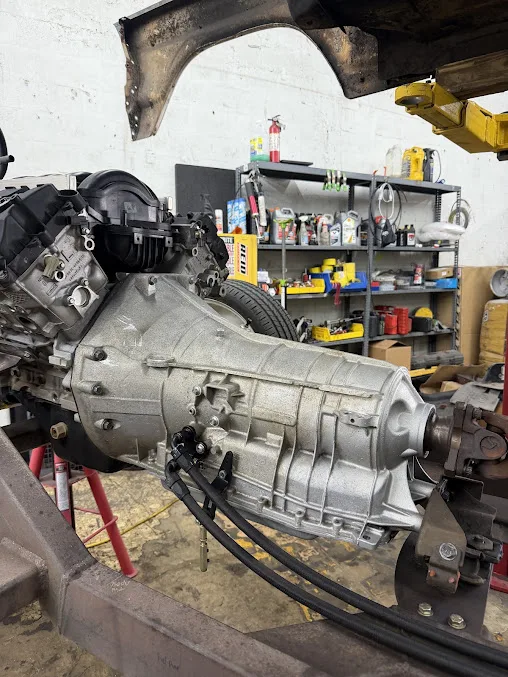
Everything from an engine bay in a driveway to a production line at shutdown. The process is the same, pointed at a different problem.
Is there a travel charge?
Sometimes, on the longer runs. Either way it is discussed before anyone commits.
What comes off
The deposits we see most
Most calls involve one of the following. The common factor is a bond between two things that should not be bonded.
- Salt and corrosion product
The year-round problem on the coast. The finish holding corrosion back has to survive the cleaning.
- Ink and printing residue
Dried ink and coating build-up on rollers and press components, where the surface texture is the product.
- Food residue
Burnt-on product, fat and sugar on processing gear, with no chemical residue left on a contact surface.
- Grease and oil
The greasy base coat that traps grit and dust. It releases early and takes the loose material with it.
- Carbon and soot
The hard black crust on a housing, an oven or a weld cell. Bonded by heat, and the first thing to release under thermal shock.
- Adhesive and sealant
Sealant squeezed out and cured where it was never supposed to set.
- Resin and mold release
Production residue cured onto tooling. Solvent softens it and leaves its own film; the ice lifts it and takes nothing with it.
How a job runs
What happens once you call
If you have not seen this done before, the process is worth reading once. Nothing below is hidden in a footnote.
- We test a small area
An out-of-sight patch comes first so pressure and pellet size are proven before anything that shows. Soft alloys, older paint and bare metal each want different numbers.
- We blast, then clean up
The ice is gone on impact. What is on the floor afterward came off your machine, and clearing it is ours to do.
- You look before we pack up
A second pass while everything is still connected is free in every sense. A return trip is not.
- You describe the job
We start with what it is and what is on it. Whether it can come offline matters as much as the contaminant, and a wrong-tool answer is one we give up front rather than after the invoice.
- We look at access and containment
Where the compressor sits, how far the hose has to reach, what gets masked or moved, and where the removed contaminant ends up. On food and electrical work this is most of the planning.
The comparison
Why not just pressure wash it
- Pressure washing
Water gets into everything and has to come out again before the equipment runs. Around electrics it is off the table entirely.
- Solvent and degreaser
It loosens the mess and leaves its own behind, along with fumes and something to dispose of.
- Hand scraping
Slow, inconsistent, and the tool marks the surface. Fine for a small area, unworkable across a machine.
- Media blasting
Effective and indiscriminate. On soft metal or a finished surface it does damage you then have to fix.
- Dry ice
Thermal shock breaks the bond. The pellet sublimates, so nothing abrasive touches the part and nothing is left to collect but the contaminant.
Why us
How we do business
- Firefighter owned and operated
Giancarlo and Kenny both came out of the fire service, and the discipline that job demands is the discipline this one gets.
- You speak to an owner
No dispatcher, no account manager. You talk to whoever is going to be holding the hose.
- We will tell you no
Not everything should be dry ice blasted. Being told that early is worth more than being sold the job.
- We test before we commit
Anything unusual gets an inconspicuous test area first. Painted parts, soft alloys and older finishes all behave differently.
- The rig comes to you
Shop, yard, driveway or dockside, the van carries the whole setup, so nothing has to be moved.
- We clean up after ourselves
Nothing of the blasting media remains, so the only cleanup is the dirt itself, and that is ours to handle.
What happens in your space
The part will be cold when we finish. Sometimes that means a short wait before handling; sometimes it means a film of condensation as it warms back up.
Air comes from our own compressor. You do not need to provide power, water or a connection of any kind.
Anything nearby that should not be touched gets masked before we start. That is quicker than explaining it afterward.
The media is solid CO2, nothing toxic and nothing left behind, but it pushes oxygen out of a closed room. Ventilation gets planned before the hose is connected.
Describe what you are dealing with.
Tell us what the machine is, where it is and what is on it. A photo or two speeds it up. One of the owners calls you back.