Home / Service areas / Lee County / Buckingham
Lee County · Florida
Buckingham dry ice blasting
Most of what we clean around Buckingham is equipment somebody cannot afford to damage.
How the work runs here
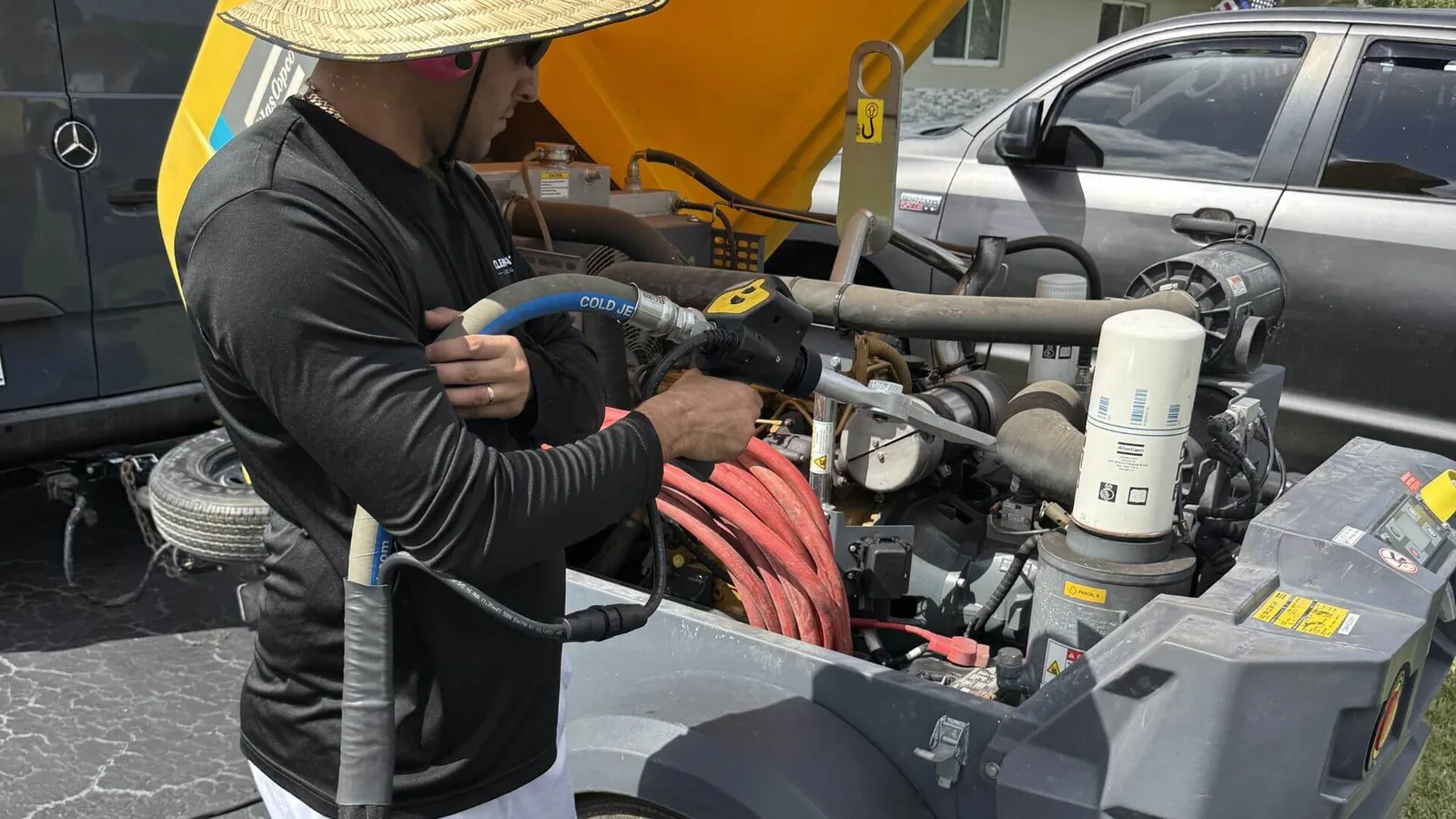
Everything arrives on the van: compressor, hose, operator and containment. It is also why nothing has to be crated up and driven across town, the work happens where the machine already sits in Buckingham.
Nothing of the ice survives the blast. That removes the entire cleanup problem every other method creates, leaving only the deposit that came off the equipment.

What we clean
Where this method earns its keep in Buckingham
Nearby
Also working across Lee County
Questions from Buckingham
What sort of work do you get called for?
A mix, vehicle work, shop equipment, marine and light industrial. Same rig, different constraint each time.
Does distance affect the price?
It depends how far out the job is. We will be straight with you about it when you describe the work.
What is the first step?
Send the equipment, the location and a short description with photos if you have them. One of the owners calls you back.
Do you actually come out to Buckingham?
Yes, Buckingham is well within range, and the compressor comes on the truck with everything else.
What do you need from us on site?
Access to the equipment and somewhere to park the compressor. No water hookup, no drain and no wash bay.
How flexible are the hours?
Generally yes. Weekend and overnight work is routine, and the limiting factor is usually noise, not us.
What the climate does here
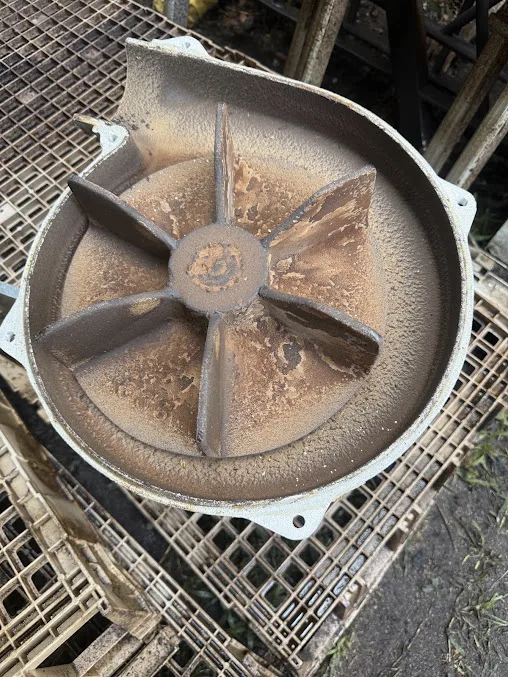
The heat matters more than people expect: baked-on residue cures harder in a South Florida summer. That is why so much of the work is removing what has bonded to a surface without taking the surface with it.
Light industrial, automotive and marine make up most of what we are called out for. The setup is the same in all of them, because everything the job needs turns up on the van.
With no slurry to contain and no media to recover, a confined Lee County site stops being a problem.
What comes off
The deposits we see most
If you are not sure what you are dealing with, start here. These are the deposits most of our jobs come down to.
- Food residue
Carbonized product, fat, starch and sugar build-up on processing equipment, cleaned without chemicals touching a food contact surface.
- Grease and oil
Old oil soaks into the dirt around a leak and hardens. Cold makes it brittle, which is why it releases where a rag only smears it around.
- Carbon and soot
Heat-bonded black deposit. Because heat put it there, a sudden cold front is what breaks its grip.
- Adhesive and sealant
The stubborn film under old tape, or the gasket that tore and left half of itself behind.
- Resin and mold release
The tacky, then hardened, layer that collects on molds. Cold makes it brittle enough to lift off, and the tool surface is untouched.
- Paint and coatings
Removed selectively where the substrate underneath has to survive, which rules out most abrasive approaches.
- Salt and corrosion product
The year-round problem on the coast. The finish holding corrosion back has to survive the cleaning.
How a job runs
What happens once you call
Here is what a job looks like from our side. Ask about any of it; none of it is a trade secret.
- We look at access and containment
If the equipment handles product, the question is what touches it. Those surfaces get extra attention in the plan, since what we remove must not end up anywhere near them.
- We test a small area
The test is short and it is never skipped. Getting the pressure and pellet size wrong on a visible face is the one mistake this method can make, and a hidden patch is how we keep from making it.
- We blast, then clean up
The media disappears on contact; the contaminant does not. Gathering what came off is included, not a line added afterward.
- You look before we pack up
Inspect it with the rig still set up. Anything you are not happy with gets another go before we leave.
- You describe the job
Some people call us after another method has already caused damage. Tell us the history of the part, because we would rather know about a soft spot or a past repair before we plan anything.
The comparison
What the alternatives actually do
- Hand scraping
Slow, inconsistent, and the tool marks the surface. Fine for a small area, unworkable across a machine.
- Media blasting
Effective and indiscriminate. On soft metal or a finished surface it does damage you then have to fix.
- Pressure washing
Drives water into harnesses, bearings, panels and seams, then everything waits to dry. On electrical work it is simply not an option.
- Solvent and degreaser
It dissolves the deposit and often the finish underneath, then leaves a film behind either way.
- Dry ice
Cold breaks the bond and the media vanishes. The substrate is untouched and there is no second mess to clean up.
What happens in your space
Everything the rig needs arrives with it. No tap, no drain, no outlet.
Masking happens first. Whatever is adjacent and vulnerable gets covered before the hose is picked up.
As a firefighter-owned company, we treat air as part of the job from the first minute. Dry ice is solid carbon dioxide, safe and residue-free, but it lowers oxygen in a confined room, so ventilation is arranged first.
If the job is somewhere people live or work close by, they may hear us. Let us know if there is a time of day that works better for them.
Send us the job.
Car or commercial, the first step is the same: tell us what it is and where. We take it from there.