Home / Service areas / Palm Beach County / South Palm Beach
Palm Beach County · Florida
South Palm Beach dry ice blasting
South Palm Beach calls tend to arrive with a constraint attached, which is exactly where this method earns its keep.
How the work runs here
The compressor runs off the truck, so there is no wash pad to find and no runoff to manage. It is also why nothing has to be crated up and driven across town, the work happens where the machine already sits in South Palm Beach.
Nothing of the ice survives the blast. That removes the entire cleanup problem every other method creates, leaving only the deposit that came off the equipment.
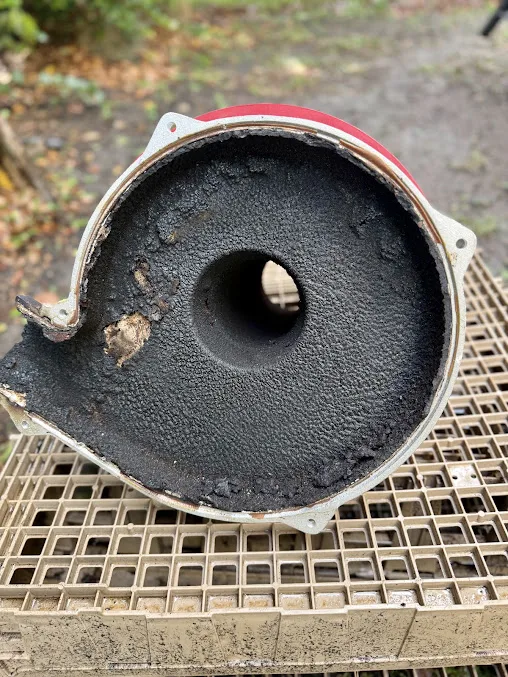
What we clean
Where this method earns its keep in South Palm Beach
Nearby
Also working across Palm Beach County
Questions from South Palm Beach
What does the site need to have?
Space for the rig and a way to reach the machine. Everything else arrives with us.
Can you work around our schedule?
Nearly always. Give us the hours you can spare and we will say what genuinely fits inside them.
Who calls you around here?
It ranges from a single restoration project to a plant maintenance window. The method does not change much.
Is there a travel charge?
Sometimes, on the longer runs. Either way it is discussed before anyone commits.
How do I get started?
A short description and a couple of pictures is enough to start. An owner rings you back.
Is South Palm Beach in your area?
We do. The whole point of a mobile setup is that South Palm Beach is no further than any other stop on the schedule.
Why South Palm Beach equipment ends up like this
Humidity is the constant. Anything bare oxidizes faster than it would almost anywhere else. So the job is usually less about scrubbing harder and more about not making the underlying problem worse.
The mix here runs from vehicle work in driveways to production equipment inside industrial units. Driveway or plant floor, the requirement is the same: room for the rig and access to the machine.
With no slurry to contain and no media to recover, a confined Palm Beach County site stops being a problem.
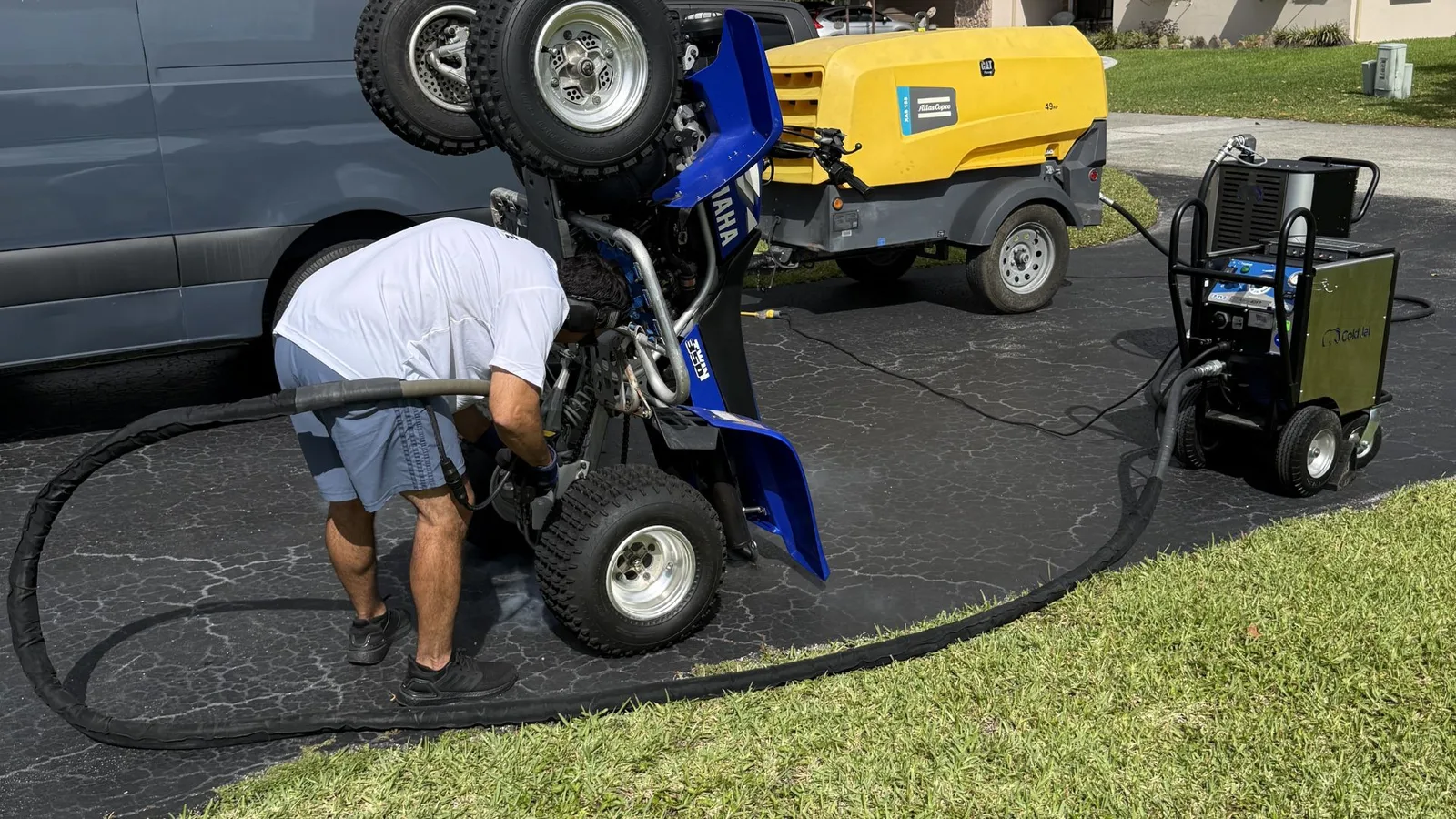
What comes off
The deposits we see most
Chances are your problem is on this list. Each item is a layer that attached itself where it was never meant to stay.
- Food residue
Carbonized product, fat, starch and sugar build-up on processing equipment, cleaned without chemicals touching a food contact surface.
- Grease and oil
The greasy base coat that traps grit and dust. It releases early and takes the loose material with it.
- Carbon and soot
Heat-bonded black deposit. Because heat put it there, a sudden cold front is what breaks its grip.
- Adhesive and sealant
Bonded material that outlived whatever it was bonding, usually harder to shift than the part it is on.
- Resin and mold release
A mold has to keep its exact dimensions. Ice removes the cured residue and leaves the face untouched, so parts keep coming out right.
- Paint and coatings
Taken off in a controlled way when what is underneath matters more than speed.
- Salt and corrosion product
Salt deposit and the oxidation it starts. Anything abrasive removes the protection along with the salt.
How a job runs
What happens once you call
Most people have never watched this done. The steps below are exactly what happens, with nothing left out.
- You describe the job
What it is, what is on it and whether it can stop. If the answer is that dry ice is wrong for it, you get that answer first, not last.
- We look at access and containment
Where anything sensitive sits nearby, containment comes first. It is shielded and the area is kept dry, which is one reason this method suits that kind of work.
- We test a small area
First pass goes somewhere out of sight. We look at it with you if you want, adjust if needed, and only then work the visible surfaces.
- We blast, then clean up
One mess instead of two: the pellet vanishes and we take away what it removed.
- You look before we pack up
If something needs another pass we do it then, on site, while the rig is still running. That is a better outcome for everyone than a callback.
The comparison
The other ways to do this
- Hand scraping
Labor-intensive and uneven, and whatever you scrape with eventually marks what you are scraping.
- Media blasting
It works by removing material, which is the problem. Acceptable on heavy steel, damaging on soft alloy, plating or a machined surface.
- Pressure washing
The water has to go somewhere, and on most equipment that somewhere is inside it.
- Solvent and degreaser
It loosens the mess and leaves its own behind, along with fumes and something to dispose of.
- Dry ice
Thermal contraction cracks the bond between deposit and surface, then the pellet gasses off. Nothing abrasive, nothing wet, nothing left.
What happens in your space
A driveway works as well as a plant floor. Everything the job needs, air included, arrives with us.
We cover what should not be hit before anything gets blasted. It takes minutes and saves arguments.
If the space has no windows and no door that opens to the outside, tell us before the visit. Airflow in a closed room is settled before the first pellet goes in.
Expect noise. Everybody inside the working area wears hearing protection, us included.
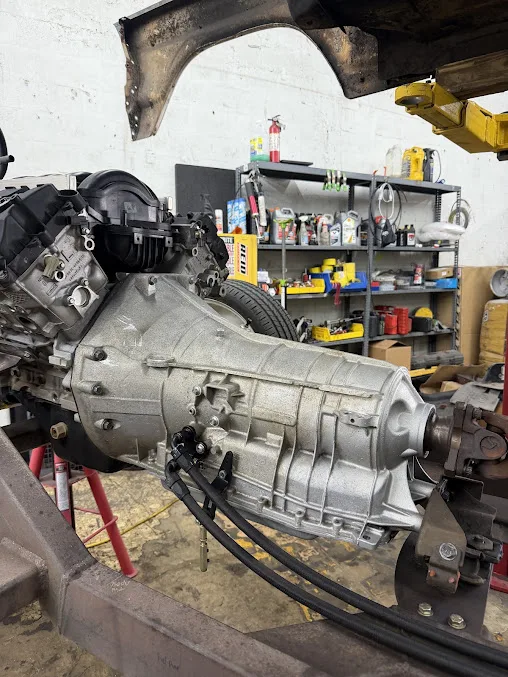
Tell us what needs cleaning.
Tell us what needs cleaning and where. A couple of pictures go a long way, and the person who answers is Giancarlo or Kenny, not an answering service.