Home / Service areas / Broward County / Southwest Ranches
Broward County · Florida
Southwest Ranches dry ice blasting
Most of what we clean around Southwest Ranches is equipment somebody cannot afford to damage.
How we work in this area
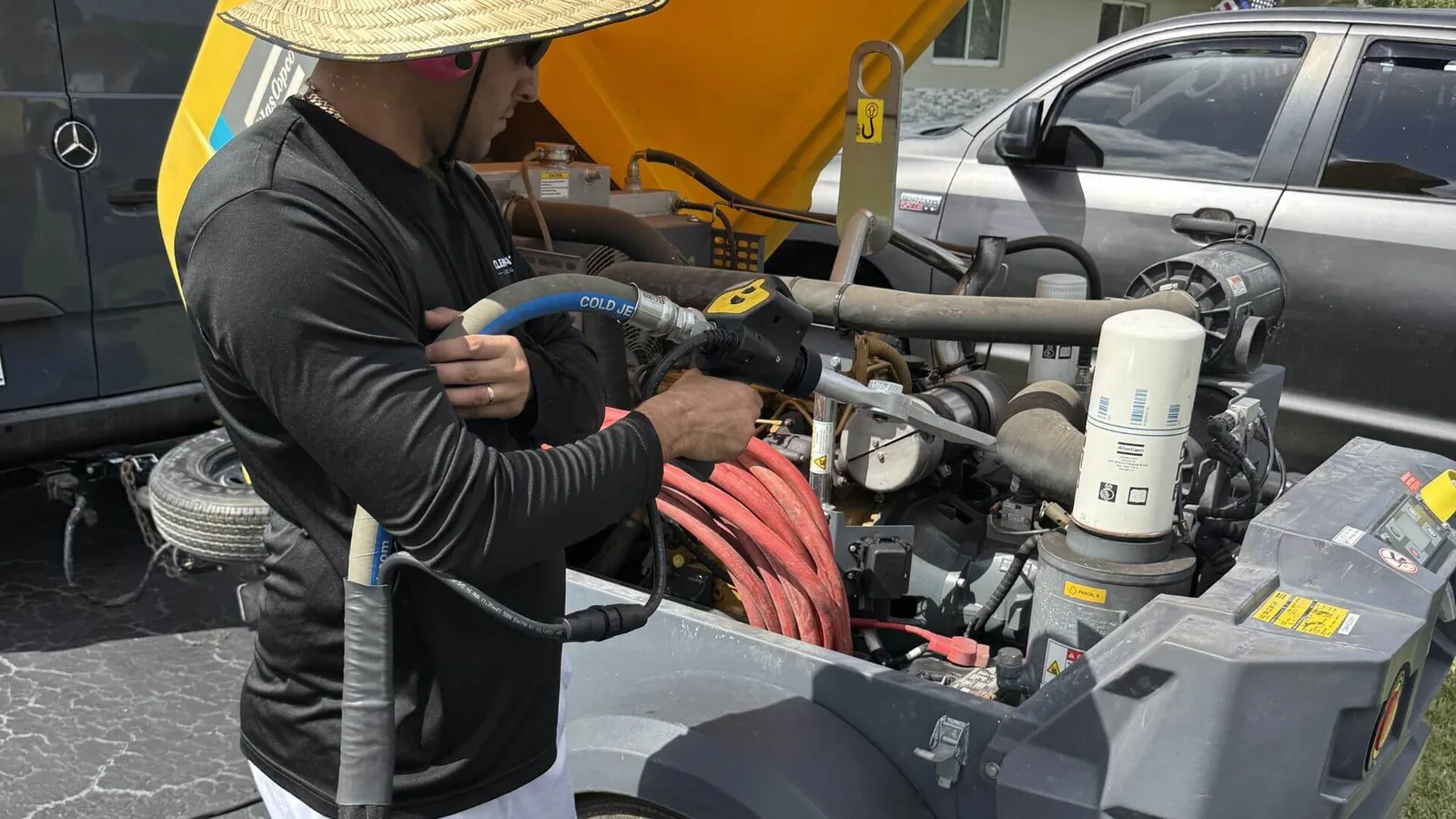
We work on driveways, in yards and inside shops that cannot take water on the floor. So the equipment stays put. Everything that has to move arrives on the truck instead.
Nothing of the ice survives the blast. That removes the entire cleanup problem every other method creates, leaving only the deposit that came off the equipment.
What we clean
What we get called for in Southwest Ranches
Nearby
Also working across Broward County
Questions from Southwest Ranches
Do you actually come out to Southwest Ranches?
We do. The whole point of a mobile setup is that Southwest Ranches is no further than any other stop on the schedule.
What do you need from us on site?
Space for the rig and a way to reach the machine. Everything else arrives with us.
How flexible are the hours?
Often yes, a lot of industrial work happens overnight or during a planned outage. Give us the window and we will say straight away whether it is realistic.
What sort of work do you get called for?
A mix, vehicle work, shop equipment, marine and light industrial. Same rig, different constraint each time.
Is there a travel charge?
Distance can factor in. You will hear about it up front, not on the invoice.
How do we book it in?
Send the equipment, the location and a short description with photos if you have them. One of the owners calls you back.
What the climate does here
Salt carries a long way inland here, and it keeps working on metal every day of the year. Which is exactly the situation where a non-abrasive, low-moisture method is worth the call.
Shops, marine yards, warehouses and home garages all end up with the same problem in different forms. Driveway or plant floor, the requirement is the same: room for the rig and access to the machine.
The pellet turns to gas, so nothing runs off toward a drain and nothing abrasive stays behind in a bearing. On a cramped Broward County site that usually decides it.
What comes off
What dry ice actually removes
The rule of thumb is simple: anything stuck on rather than built in. These are the deposits we see most.
- Adhesive and sealant
Sound deadening, tape residue, gasket material and sealant that has cured onto a face it was never meant to stay on.
- Resin and mold release
Release agent and resin build-up on tooling, where a solvent fix trades one residue for another.
- Paint and coatings
Taken off in a controlled way when what is underneath matters more than speed.
- Salt and corrosion product
The year-round problem on the coast. The finish holding corrosion back has to survive the cleaning.
- Ink and printing residue
Ink and coating on anilox and press rollers, surfaces where changing the texture changes the print.
- Food residue
Burnt-on product, fat and sugar on processing gear, with no chemical residue left on a contact surface.
- Grease and oil
Oil film is the layer everything else sticks to. Remove it and half the job is already done.
How a job runs
How a job actually runs
You should know what you are agreeing to before the truck shows up. This is exactly how we run a job.
- We look at access and containment
Siting the compressor, masking what must not be touched, and catching what comes off, settled before the first pellet.
- We test a small area
Sensitive equipment gets the same treatment as a show car: a hidden patch first, at low pressure, before the hose goes anywhere near what matters.
- We blast, then clean up
The ice is gone on impact. What is on the floor afterward came off your machine, and clearing it is ours to do.
- You look before we pack up
The job is not finished because we say so. It is finished when you have looked at it.
- You describe the job
Start with the machine and what is caked on it. A phone photo from a couple of angles saves a lot of back and forth. Tell us whether it can come offline and for how long, because that shapes the whole plan, and if another method suits it better you hear that first.
The comparison
What the alternatives actually do
- Solvent and degreaser
Softens the contaminant but leaves a film, fumes and a disposal problem, and attacks finishes you meant to keep.
- Hand scraping
Labor-intensive and uneven, and whatever you scrape with eventually marks what you are scraping.
- Media blasting
Cuts into the substrate by design. Fine on structural steel, wrong on aluminum, plating, machined faces or anything with a tolerance.
- Pressure washing
The water has to go somewhere, and on most equipment that somewhere is inside it.
- Dry ice
Thermal contraction cracks the bond between deposit and surface, then the pellet gasses off. Nothing abrasive, nothing wet, nothing left.
What the job is like to stand next to
Solid carbon dioxide leaves no residue at all. What it does do is displace air, so an enclosed space gets ventilated as part of the job rather than as a precaution added later.
Expect noise. Everybody inside the working area wears hearing protection, us included.
Some pieces are ready to handle within minutes. Others stay cold longer and sweat a little as they warm. Either way it is temporary and leaves nothing behind.
We are fully self-supplied. No outlet, no water and no air line from your building are needed.
Tell us what needs cleaning.
Car or commercial, the first step is the same: tell us what it is and where. We take it from there.