What builds up, and why it matters
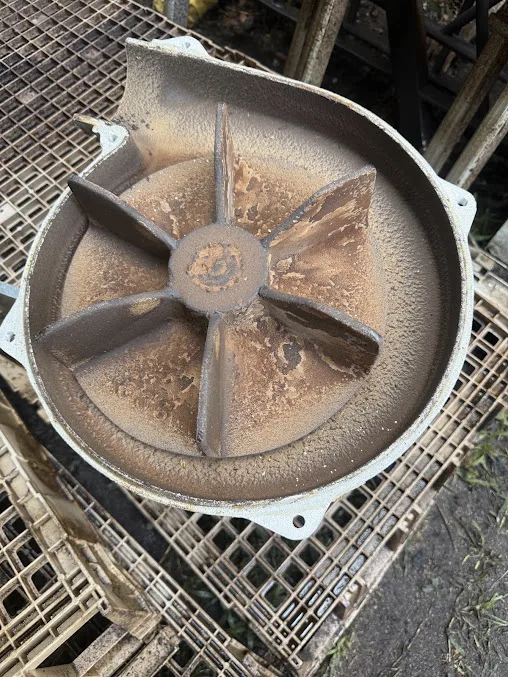
On this kind of work the problem is carbonized product, fat, starch, sugar residue and burnt-on build-up. Dry ice leaves no chemical residue on a food contact surface, and no water in a place where standing water is a sanitation problem. That is the whole reason it is used in food production.
Cleaning is usually scheduled around sanitation and production windows. The people who call us about packaging equipment are usually sanitation and plant managers, and the thing they are actually worried about is a chemical residue finding its way onto product.
The method
Why dry ice and not the alternatives
- Non-abrasive
The pellets are frozen carbon dioxide, softer than the metal they hit. They break up and vanish, taking the bond with them and leaving the surface intact.
- Low moisture
Bearings and wiring hate water. The ice turns to gas instead of liquid, so there is none to work its way inside.
- No secondary waste
No pile of sand in the corners afterward. The pellet is gone on impact, and only the original contaminant needs cleaning up.
- Often no teardown
Cleaning in place cuts the downtime. A machine that stays assembled is back in service sooner than one that had to be stripped and rebuilt.
More food work
Related jobs we get called for
Questions we get asked first
Will it damage the surface underneath?
Generally not. The pellet works by temperature rather than friction, so the surface underneath is left alone. If there is any doubt about a finish, we test it before anyone sees the result.
Do you have to take the equipment apart for packaging equipment?
Not often. Because nothing wet goes in, there is no reason to pull covers or remove parts to protect them from water. Where something does need to come off for access, we tell you ahead of time.
How much mess does it make?
Your floor stays dry and the corners stay free of grit. What does come off is collected by us before we pack up the rig.
Do you come to us?
Every job is on site. Your car can stay in your garage and your boat at the dock while we work. We cover South Florida, from Miami out to about a hundred miles.
What does a job cost?
It depends on the equipment, the contaminant and the access, so we will not throw a number at you over the phone without understanding the work. Describe the job and we will give you a real figure.
How soon can you look at it?
There is no dispatcher in the middle. Giancarlo or Kenny reads what you send and calls you back, so the conversation about timing starts with the people doing the work.
The comparison
The other ways to do this
- Media blasting
Effective and indiscriminate. On soft metal or a finished surface it does damage you then have to fix.
- Pressure washing
The water has to go somewhere, and on most equipment that somewhere is inside it.
- Solvent and degreaser
Trades the deposit for a residue, plus ventilation and waste to deal with, and it is hard on the finish.
- Hand scraping
Slow enough to be uneconomic on a machine, and the tool always leaves a trace.
- Dry ice
It is the only one on this list where the media stops existing the moment it has worked.
What comes off
The deposits we see most
If you are not sure what you are dealing with, start here. These are the deposits most of our jobs come down to.
- Grease and oil
Oil film is the layer everything else sticks to. Remove it and half the job is already done.
- Carbon and soot
Smoke and soot residue on equipment that runs at temperature. The cold contracts the deposit and it lifts off without scratching what is underneath.
- Adhesive and sealant
Sound deadening, tape residue, gasket material and sealant that has cured onto a face it was never meant to stay on.
- Resin and mold release
Molds can often be cleaned in place, without pulling the tool out of the press. Cured residue comes off and the surface stays true.
- Paint and coatings
Selective removal, layer by layer, on parts where media blasting would cut into the substrate.
- Salt and corrosion product
A constant in South Florida. Removing it without stripping the protective finish is the whole trick.
- Ink and printing residue
Ink and coating on anilox and press rollers, surfaces where changing the texture changes the print.
How a job runs
What happens once you call
Worth a quick read if dry ice blasting is new to you. Everything that happens on your job is covered below.
- We blast, then clean up
One mess instead of two: the pellet vanishes and we take away what it removed.
- You look before we pack up
Inspect it with the rig still set up. Anything you are not happy with gets another go before we leave.
- You describe the job
What it is, what is on it and whether it can stop. If the answer is that dry ice is wrong for it, you get that answer first, not last.
- We look at access and containment
Hose run, compressor position, what needs masking, and where the contaminant is collected. For food and electrical jobs the containment plan takes longer to settle than the blasting does.
- We test a small area
A test spot takes minutes and protects the whole job. It tells us how hard to push on this particular surface, which matters more than any rule of thumb.
What happens in your space
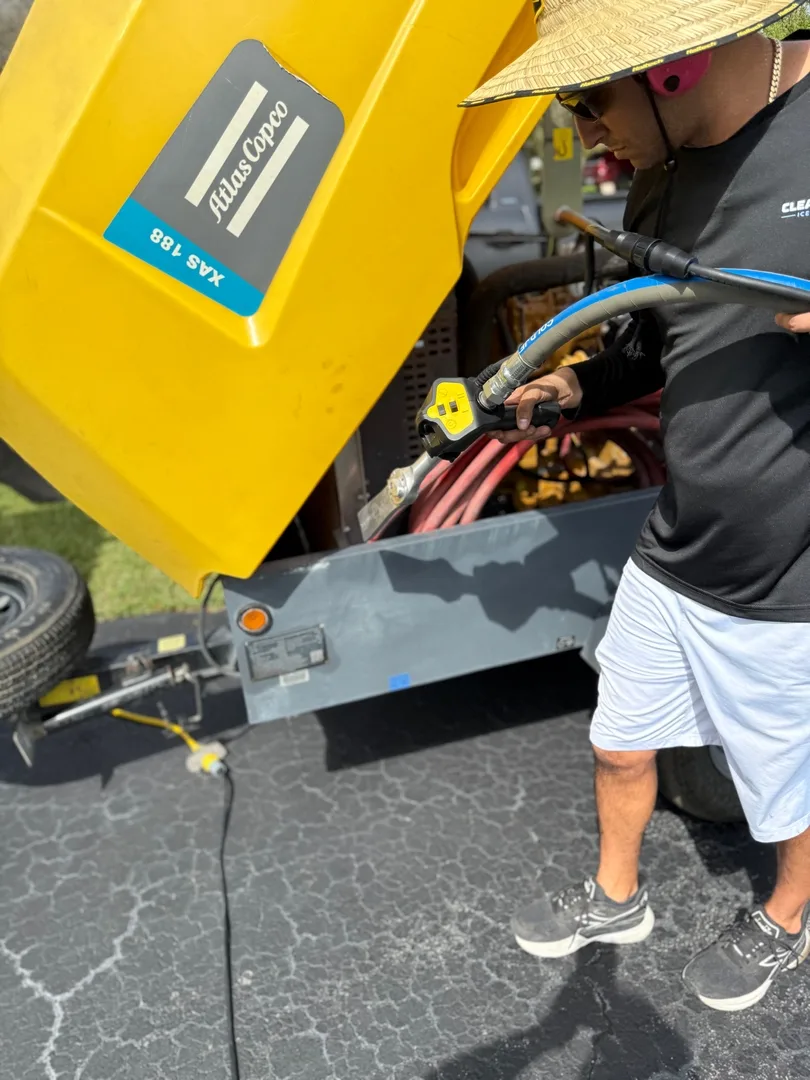
Expect noise. Everybody inside the working area wears hearing protection, us included.
Expect the surface to be cold to the touch right after. Give it a little time before bare hands go on it, especially on anything heavy.
Everything the rig needs arrives with it. No tap, no drain, no outlet.
Anything nearby that should not be touched gets masked before we start. That is quicker than explaining it afterward.
Send us the job.
Give us the location and a description of the problem. Photos speed things up. Giancarlo or Kenny handles every inquiry.