Home / Service areas / Miami-Dade County / Key Biscayne
Miami-Dade County · Florida
Key Biscayne dry ice blasting
Key Biscayne work comes to us the same way most of it does: something is coated in build-up and cannot be sanded, soaked or dissolved.
How we work in this area
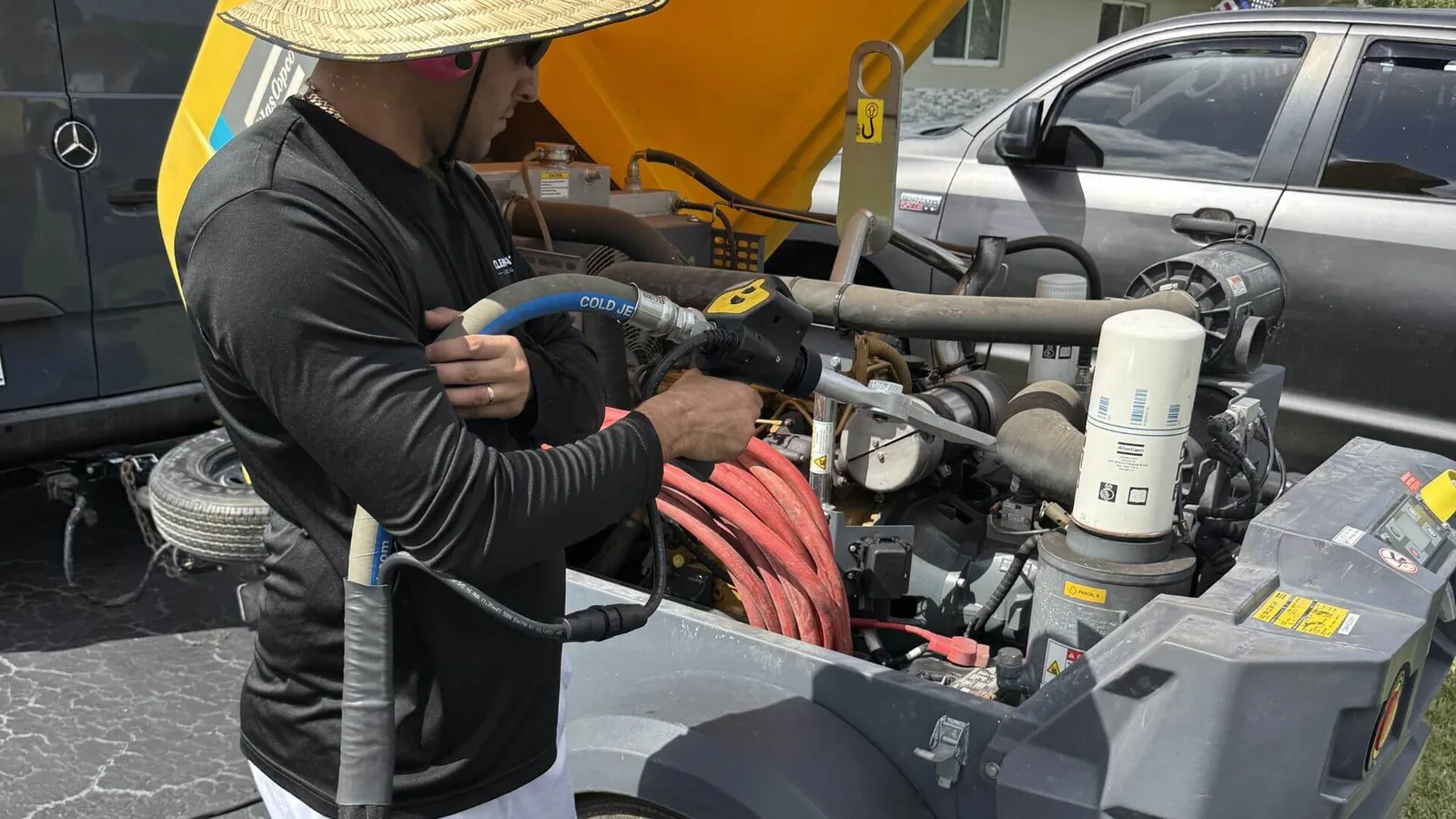
We work on driveways, in yards and inside shops that cannot take water on the floor. So the equipment stays put. Everything that has to move arrives on the truck instead.
Nothing of the ice survives the blast. That removes the entire cleanup problem every other method creates, leaving only the deposit that came off the equipment.

What we clean
What we get called for in Key Biscayne
Nearby
Also working across Miami-Dade County
Questions from Key Biscayne
Do you actually come out to Key Biscayne?
Yes. Key Biscayne is inside our regular working area, and the rig travels to the job rather than the other way round.
What do you need from us on site?
Access to the equipment and somewhere to park the compressor. No water hookup, no drain and no wash bay.
How flexible are the hours?
Yes, within reason. Planned outages are easiest because everybody already knows the window.
What sort of work do you get called for?
Everything from an engine bay in a driveway to a production line at shutdown. The process is the same, pointed at a different problem.
Is there a travel charge?
Distance can factor in. You will hear about it up front, not on the invoice.
What is the first step?
A short description and a couple of pictures is enough to start. An owner rings you back.
What the climate does here
The heat matters more than people expect: baked-on residue cures harder in a South Florida summer. That is why so much of the work is removing what has bonded to a surface without taking the surface with it.
Light industrial, automotive and marine make up most of what we are called out for. In every case the truck brings its own air and its own containment, so you are not adapting the site to suit the method.
The pellet turns to gas, so nothing runs off toward a drain and nothing abrasive stays behind in a bearing. On a cramped Miami-Dade County site that usually decides it.
What comes off
What dry ice actually removes
The rule of thumb is simple: anything stuck on rather than built in. These are the deposits we see most.
- Paint and coatings
Selective removal, layer by layer, on parts where media blasting would cut into the substrate.
- Salt and corrosion product
A constant in South Florida. Removing it without stripping the protective finish is the whole trick.
- Ink and printing residue
Dried ink on precision roller faces, cleaned without altering the cell structure that does the work.
- Food residue
Carbonized product build-up in a plant where neither standing water nor a chemical film is acceptable.
- Grease and oil
Oil film is the layer everything else sticks to. Remove it and half the job is already done.
- Carbon and soot
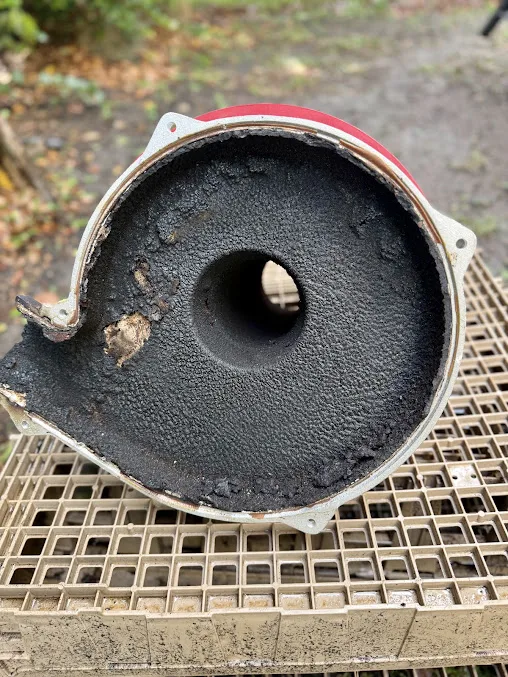
Carbon that has been cooked on over months of use. It turns brittle in the cold, so it cracks away from the steel instead of being ground off it.
- Adhesive and sealant
The stubborn film under old tape, or the gasket that tore and left half of itself behind.
How a job runs
How a job actually runs
Dry ice blasting looks dramatic on video, but the work itself follows a simple order. These are the steps, in sequence.
- We test a small area
Sensitive equipment gets the same treatment as a show car: a hidden patch first, at low pressure, before the hose goes anywhere near what matters.
- We blast, then clean up
The ice is gone on impact. What is on the floor afterward came off your machine, and clearing it is ours to do.
- You look before we pack up
Walk it with us before the hose goes away. A second pass while the compressor is still running costs nothing; a return visit costs us both.
- You describe the job
Send images if you can, they settle most of the questions. A wrong-tool verdict comes on that first call, not after the invoice.
- We look at access and containment
Tight sites need a plan for where people walk. We mark out a working zone so staff and visitors stay clear while the hose is live.
The comparison
What the alternatives actually do
- Media blasting
Abrasive by definition. Anything with a tolerance or a finish worth keeping comes out changed.
- Pressure washing
Forces water where water should not go, looms, bearings, seams, and then the job stops while it dries.
- Solvent and degreaser
Chemistry works, but you inherit ventilation, waste handling and a film on the surface.
- Hand scraping
Slow, inconsistent, and the tool marks the surface. Fine for a small area, unworkable across a machine.
- Dry ice
Cold breaks the bond and the media vanishes. The substrate is untouched and there is no second mess to clean up.
What the job is like to stand next to
Masking happens first. Whatever is adjacent and vulnerable gets covered before the hose is picked up.
As a firefighter-owned company, we treat air as part of the job from the first minute. Dry ice is solid carbon dioxide, safe and residue-free, but it lowers oxygen in a confined room, so ventilation is arranged first.
If you want to watch, you are welcome to, from a safe distance and with hearing protection on. It is loud enough that conversation waits until we stop.
Some pieces are ready to handle within minutes. Others stay cold longer and sweat a little as they warm. Either way it is temporary and leaves nothing behind.
Send us the job.
Car or commercial, the first step is the same: tell us what it is and where. We take it from there.