Home / Service areas / Miami-Dade County / Ives Estates
Miami-Dade County · Florida
Ives Estates dry ice blasting
Most of what we clean around Ives Estates is equipment somebody cannot afford to damage.
How we work in this area
Nothing about the setup needs a drain, a hookup or a bay. So the equipment stays put. Everything that has to move arrives on the truck instead.
Solid to gas on impact. Nothing settles into a bearing, nothing runs toward a drain, and the only residue is what was already on the part.
What we clean
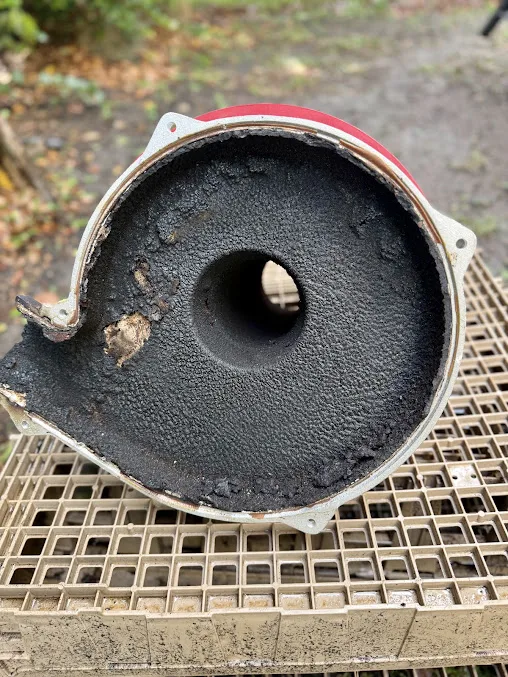
What we get called for in Ives Estates
Nearby
Also working across Miami-Dade County
Questions from Ives Estates
Can you come outside business hours?
Generally yes. Weekend and overnight work is routine, and the limiting factor is usually noise, not us.
What do most jobs look like?
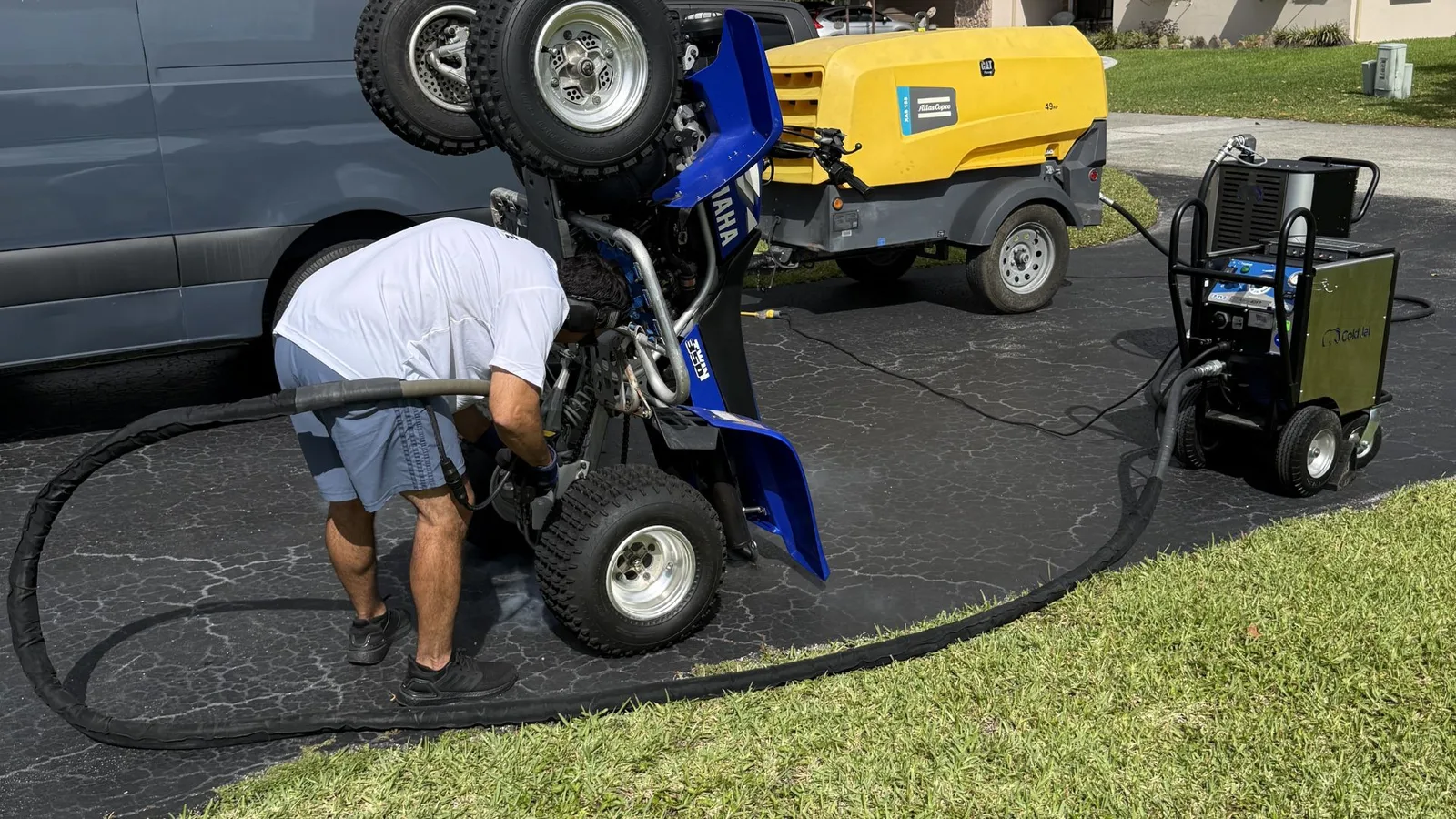
Everything from an engine bay in a driveway to a production line at shutdown. The process is the same, pointed at a different problem.
Does distance affect the price?
It depends how far out the job is. We will be straight with you about it when you describe the work.
How do I get started?
Send the equipment, the location and a short description with photos if you have them. One of the owners calls you back.
Will you travel to Ives Estates?
Yes, Ives Estates is well within range, and the compressor comes on the truck with everything else.
Do you need anything set up before you arrive?
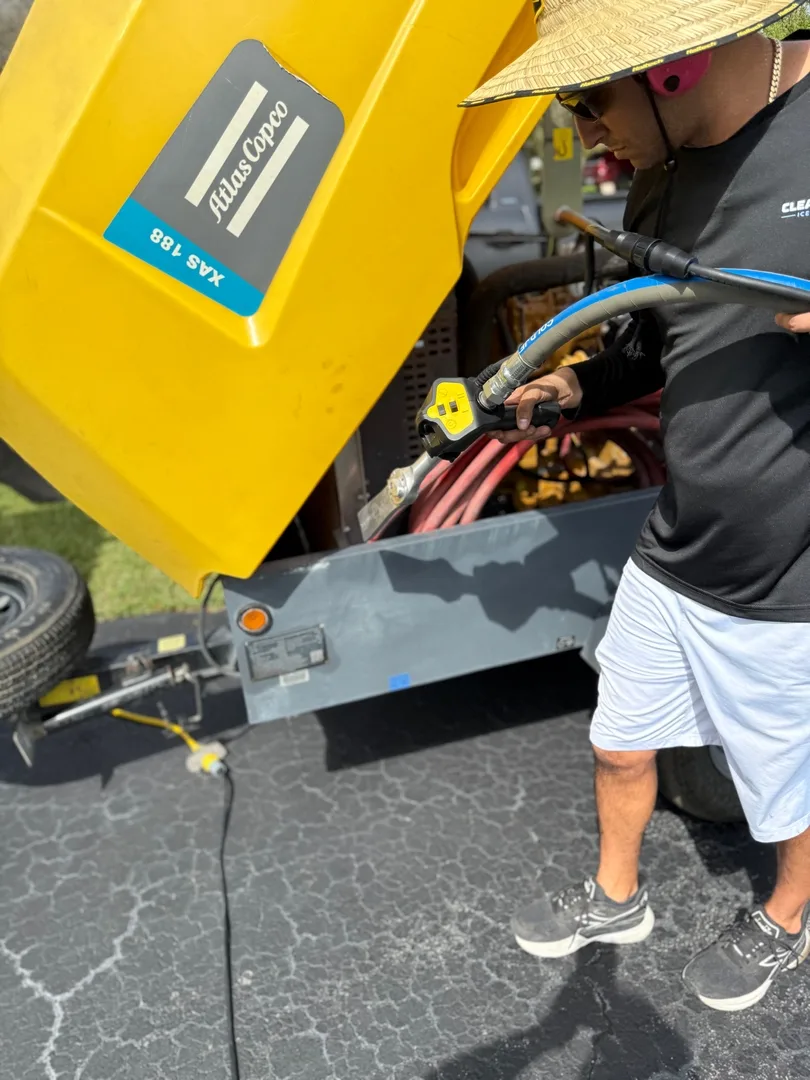
Access to the equipment and somewhere to park the compressor. No water hookup, no drain and no wash bay.
The local conditions
Afternoon storms mean equipment that lives outside is wet, then hot, then wet again. It is also why an abrasive method costs you twice: once in the cleaning, again in the finish you removed.
Residential garages and small shops sit alongside the commercial work on any given week. In every case the truck brings its own air and its own containment, so you are not adapting the site to suit the method.
The pellet turns to gas, so nothing runs off toward a drain and nothing abrasive stays behind in a bearing. On a cramped Miami-Dade County site that usually decides it.
What comes off
What dry ice actually removes
The rule of thumb is simple: anything stuck on rather than built in. These are the deposits we see most.
- Adhesive and sealant
Whatever the last repair left stuck to the mating face: gasket, sealant, deadener or adhesive.
- Resin and mold release
Mold release and resin that build up cycle after cycle. The cold lifts it cleanly, with no solvent film left behind to carry into the next part.
- Paint and coatings
Removed selectively where the substrate underneath has to survive, which rules out most abrasive approaches.
- Salt and corrosion product
Salt deposit and the oxidation it starts. Anything abrasive removes the protection along with the salt.
- Ink and printing residue
Dried ink and coating build-up on rollers and press components, where the surface texture is the product.
- Food residue
Burnt-on product, fat and sugar on processing gear, with no chemical residue left on a contact surface.
- Grease and oil
Old oil soaks into the dirt around a leak and hardens. Cold makes it brittle, which is why it releases where a rag only smears it around.
How a job runs
How a job actually runs
Most people have never watched dry ice blasting happen and are not sure what they are agreeing to. Here is the whole sequence, start to finish.
- We test a small area
The test is short and it is never skipped. Getting the pressure and pellet size wrong on a visible face is the one mistake this method can make, and a hidden patch is how we keep from making it.
- We blast, then clean up
The carbon, grease or paint we lift off comes down as loose debris. We gather it up at the end, and you do not pay extra for the cleanup.
- You look before we pack up
Walk it with us before the hose goes away. A second pass while the compressor is still running costs nothing; a return visit costs us both.
- You describe the job
Tell us the machine, the mess and the constraint. A couple of photos answers more than a long description, and if the honest answer is that something else suits it better, we say so.
- We look at access and containment
Access drives the plan: reach, siting, masking, and the route the removed material takes off the job. It is the part customers think about least and we think about most.
The comparison
Why not just pressure wash it
- Solvent and degreaser
Chemistry works, but you inherit ventilation, waste handling and a film on the surface.
- Hand scraping
Labor-intensive and uneven, and whatever you scrape with eventually marks what you are scraping.
- Media blasting
Effective and indiscriminate. On soft metal or a finished surface it does damage you then have to fix.
- Pressure washing
Water gets into everything and has to come out again before the equipment runs. Around electrics it is off the table entirely.
- Dry ice
Cold breaks the bond and the media vanishes. The substrate is untouched and there is no second mess to clean up.
What the job is like to stand next to
This is not a quiet method. Ear defenders are standard issue on site for anyone nearby.
Plan a short pause after we finish. The surface is cold, and depending on the part and the air around it, you may see condensation until it settles back to normal.
The rig is self-contained. Park us within reach of the job and we are ready to work without borrowing anything from your site.
We cover what should not be hit before anything gets blasted. It takes minutes and saves arguments.
Describe what you are dealing with.
Describe the job in plain words, no jargon needed. If dry ice is the wrong tool, you will hear that from us right away.