Home / Service areas / Palm Beach County / West Palm Beach
Palm Beach County · Florida
West Palm Beach dry ice blasting
West Palm Beach calls tend to arrive with a constraint attached, which is exactly where this method earns its keep.
How we work in this area
The compressor runs off the truck, so there is no wash pad to find and no runoff to manage. So the equipment stays put. Everything that has to move arrives on the truck instead.
The pellet turns straight to gas when it hits, which means no sand in the machine and no sludge on the floor. The only thing to collect is the contaminant itself, and that is included.
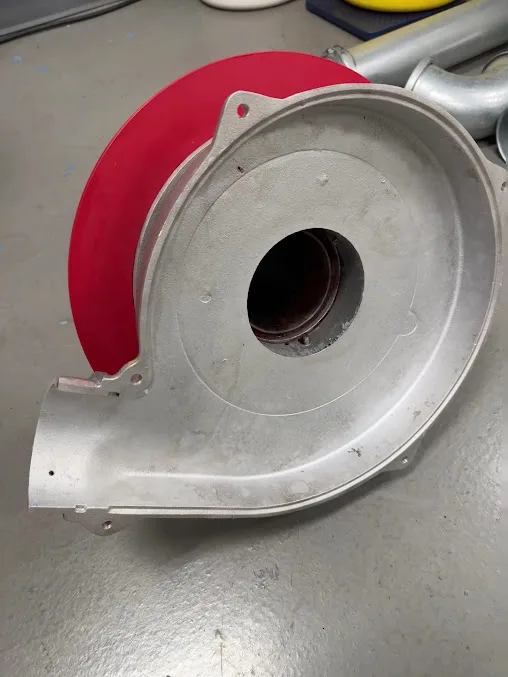
What we clean
What we get called for in West Palm Beach
Nearby
Also working across Palm Beach County
Questions from West Palm Beach
Do you cover West Palm Beach?
We do. The whole point of a mobile setup is that West Palm Beach is no further than any other stop on the schedule.
What do we have to provide?
Space for the rig and a way to reach the machine. Everything else arrives with us.
Will you work during a shutdown?
Nearly always. Give us the hours you can spare and we will say what genuinely fits inside them.
What kinds of jobs do you take here?
A mix, vehicle work, shop equipment, marine and light industrial. Same rig, different constraint each time.
Does distance affect the price?
Distance can factor in. You will hear about it up front, not on the invoice.
How do I get started?
Send the equipment, the location and a short description with photos if you have them. One of the owners calls you back.
Conditions around West Palm Beach
Humidity is the constant. Anything bare oxidizes faster than it would almost anywhere else. So the job is usually less about scrubbing harder and more about not making the underlying problem worse.
The mix here runs from vehicle work in driveways to production equipment inside industrial units. In every case the truck brings its own air and its own containment, so you are not adapting the site to suit the method.
The pellet turns to gas, so nothing runs off toward a drain and nothing abrasive stays behind in a bearing. On a cramped Palm Beach County site that usually decides it.
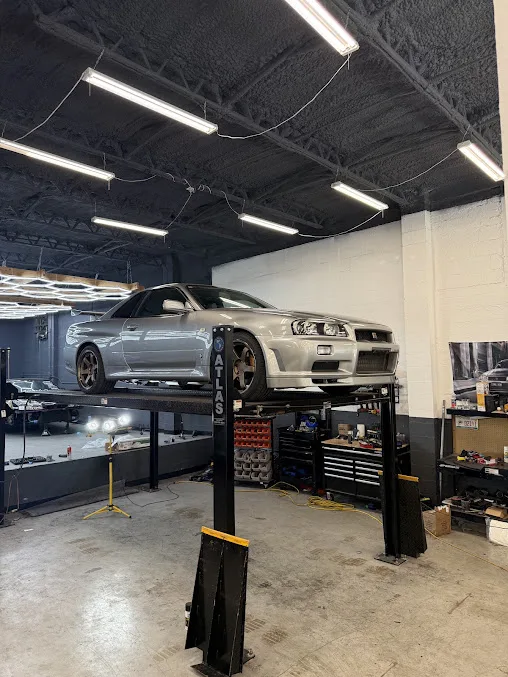
What comes off
What dry ice actually removes
The rule of thumb is simple: anything stuck on rather than built in. These are the deposits we see most.
- Adhesive and sealant
Cured sealant, old gasket, tape glue and sound deadening, the residue left when something was removed but its bond was not.
- Resin and mold release
Mold release and resin that build up cycle after cycle. The cold lifts it cleanly, with no solvent film left behind to carry into the next part.
- Paint and coatings
Removed selectively where the substrate underneath has to survive, which rules out most abrasive approaches.
- Salt and corrosion product
The year-round problem on the coast. The finish holding corrosion back has to survive the cleaning.
- Ink and printing residue
Ink and coating on anilox and press rollers, surfaces where changing the texture changes the print.
- Food residue
Carbonized product build-up in a plant where neither standing water nor a chemical film is acceptable.
- Grease and oil
The soft film that holds dust and swarf against metal. It is what makes a part feel dirty long after it looks clean, and it comes off first.
How a job runs
How a job actually runs
Dry ice blasting looks dramatic on video, but the work itself follows a simple order. These are the steps, in sequence.
- You look before we pack up
Inspect it with the rig still set up. Anything you are not happy with gets another go before we leave.
- You describe the job
Give us the basics in plain words: the equipment and what is stuck to it, and where it is. One of the owners reads it, and if the honest answer is that you need a different method, that is the answer you get. We would rather lose the job than sell you the wrong one.
- We look at access and containment
Siting the compressor, masking what must not be touched, and catching what comes off, settled before the first pellet.
- We test a small area
Before the hose points at anything you will see, we try it somewhere you won’t, like the underside of a bracket or the back of a panel. That patch tells us the pressure and pellet size the rest of the job runs at.
- We blast, then clean up
The ice is gone on impact. What is on the floor afterward came off your machine, and clearing it is ours to do.
The comparison
How this compares to the usual methods
- Solvent and degreaser
Good at softening, bad at leaving. There is always a residue and always a drum to get rid of.
- Hand scraping
Labor-intensive and uneven, and whatever you scrape with eventually marks what you are scraping.
- Media blasting
It takes the top off whatever it touches. That is the point on rusted plate and the problem everywhere else.
- Pressure washing
The water has to go somewhere, and on most equipment that somewhere is inside it.
- Dry ice
The pellet is soft and the mechanism is temperature, not abrasion. It turns to gas on impact, so the only thing left to sweep up is what came off.
What the job is like to stand next to
Masking happens first. Whatever is adjacent and vulnerable gets covered before the hose is picked up.
We look at the room before the truck is unloaded. Carbon dioxide is harmless in open air but pushes oxygen out of a tight space, so an enclosed job gets ventilation planned in.
If you want to watch, you are welcome to, from a safe distance and with hearing protection on. It is loud enough that conversation waits until we stop.
Expect the surface to be cold to the touch right after. Give it a little time before bare hands go on it, especially on anything heavy.

Send us the job.
Your message does not go into a queue. Giancarlo or Kenny reads it and calls back. Include the location and a photo or two if you can.