Home / Service areas / St. Lucie County / Hutchinson Island
St. Lucie County · Florida
Hutchinson Island dry ice blasting
Most of what we clean around Hutchinson Island is equipment somebody cannot afford to damage.
How the work runs here
Everything arrives on the van: compressor, hose, operator and containment. It is also why nothing has to be crated up and driven across town, the work happens where the machine already sits in Hutchinson Island.
The pellet turns straight to gas when it hits, which means no sand in the machine and no sludge on the floor. The only thing to collect is the contaminant itself, and that is included.
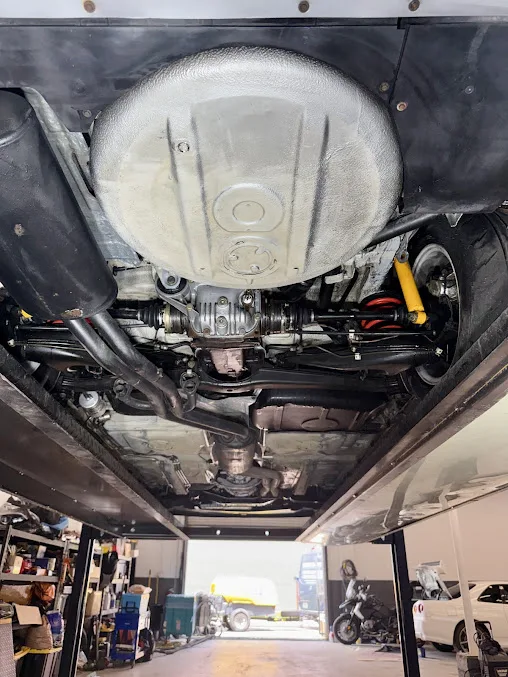
What we clean
Where this method earns its keep in Hutchinson Island
Nearby
Also working across St. Lucie County
Questions from Hutchinson Island
Will you travel to Hutchinson Island?
Yes. Hutchinson Island is inside our regular working area, and the rig travels to the job rather than the other way round.
Do you need anything set up before you arrive?
Space for the rig and a way to reach the machine. Everything else arrives with us.
Can you come outside business hours?
Often yes, a lot of industrial work happens overnight or during a planned outage. Give us the window and we will say straight away whether it is realistic.
What do most jobs look like?
Everything from an engine bay in a driveway to a production line at shutdown. The process is the same, pointed at a different problem.
Do you charge for the drive?
Sometimes, on the longer runs. Either way it is discussed before anyone commits.
How do we book it in?
Send the equipment, the location and a short description with photos if you have them. One of the owners calls you back.
The local conditions
The heat matters more than people expect: baked-on residue cures harder in a South Florida summer. That is why so much of the work is removing what has bonded to a surface without taking the surface with it.
Light industrial, automotive and marine make up most of what we are called out for. Driveway or plant floor, the requirement is the same: room for the rig and access to the machine.
With no slurry to contain and no media to recover, a confined St. Lucie County site stops being a problem.
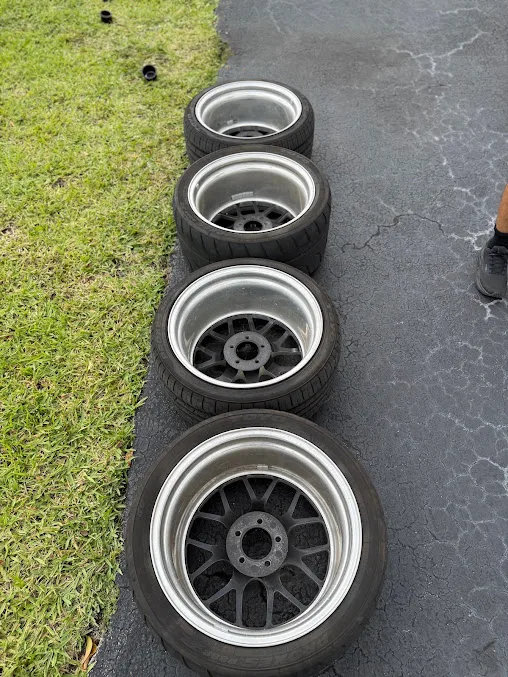
What comes off
The deposits we see most
Most calls involve one of the following. The common factor is a bond between two things that should not be bonded.
- Adhesive and sealant
The stubborn film under old tape, or the gasket that tore and left half of itself behind.
- Resin and mold release
Release agent and resin build-up on tooling, where a solvent fix trades one residue for another.
- Paint and coatings
Taken off in a controlled way when what is underneath matters more than speed.
- Salt and corrosion product
Salt deposit and the oxidation it starts. Anything abrasive removes the protection along with the salt.
- Ink and printing residue
Ink and coating on anilox and press rollers, surfaces where changing the texture changes the print.
- Food residue
Carbonized product, fat, starch and sugar build-up on processing equipment, cleaned without chemicals touching a food contact surface.
- Grease and oil
Oil film is the layer everything else sticks to. Remove it and half the job is already done.
How a job runs
What happens once you call
If you have not seen this done before, the process is worth reading once. Nothing below is hidden in a footnote.
- We look at access and containment
Hose run, compressor position, what needs masking, and where the contaminant is collected. For food and electrical jobs the containment plan takes longer to settle than the blasting does.
- We test a small area
Settings get proven somewhere nobody looks before they get used somewhere everybody does. What is correct on cast iron will mark aluminum, so the test is not a formality.
- We blast, then clean up
The ice is gone the moment it does its work. What stays behind is the grease or carbon that came off, and collecting that is part of the job, not an extra.
- You look before we pack up
We would rather you find the missed spot while we are standing there than a week later. Another pass on the day is the cheapest fix available.
- You describe the job
Tell us the machine, the mess and the constraint. A couple of photos answers more than a long description, and if the honest answer is that something else suits it better, we say so.
The comparison
Why not just pressure wash it
- Solvent and degreaser
It loosens the mess and leaves its own behind, along with fumes and something to dispose of.
- Hand scraping
Slow, inconsistent, and the tool marks the surface. Fine for a small area, unworkable across a machine.
- Media blasting
Abrasive by definition. Anything with a tolerance or a finish worth keeping comes out changed.
- Pressure washing
Water gets into everything and has to come out again before the equipment runs. Around electrics it is off the table entirely.
- Dry ice
Thermal contraction cracks the bond between deposit and surface, then the pellet gasses off. Nothing abrasive, nothing wet, nothing left.
What happens in your space
Air comes from our own compressor. You do not need to provide power, water or a connection of any kind.
Anything nearby that should not be touched gets masked before we start. That is quicker than explaining it afterward.
The media is solid CO2, nothing toxic and nothing left behind, but it pushes oxygen out of a closed room. Ventilation gets planned before the hose is connected.
Expect noise. Everybody inside the working area wears hearing protection, us included.

Describe what you are dealing with.
Tell us what the machine is, where it is and what is on it. A photo or two speeds it up. One of the owners calls you back.