Home / Service areas / Hendry County
5 communities · Florida
Dry ice blasting across Hendry County
We are mobile, so the job site is wherever the machine is. The compressor, hose and operator come to you anywhere in Hendry County.
Working in Hendry County
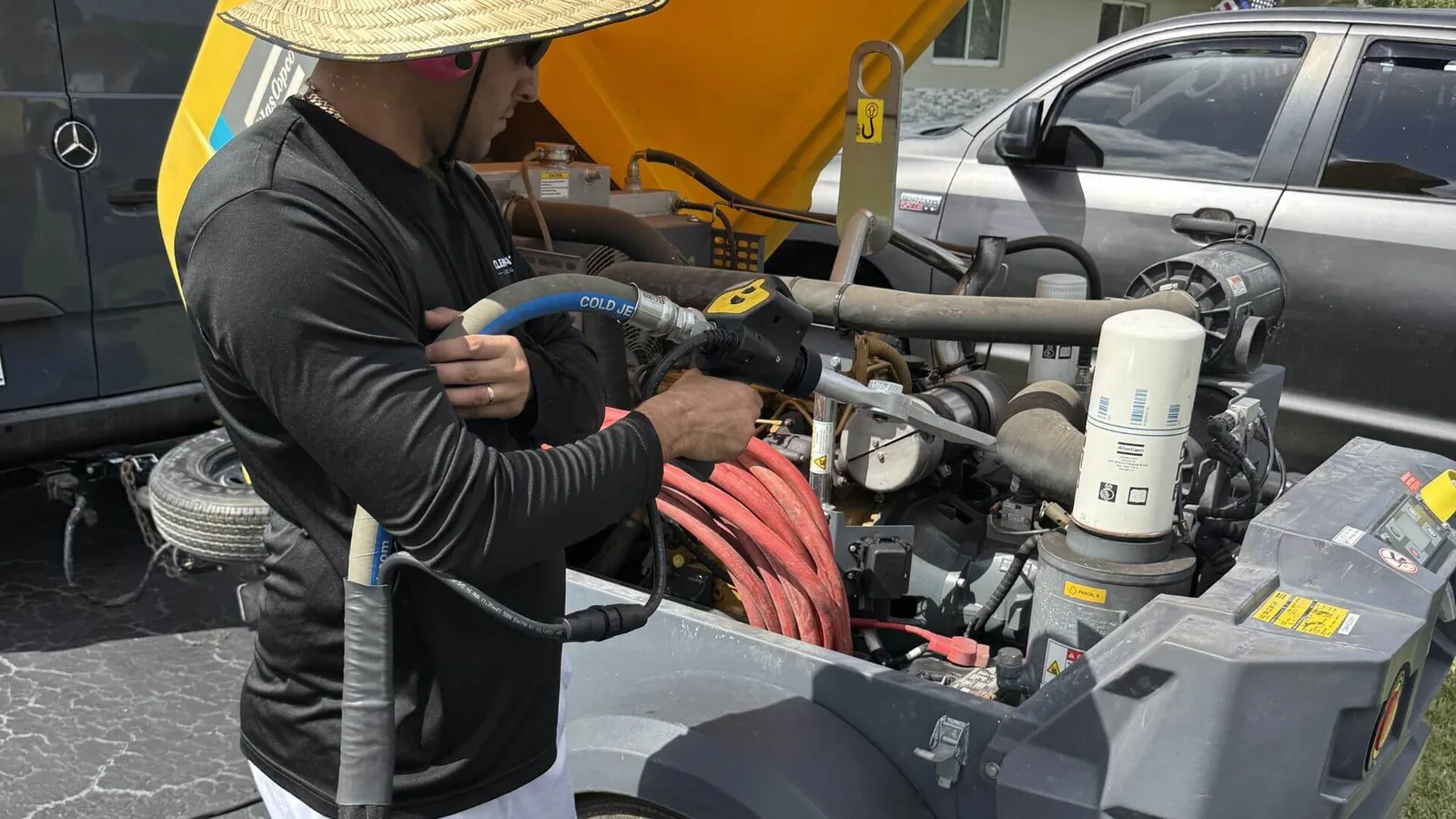
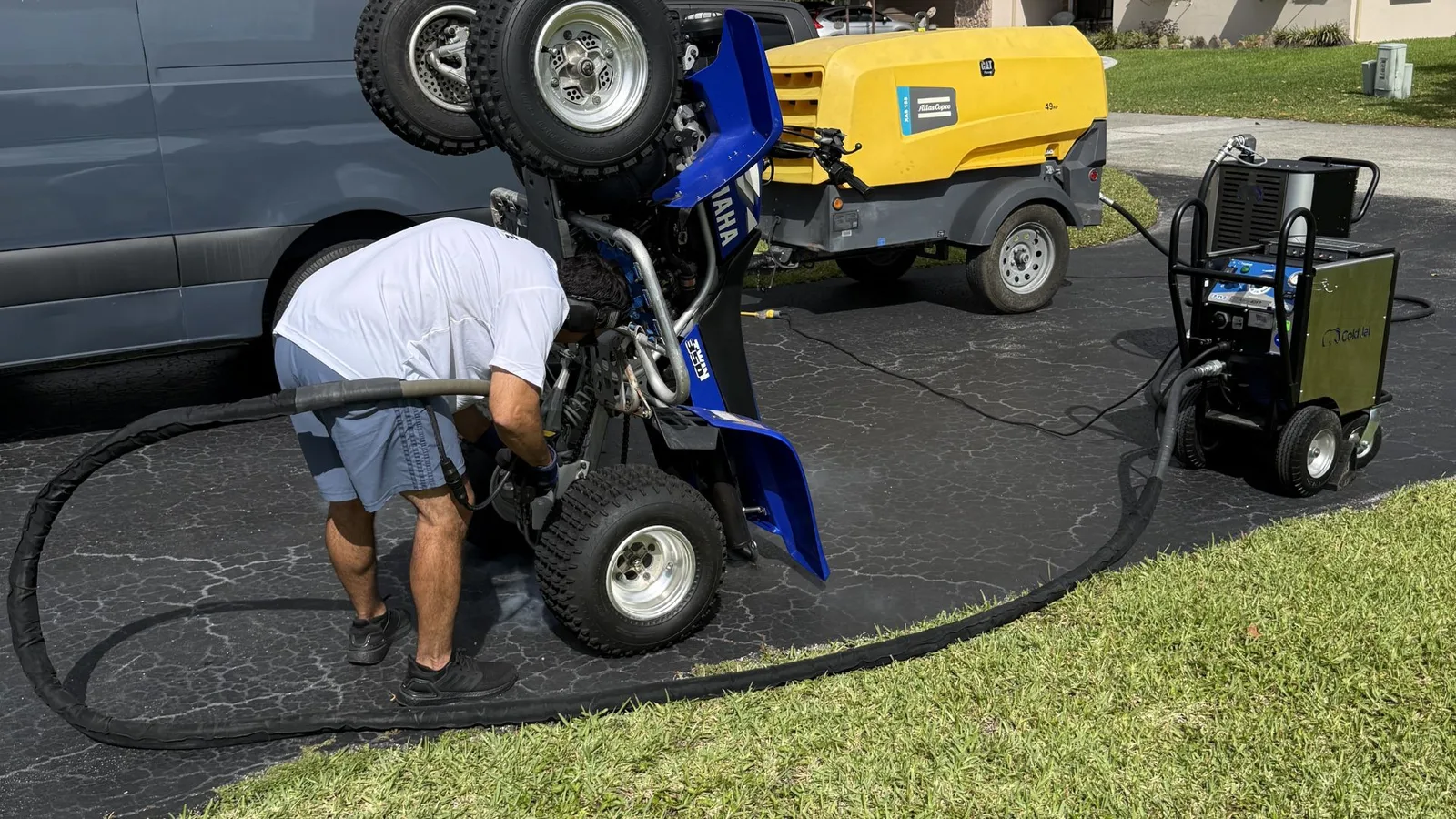
Everything we do runs off our own compressor, so there is no wash pad to find and no drain to worry about. That matters in Hendry County, where a lot of the work happens on a driveway, in a yard, or inside a shop that cannot be flooded.
South Florida salt air keeps corrosion moving all year, which is why so much of the work here is about removing what has bonded to a surface without taking the surface with it.
Where we work
Communities across Hendry County
Questions we get from around here
What do most jobs look like?
Everything from an engine bay in a driveway to a production line at shutdown. The process is the same, pointed at a different problem.
Does distance affect the price?
Distance can factor in. You will hear about it up front, not on the invoice.
How do I get started?
Send the equipment, the location and a short description with photos if you have them. One of the owners calls you back.
Will you travel to Hendry County?
We do. The whole point of a mobile setup is that Hendry County is no further than any other stop on the schedule.
Do you need anything set up before you arrive?
Space for the rig and a way to reach the machine. Everything else arrives with us.
Can you come outside business hours?
Yes, within reason. Planned outages are easiest because everybody already knows the window.
What comes off
The deposits we see most
This list covers the bulk of what people ask us about. All of it is buildup sitting on top of something worth keeping.
- Food residue
Carbonized product build-up in a plant where neither standing water nor a chemical film is acceptable.
- Grease and oil
Machinery runs on lubricant, and the overspray collects lint and metal fines around every bearing and housing. The ice takes the film and the dirt stuck in it together.
- Carbon and soot
Carbon fused onto metal by repeated heating. Hit it with cold and it lets go, leaving the surface underneath intact.
- Adhesive and sealant
The stubborn film under old tape, or the gasket that tore and left half of itself behind.
- Resin and mold release
Residue from production that has hardened onto molds. We remove it with cold instead of chemistry, so there is nothing to rinse away afterward.
- Paint and coatings
Removed selectively where the substrate underneath has to survive, which rules out most abrasive approaches.
- Salt and corrosion product
The year-round problem on the coast. The finish holding corrosion back has to survive the cleaning.
How a job runs
What happens once you call
No fine print here. This is how a typical job runs, written so someone who has never seen it done can follow along.
- You describe the job
What it is, what is on it and whether it can stop. If the answer is that dry ice is wrong for it, you get that answer first, not last.
- We look at access and containment
If the equipment handles product, the question is what touches it. Those surfaces get extra attention in the plan, since what we remove must not end up anywhere near them.
- We test a small area
Old paint can be fragile in ways that don’t show until it is hit. A small patch out of view tells us how it will behave.
- We blast, then clean up
The carbon, grease or paint we lift off comes down as loose debris. We gather it up at the end, and you do not pay extra for the cleanup.
- You look before we pack up
A second pass while everything is still connected is free in every sense. A return trip is not.
The comparison
Why not just pressure wash it
- Hand scraping
Labor-intensive and uneven, and whatever you scrape with eventually marks what you are scraping.
- Media blasting
Abrasive by definition. Anything with a tolerance or a finish worth keeping comes out changed.
- Pressure washing
Pressure pushes moisture past seals and into connectors, and then you wait. Panels and motors rule it out.
- Solvent and degreaser
Softens the contaminant but leaves a film, fumes and a disposal problem, and attacks finishes you meant to keep.
- Dry ice
Thermal shock breaks the bond. The pellet sublimates, so nothing abrasive touches the part and nothing is left to collect but the contaminant.
Why us
How we do business
- We will tell you no
If dry ice is the wrong tool for what you have, we say so on the first call rather than finding out on your equipment. Honest beats a quick buck.
- We test before we commit
Anything unusual gets an inconspicuous test area first. Painted parts, soft alloys and older finishes all behave differently.
- The rig comes to you
Compressor, hose and operator arrive at your shop, plant, driveway or dock. Nothing needs to be transported to us.
- We clean up after ourselves
Nothing of the blasting media remains, so the only cleanup is the dirt itself, and that is ours to handle.
- Firefighter owned and operated
Both founders came up in the fire service. That background is about preparation, accountability and performing under pressure, and it is how every job gets approached.
- You speak to an owner
No dispatcher, no account manager. You talk to whoever is going to be holding the hose.
What happens in your space
We look at the room before the truck is unloaded. Carbon dioxide is harmless in open air but pushes oxygen out of a tight space, so an enclosed job gets ventilation planned in.
Dry ice blasting is noisy. Anyone close to the work wears hearing protection, and we will ask you to keep your distance or put some on.
Thick castings hold the cold longer than thin panels. On heavy pieces, plan on a short wait before anyone works on them.
There is no hookup to arrange before we come. We arrive with our own air and start once the hose reaches the job.
Send us the job.
Tell us what you are working on and what is stuck to it. If there is a deadline or a shutdown date, put that in too.