Home / Service areas / Palm Beach County / Lake Clarke Shores
Palm Beach County · Florida
Lake Clarke Shores dry ice blasting
Most of what we clean around Lake Clarke Shores is equipment somebody cannot afford to damage.
How we work in this area
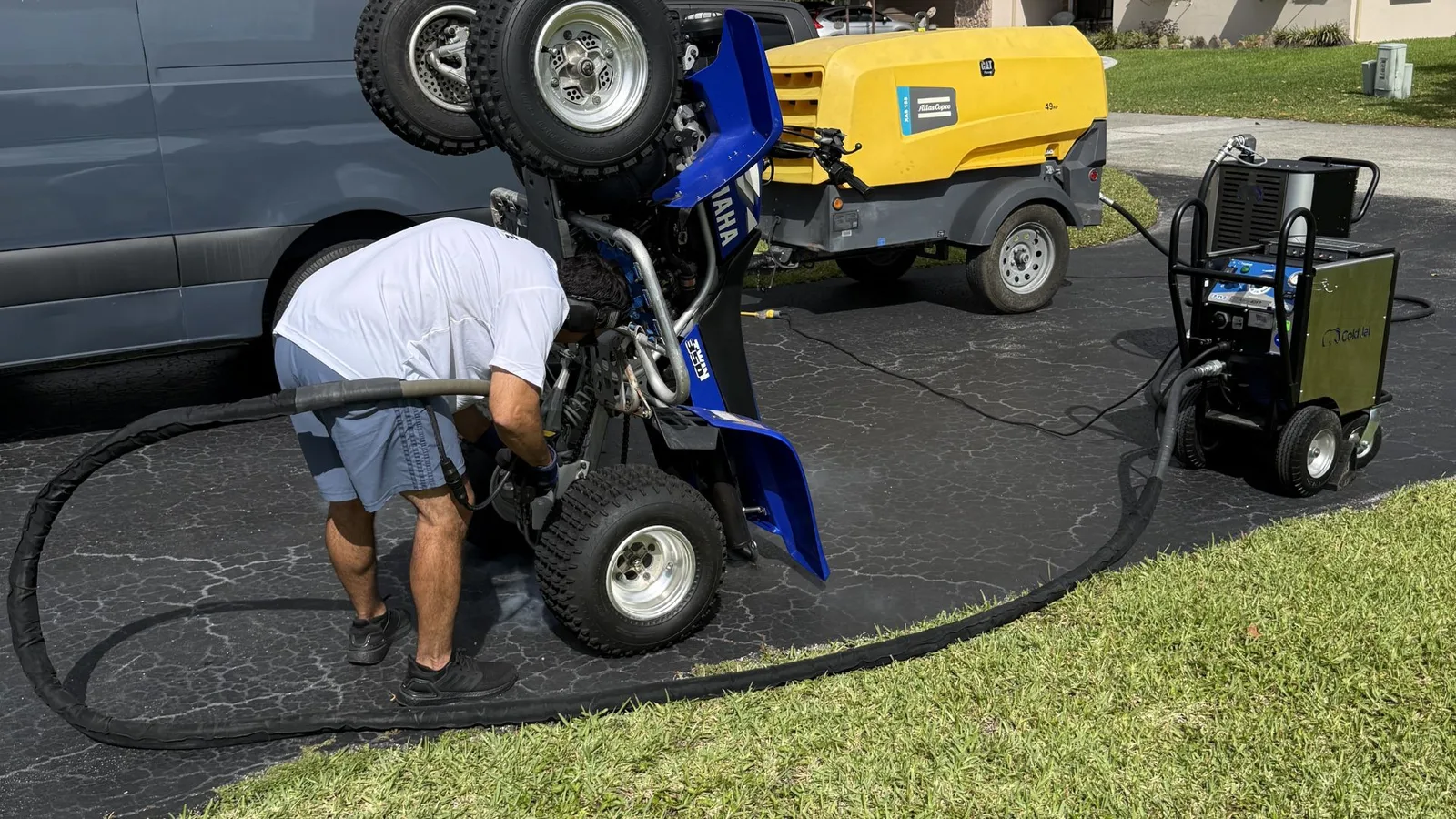
Nothing about the setup needs a drain, a hookup or a bay. So the equipment stays put. Everything that has to move arrives on the truck instead.
Solid to gas on impact. Nothing settles into a bearing, nothing runs toward a drain, and the only residue is what was already on the part.
What we clean
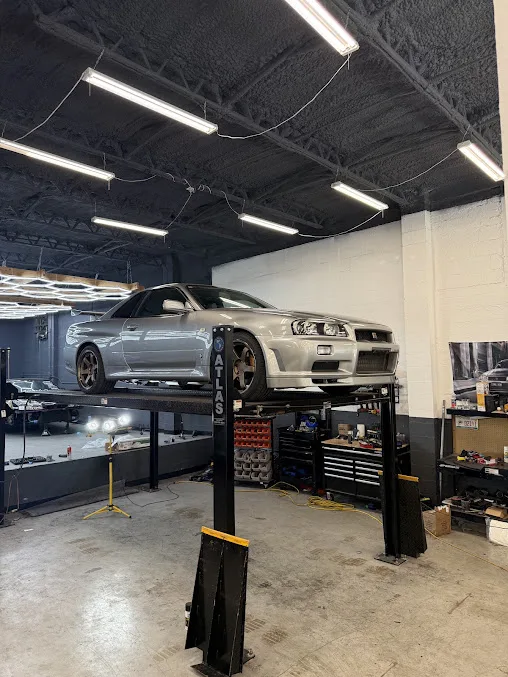
What we get called for in Lake Clarke Shores
Nearby
Also working across Palm Beach County
Questions from Lake Clarke Shores
Do you charge for the drive?
It depends how far out the job is. We will be straight with you about it when you describe the work.
How do we book it in?
Send the equipment, the location and a short description with photos if you have them. One of the owners calls you back.
Is Lake Clarke Shores in your area?
We do. The whole point of a mobile setup is that Lake Clarke Shores is no further than any other stop on the schedule.
What does the site need to have?
Space for the rig and a way to reach the machine. Everything else arrives with us.
Can you work around our schedule?
Most of the time. Shutdowns and after-hours work are normal for us; what matters is knowing the window early.
Who calls you around here?
It ranges from a single restoration project to a plant maintenance window. The method does not change much.
Why Lake Clarke Shores equipment ends up like this
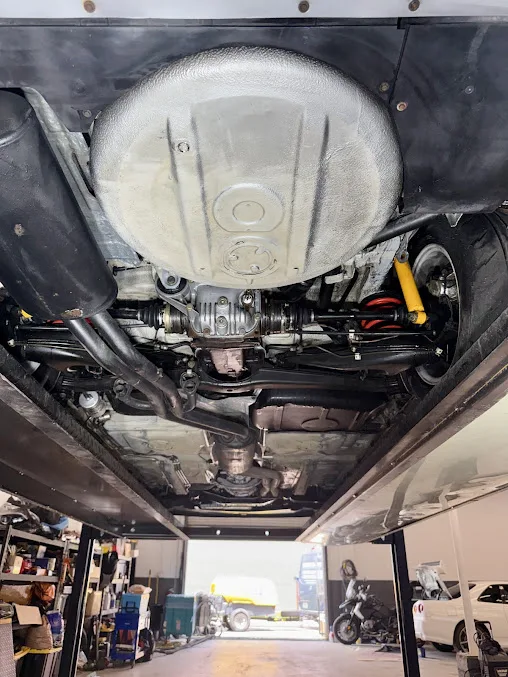
The heat matters more than people expect: baked-on residue cures harder in a South Florida summer. That is why so much of the work is removing what has bonded to a surface without taking the surface with it.
Light industrial, automotive and marine make up most of what we are called out for. The setup is the same in all of them, because everything the job needs turns up on the van.
The pellet turns to gas, so nothing runs off toward a drain and nothing abrasive stays behind in a bearing. On a cramped Palm Beach County site that usually decides it.
What comes off
What dry ice actually removes
The rule of thumb is simple: anything stuck on rather than built in. These are the deposits we see most.
- Ink and printing residue
Dried ink and coating build-up on rollers and press components, where the surface texture is the product.
- Food residue
Burnt-on product, fat and sugar on processing gear, with no chemical residue left on a contact surface.
- Grease and oil
The soft film that holds dust and swarf against metal. It is what makes a part feel dirty long after it looks clean, and it comes off first.
- Carbon and soot
Baked carbon on a manifold, oven or weld fixture. Thermal shock is exactly the wrong thing for the bond holding it on, which is why this works.
- Adhesive and sealant
Cured sealant, old gasket, tape glue and sound deadening, the residue left when something was removed but its bond was not.
- Resin and mold release
Release agent and resin build-up on tooling, where a solvent fix trades one residue for another.
- Paint and coatings
Taken off in a controlled way when what is underneath matters more than speed.
How a job runs
How a job actually runs
Most people have never watched dry ice blasting happen and are not sure what they are agreeing to. Here is the whole sequence, start to finish.
- We blast, then clean up
The ice is gone the moment it does its work. What stays behind is the grease or carbon that came off, and collecting that is part of the job, not an extra.
- You look before we pack up
The job is not finished because we say so. It is finished when you have looked at it.
- You describe the job
The machine, the deposit and the downtime you can afford. Those three things decide the whole job, and we would rather know all of them before quoting.
- We look at access and containment
How close the truck can get, how far the hose must run, what needs covering, and where the debris goes. That is the bulk of the planning on a tight site.
- We test a small area
An out-of-sight patch comes first so pressure and pellet size are proven before anything that shows. Soft alloys, older paint and bare metal each want different numbers.
The comparison
The other ways to do this
- Solvent and degreaser
Good at softening, bad at leaving. There is always a residue and always a drum to get rid of.
- Hand scraping
It is the fallback when nothing else is available, and it shows on the surface afterward.
- Media blasting
It works by removing material, which is the problem. Acceptable on heavy steel, damaging on soft alloy, plating or a machined surface.
- Pressure washing
Pressure pushes moisture past seals and into connectors, and then you wait. Panels and motors rule it out.
- Dry ice
The deposit shrinks away from the surface it is stuck to and releases. The ice is gone before it can do any harm.
What the job is like to stand next to
Solid carbon dioxide leaves no residue at all. What it does do is displace air, so an enclosed space gets ventilated as part of the job rather than as a precaution added later.
Expect noise. Everybody inside the working area wears hearing protection, us included.
The part will be cold when we finish. Sometimes that means a short wait before handling; sometimes it means a film of condensation as it warms back up.
The rig needs compressed air, which the truck supplies. There is no hookup to find and nothing of yours to plug into.
Describe what you are dealing with.
Send the equipment, the location and a short description. Photos help. You will hear back from Giancarlo or Kenny, not a call center.