Home / Service areas / Broward County / Tamarac
Broward County · Florida
Tamarac dry ice blasting
Most of what we clean around Tamarac is equipment somebody cannot afford to damage.
How we work in this area
Nothing about the setup needs a drain, a hookup or a bay. So the equipment stays put. Everything that has to move arrives on the truck instead.
The pellet turns straight to gas when it hits, which means no sand in the machine and no sludge on the floor. The only thing to collect is the contaminant itself, and that is included.

What we clean
What we get called for in Tamarac
Nearby
Also working across Broward County
Questions from Tamarac
What do most jobs look like?
A mix, vehicle work, shop equipment, marine and light industrial. Same rig, different constraint each time.
Do you charge for the drive?
Distance can factor in. You will hear about it up front, not on the invoice.
How do we book it in?
Describe the job and send a photo or two. Giancarlo or Kenny will call you, not a scheduler.
Will you travel to Tamarac?
Yes. Tamarac is inside our regular working area, and the rig travels to the job rather than the other way round.
Do you need anything set up before you arrive?
Just access and parking. There is no tap to find, no drain to use and nothing of yours to plug into.
Can you come outside business hours?
Generally yes. Weekend and overnight work is routine, and the limiting factor is usually noise, not us.
The local conditions
The heat matters more than people expect: baked-on residue cures harder in a South Florida summer. That is why so much of the work is removing what has bonded to a surface without taking the surface with it.
Light industrial, automotive and marine make up most of what we are called out for. The setup is the same in all of them, because everything the job needs turns up on the van.
The pellet turns to gas, so nothing runs off toward a drain and nothing abrasive stays behind in a bearing. On a cramped Broward County site that usually decides it.
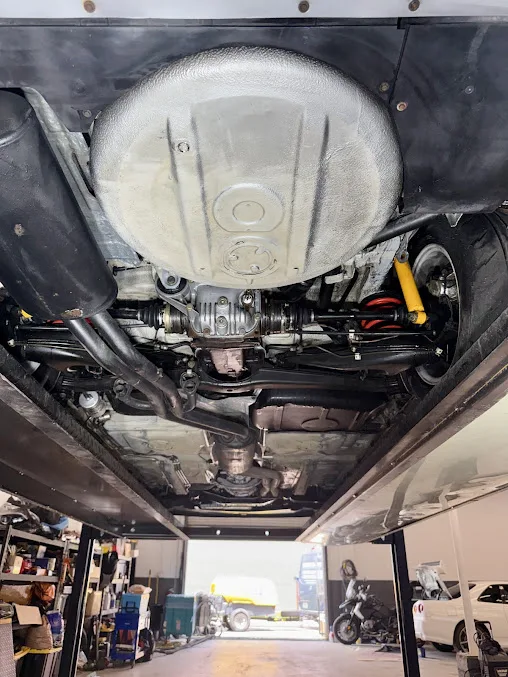
What comes off
What dry ice actually removes
The rule of thumb is simple: anything stuck on rather than built in. These are the deposits we see most.
- Food residue
Burnt-on product, fat and sugar on processing gear, with no chemical residue left on a contact surface.
- Grease and oil
Degreasers leave their own residue behind. Dry ice takes the oil off without adding anything, so there is no chemical left on the part afterward.
- Carbon and soot
Heat-bonded black deposit. Because heat put it there, a sudden cold front is what breaks its grip.
- Adhesive and sealant
Whatever the last repair left stuck to the mating face: gasket, sealant, deadener or adhesive.
- Resin and mold release
Production residue cured onto tooling. Solvent softens it and leaves its own film; the ice lifts it and takes nothing with it.
- Paint and coatings
Removed selectively where the substrate underneath has to survive, which rules out most abrasive approaches.
- Salt and corrosion product
A constant in South Florida. Removing it without stripping the protective finish is the whole trick.
How a job runs
How a job actually runs
The process is short to explain. These are the stages, start to finish, so you know where we are at any point in the job.
- We test a small area
Two parts that look identical can be different underneath. One may have been repainted and one may be bare, so we check before we commit, starting low and only stepping up as far as the surface allows.
- We blast, then clean up
One mess instead of two: the pellet vanishes and we take away what it removed.
- You look before we pack up
If something needs another pass we do it then, on site, while the rig is still running. That is a better outcome for everyone than a callback.
- You describe the job
The machine, the deposit and the downtime you can afford. Those three things decide the whole job, and we would rather know all of them before quoting.
- We look at access and containment
The layout decides the method more often than the contaminant does. We work out reach and containment before quoting anything.
The comparison
Why not just pressure wash it
- Hand scraping
Fine on a patch, hopeless on a machine, and the blade leaves its own evidence.
- Media blasting
It takes the top off whatever it touches. That is the point on rusted plate and the problem everywhere else.
- Pressure washing
It is fast and it is wet, which is fine outdoors and unusable on anything with a winding in it.
- Solvent and degreaser
It loosens the mess and leaves its own behind, along with fumes and something to dispose of.
- Dry ice
It is the only one on this list where the media stops existing the moment it has worked.
What the job is like to stand next to
A part that just came clean will be chilly for a few minutes. Let it warm before you coat, polish or apply anything to it.
Everything the rig needs arrives with it. No tap, no drain, no outlet.
We cover what should not be hit before anything gets blasted. It takes minutes and saves arguments.
There is nothing toxic in the media and no residue afterward. What we watch is the room itself: an enclosed space needs moving air, and we arrange it up front.
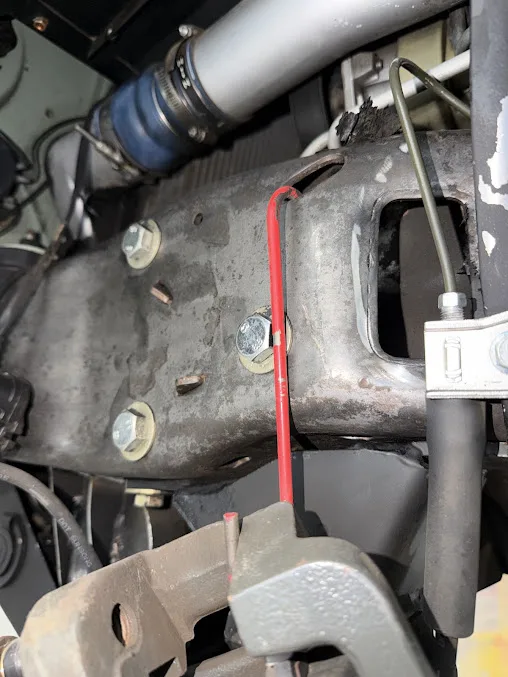
Send us the job.
Snap a couple of photos of the dirty area and send them over with a sentence or two. Seeing the buildup tells us more than a long description could.