Home / Service areas / Miami-Dade County / Miami Springs
Miami-Dade County · Florida
Miami Springs dry ice blasting
When we take a job in Miami Springs, the rig comes to the machine rather than the other way round.
What a job looks like locally
Nothing about the setup needs a drain, a hookup or a bay. That is the practical reason a mobile rig beats hauling equipment somewhere: the machine never leaves Miami Springs.
Because the media disappears on impact, there is nothing abrasive left in a bearing and nothing to shovel up afterward. Whatever came off the surface is ours to gather before we leave.
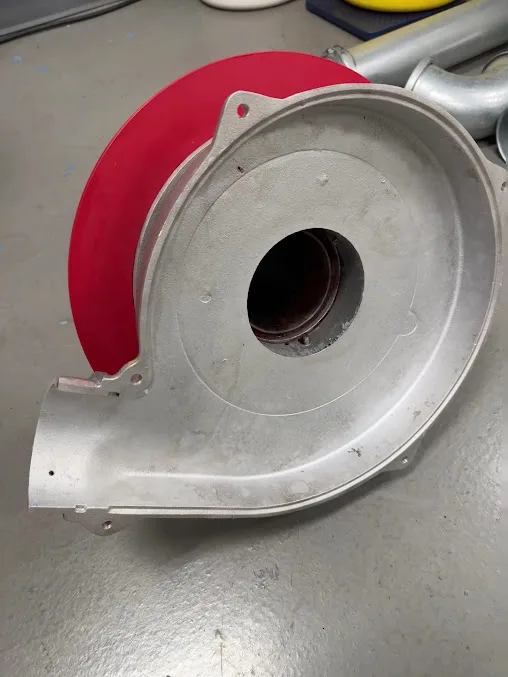
What we clean
What we clean in and around Miami Springs
Nearby
Also working across Miami-Dade County
Questions from Miami Springs
Will you travel to Miami Springs?
Yes. Miami Springs is inside our regular working area, and the rig travels to the job rather than the other way round.
Do you need anything set up before you arrive?
Access to the equipment and somewhere to park the compressor. No water hookup, no drain and no wash bay.
Can you come outside business hours?
Often yes, a lot of industrial work happens overnight or during a planned outage. Give us the window and we will say straight away whether it is realistic.
What do most jobs look like?
Everything from an engine bay in a driveway to a production line at shutdown. The process is the same, pointed at a different problem.
Is there a travel charge?
It depends how far out the job is. We will be straight with you about it when you describe the work.
How do I get started?
Describe the job and send a photo or two. Giancarlo or Kenny will call you, not a scheduler.
The local conditions
Salt carries a long way inland here, and it keeps working on metal every day of the year. Which is exactly the situation where a non-abrasive, low-moisture method is worth the call.
Shops, marine yards, warehouses and home garages all end up with the same problem in different forms. Site type barely matters when the air, the hose and the collection all arrive together.
No runoff and no residual grit, which matters more than it sounds on a Miami-Dade County job with neighbors close by.
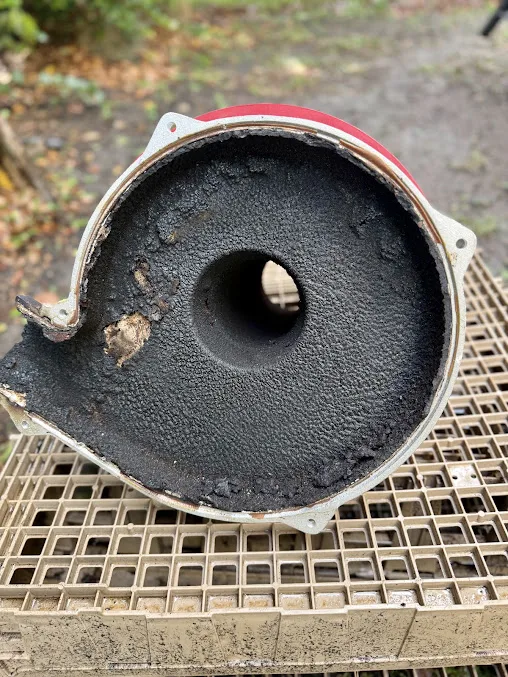
What comes off
What this takes off
The method does not care much what the contaminant is, only that it sits on top of something. Here is the usual list.
- Adhesive and sealant
The stubborn film under old tape, or the gasket that tore and left half of itself behind.
- Resin and mold release
Cured resin clings to fixtures and tooling. Grit would wear the tool as it cleaned, which is why this needs something softer.
- Paint and coatings
Selective removal, layer by layer, on parts where media blasting would cut into the substrate.
- Salt and corrosion product
A constant in South Florida. Removing it without stripping the protective finish is the whole trick.
- Ink and printing residue
Dried ink on precision roller faces, cleaned without altering the cell structure that does the work.
- Food residue
Carbonized product, fat, starch and sugar build-up on processing equipment, cleaned without chemicals touching a food contact surface.
- Grease and oil
Thick grease that has been sitting for years comes off too, it just takes more passes. Fresh oil film is quicker, and both leave nothing behind but the grime itself.
How a job runs
The sequence, start to finish
There is no mystery to how these jobs run, and no part of it we would rather you did not ask about.
- You look before we pack up
Inspect it with the rig still set up. Anything you are not happy with gets another go before we leave.
- You describe the job
Tell us if the equipment can stop and for how long. A machine that can only go down for one shift needs a different plan from a car sitting in a garage all week.
- We look at access and containment
Debris is the part people forget. Grease and carbon have to land somewhere when they come off, so we pick that spot and protect it before we start.
- We test a small area
The test patch also answers whether the buildup releases at all. Bonded grime usually lets go on the first pass, but if something on your part won’t move, we would rather find out on a hidden corner and tell you.
- We blast, then clean up
The ice is gone on impact. What is on the floor afterward came off your machine, and clearing it is ours to do.
The comparison
Why not just pressure wash it
- Solvent and degreaser
It dissolves the deposit and often the finish underneath, then leaves a film behind either way.
- Hand scraping
Fine on a patch, hopeless on a machine, and the blade leaves its own evidence.
- Media blasting
Cuts into the substrate by design. Fine on structural steel, wrong on aluminum, plating, machined faces or anything with a tolerance.
- Pressure washing
Pressure pushes moisture past seals and into connectors, and then you wait. Panels and motors rule it out.
- Dry ice
Thermal contraction cracks the bond between deposit and surface, then the pellet gasses off. Nothing abrasive, nothing wet, nothing left.
Before we turn the rig on
We do not tap into your shop. All the compressed air comes from our own unit, parked as close to the job as we can get.
We cover what should not be hit before anything gets blasted. It takes minutes and saves arguments.
There is no chemical in this and nothing to wipe off afterward. The gas from the ice still displaces air in a sealed room, so we keep air moving for as long as we are blasting.
We wear ear protection on every job, and so should anyone who comes into the work area. That rule does not bend for short jobs.

Describe what you are dealing with.
Where is it, and how easy is it to get to? Add the equipment and the contaminant, and we have what we need to call you back.