Home / Service areas / Palm Beach County / Briny Breezes
Palm Beach County · Florida
Briny Breezes dry ice blasting
Briny Breezes calls tend to arrive with a constraint attached, which is exactly where this method earns its keep.
What a job looks like locally
Nothing about the setup needs a drain, a hookup or a bay. That is the practical reason a mobile rig beats hauling equipment somewhere: the machine never leaves Briny Breezes.
The media is gone by the time it has done its work, so there is no sand to vacuum and no water to mop. Only the contaminant is left, and that leaves with us.
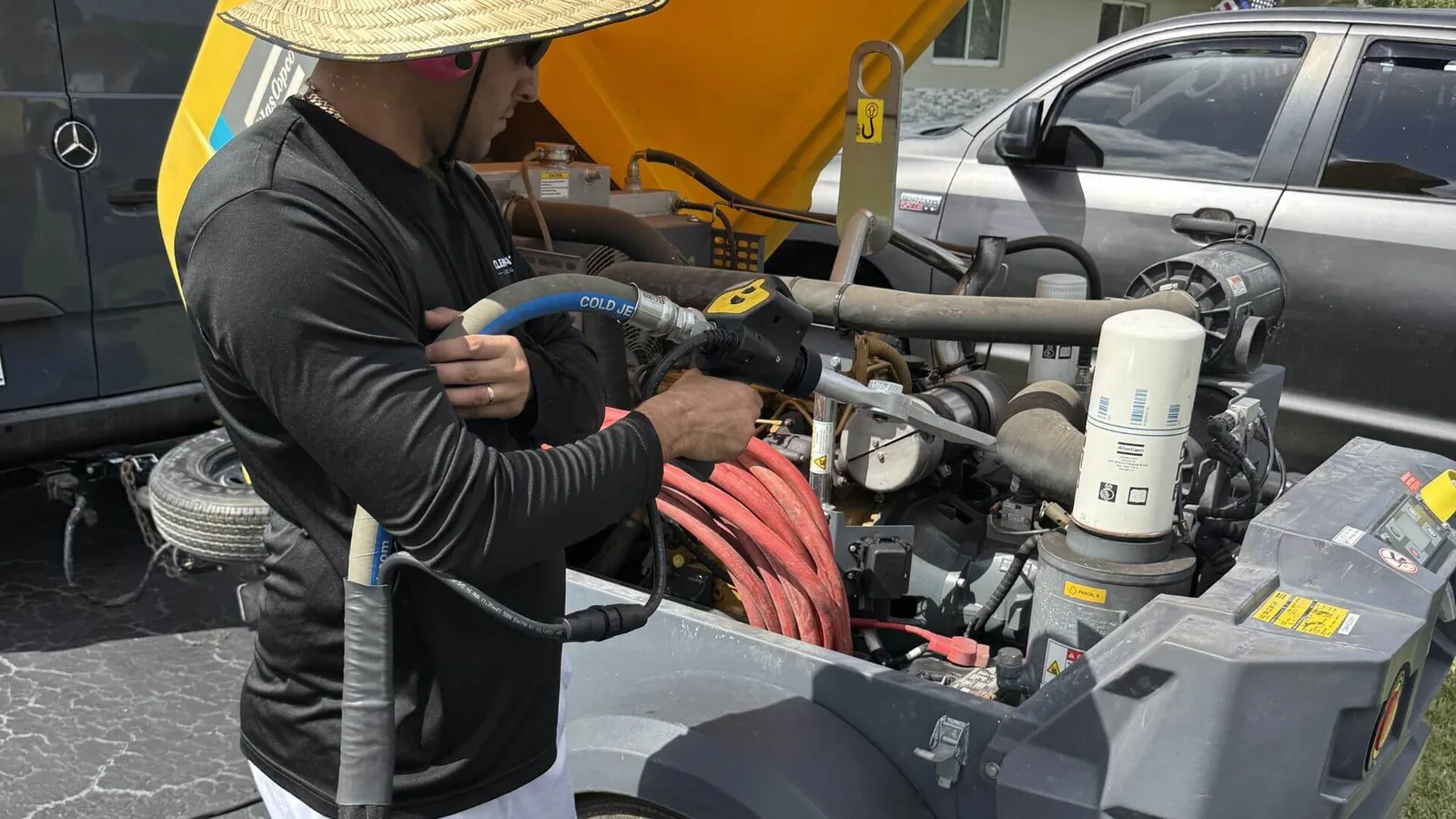
What we clean
What we clean in and around Briny Breezes
Nearby
Also working across Palm Beach County
Questions from Briny Breezes
Will you work during a shutdown?
Usually. Tell us the window you have, including overnight or a planned shutdown, and we will tell you honestly what fits in it.
What kinds of jobs do you take here?
It ranges from a single restoration project to a plant maintenance window. The method does not change much.
Do you charge for the drive?
Distance can factor in. You will hear about it up front, not on the invoice.
What is the first step?
Describe the job and send a photo or two. Giancarlo or Kenny will call you, not a scheduler.
Do you cover Briny Breezes?
We do. The whole point of a mobile setup is that Briny Breezes is no further than any other stop on the schedule.
What do we have to provide?
Access to the equipment and somewhere to park the compressor. No water hookup, no drain and no wash bay.
Conditions around Briny Breezes
Afternoon storms mean equipment that lives outside is wet, then hot, then wet again. It is also why an abrasive method costs you twice: once in the cleaning, again in the finish you removed.
Residential garages and small shops sit alongside the commercial work on any given week. None of those settings need modifying: the compressor, hose and collection all come with us.
No runoff and no residual grit, which matters more than it sounds on a Palm Beach County job with neighbors close by.
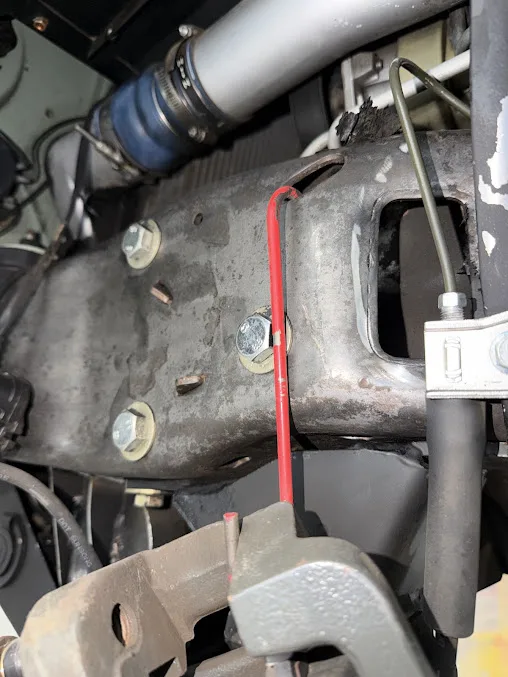
What comes off
What this takes off
The method does not care much what the contaminant is, only that it sits on top of something. Here is the usual list.
- Grease and oil
Oil film is the layer everything else sticks to. Remove it and half the job is already done.
- Carbon and soot
Heat-bonded black deposit. Because heat put it there, a sudden cold front is what breaks its grip.
- Adhesive and sealant
Bonded material that outlived whatever it was bonding, usually harder to shift than the part it is on.
- Resin and mold release
Cured process residue on a mold or fixture. The surface has to come out dimensionally unchanged, which rules out anything abrasive.
- Paint and coatings
Taken off in a controlled way when what is underneath matters more than speed.
- Salt and corrosion product
Salt deposit and the oxidation it starts. Anything abrasive removes the protection along with the salt.
- Ink and printing residue
Dried ink and coating build-up on rollers and press components, where the surface texture is the product.
How a job runs
The sequence, start to finish
There is no mystery to how these jobs run, and no part of it we would rather you did not ask about.
- You describe the job
What it is, what is on it and whether it can stop. If the answer is that dry ice is wrong for it, you get that answer first, not last.
- We look at access and containment
How close the truck can get, how far the hose must run, what needs covering, and where the debris goes. That is the bulk of the planning on a tight site.
- We test a small area
An out-of-sight patch comes first so pressure and pellet size are proven before anything that shows. Soft alloys, older paint and bare metal each want different numbers.
- We blast, then clean up
One mess instead of two: the pellet vanishes and we take away what it removed.
- You look before we pack up
If something needs another pass we do it then, on site, while the rig is still running. That is a better outcome for everyone than a callback.
The comparison
How this compares to the usual methods
- Media blasting
It takes the top off whatever it touches. That is the point on rusted plate and the problem everywhere else.
- Pressure washing
Water gets into everything and has to come out again before the equipment runs. Around electrics it is off the table entirely.
- Solvent and degreaser
It dissolves the deposit and often the finish underneath, then leaves a film behind either way.
- Hand scraping
Labor-intensive and uneven, and whatever you scrape with eventually marks what you are scraping.
- Dry ice
It is the only one on this list where the media stops existing the moment it has worked.
Before we turn the rig on
The part will be cold when we finish. Sometimes that means a short wait before handling; sometimes it means a film of condensation as it warms back up.
The rig needs compressed air, which the truck supplies. There is no hookup to find and nothing of yours to plug into.
We cover what should not be hit before anything gets blasted. It takes minutes and saves arguments.
Dry ice is carbon dioxide in solid form. It is non-toxic and leaves no residue, but it does displace oxygen in an enclosed space, so ventilation is part of the setup rather than an afterthought.
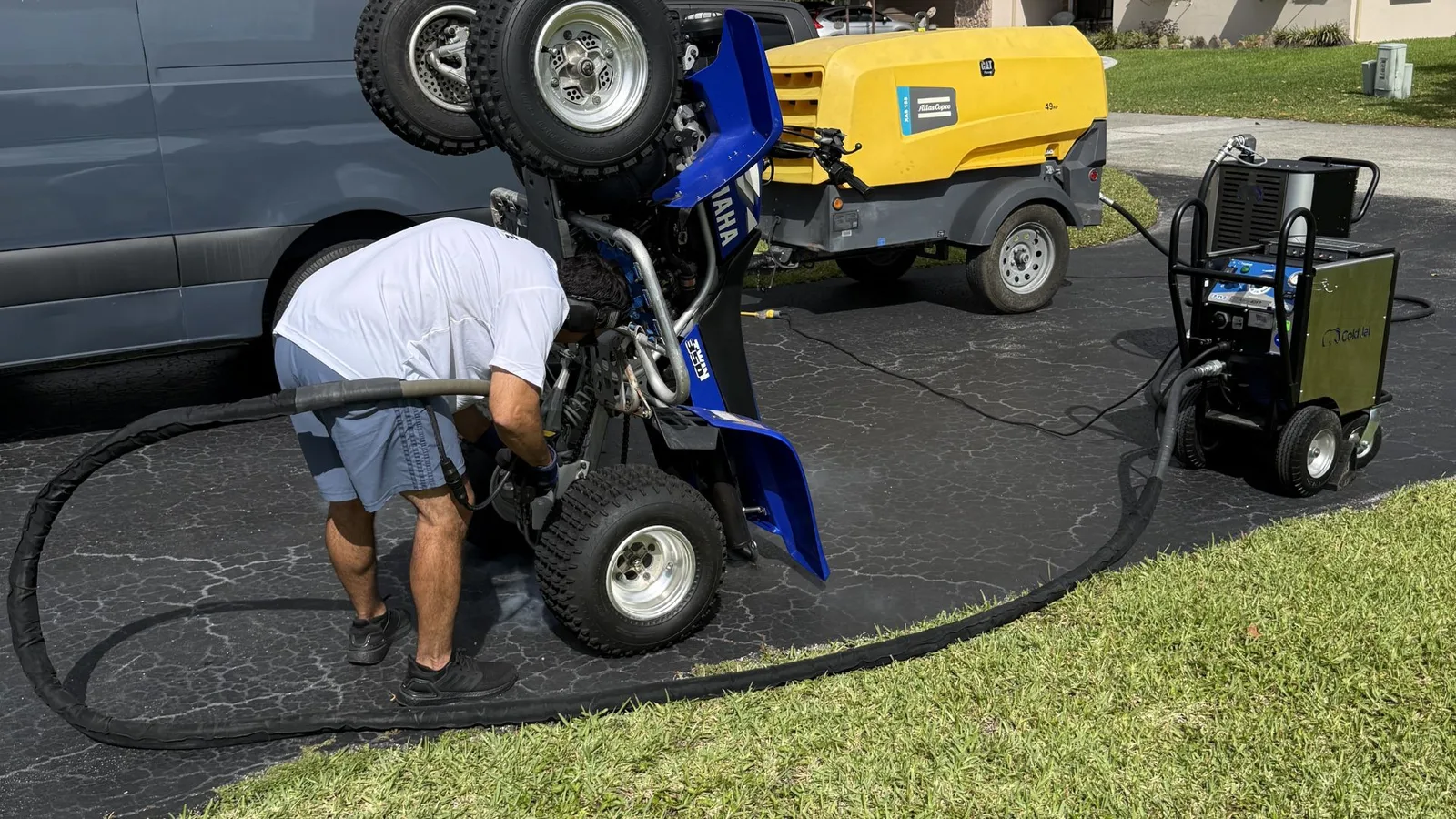
Describe what you are dealing with.
Give us the job, the address and a rough description, pictures if you have them. The call back comes from Giancarlo or Kenny directly.