Home / Services / Pharmaceutical / Medical Equipment
Pharmaceutical · Miami, FL
Medical Equipment Ice Blasting
Medical Equipment is one of the jobs dry ice blasting was made for. We clean it without water, without chemicals and without anything abrasive touching the surface.
What builds up, and why it matters
On this kind of work the problem is process residue, flux, particulate and film on sensitive equipment. These environments have documented cleaning requirements and very low tolerance for residue, moisture or abrasive media. Dry ice leaves nothing behind because the media is gone.
Work is scoped against the facility's own procedures and containment requirements. The people who call us about medical equipment are usually facilities and validation teams, and the thing they are actually worried about is introducing a contaminant while removing one.
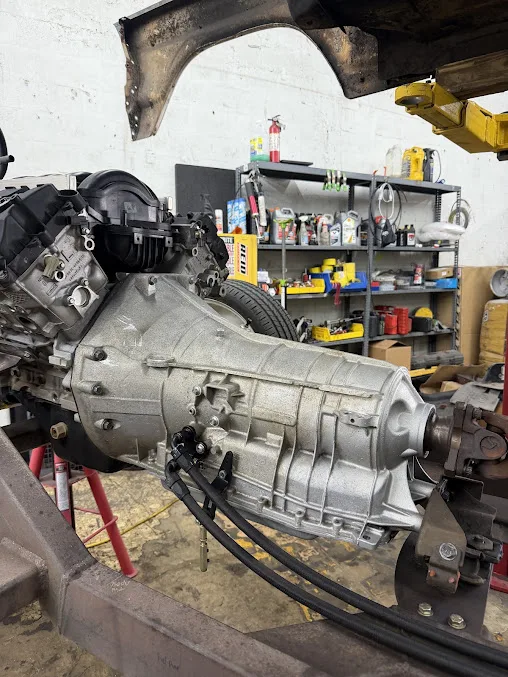
The method
Why dry ice and not the alternatives
- Non-abrasive
There is no grit in the stream, only ice that turns to gas on impact. That is why finishes and machined surfaces come through without scratching.
- Low moisture
Bearings and wiring hate water. The ice turns to gas instead of liquid, so there is none to work its way inside.
- No secondary waste
There is no spent media to sweep. What hits the floor is the grease or carbon we removed, and we collect it.
- Often no teardown
Hard-to-reach spots get cleaned without pulling the equipment apart. That alone often matters more than how fast the blasting goes.
More pharmaceutical work
Related jobs we get called for
Questions we get asked first
Will it damage the surface underneath?
It should not. Unlike sand or grit, the pellet does not cut into the material. It shocks the deposit loose with cold and then turns to gas. On anything delicate or unusual we try a hidden area first.
Do you have to take the equipment apart for medical equipment?
Rarely all the way. Dry ice does its work on whatever the nozzle can see, so we plan around access, open what has to be opened and leave the rest assembled.
How much mess does it make?
Your floor stays dry and the corners stay free of grit. What does come off is collected by us before we pack up the rig.
Do you come to us?
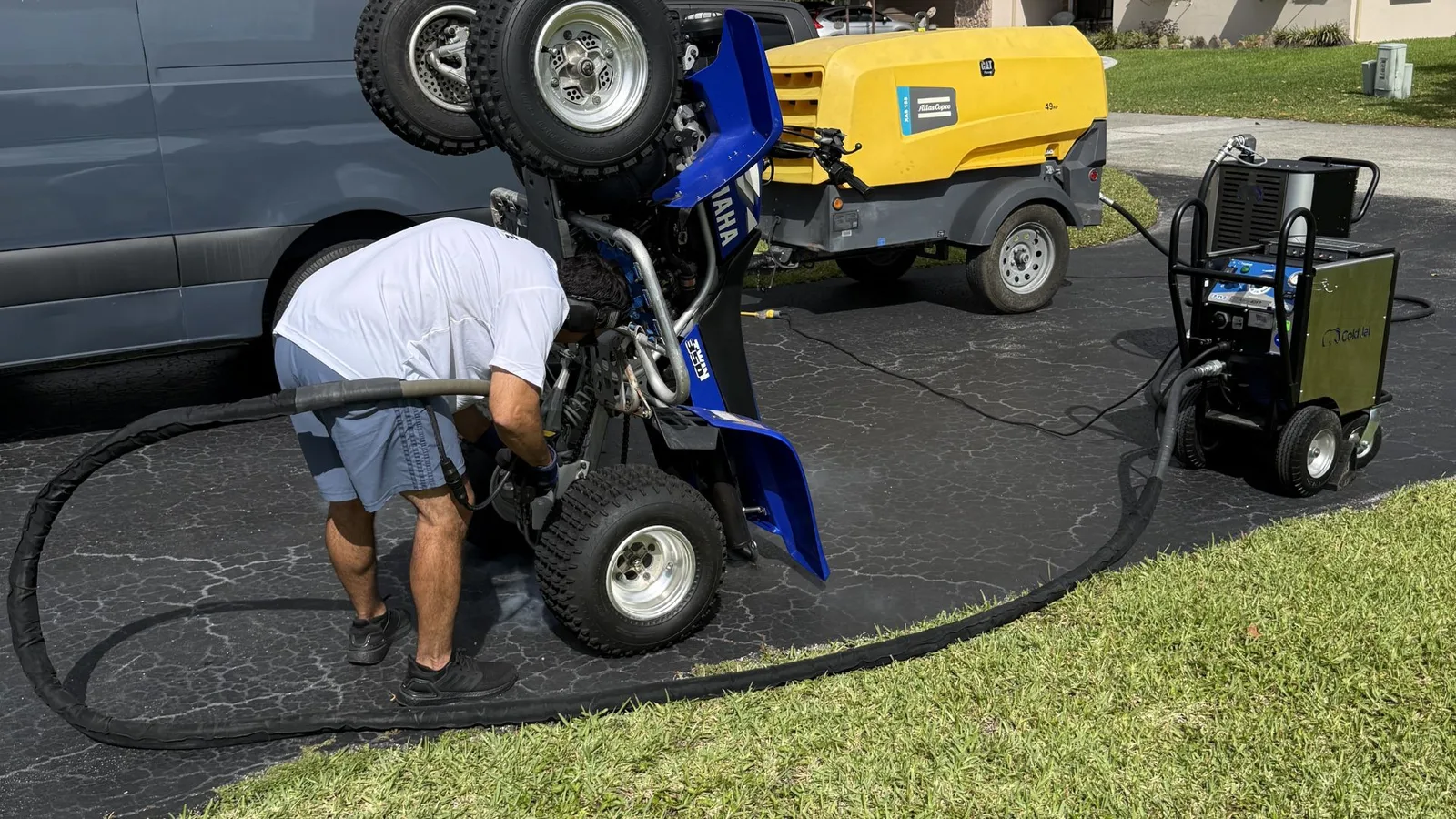
Yes. The rig is fully mobile and supplies its own air, so a driveway works as well as a plant floor. Our range runs from Miami out roughly a hundred miles through South Florida.
What does a job cost?
Honestly, it depends, and we would rather not quote blind. A few photos and a sentence about the access usually give us enough to price it properly.
How soon can you look at it?
Pictures get you an answer fastest. A few clear shots of the equipment and the buildup usually tell us enough to talk timing on the first call, before anyone drives out.
The comparison
How this compares to the usual methods
- Pressure washing
Drives water into harnesses, bearings, panels and seams, then everything waits to dry. On electrical work it is simply not an option.
- Solvent and degreaser
Chemistry works, but you inherit ventilation, waste handling and a film on the surface.
- Hand scraping
Slow enough to be uneconomic on a machine, and the tool always leaves a trace.
- Media blasting
Cuts into the substrate by design. Fine on structural steel, wrong on aluminum, plating, machined faces or anything with a tolerance.
- Dry ice
Thermal contraction cracks the bond between deposit and surface, then the pellet gasses off. Nothing abrasive, nothing wet, nothing left.
What comes off
What dry ice actually removes
The rule of thumb is simple: anything stuck on rather than built in. These are the deposits we see most.
- Salt and corrosion product
A constant in South Florida. Removing it without stripping the protective finish is the whole trick.
- Ink and printing residue
Dried ink on precision roller faces, cleaned without altering the cell structure that does the work.
- Food residue
Carbonized product, fat, starch and sugar build-up on processing equipment, cleaned without chemicals touching a food contact surface.
- Grease and oil
Oil film is the layer everything else sticks to. Remove it and half the job is already done.
- Carbon and soot
Carbon cooked onto housings and oven walls. It went on with heat, and the sudden cold of the pellet is what makes it let go.
- Adhesive and sealant
Bonded material that outlived whatever it was bonding, usually harder to shift than the part it is on.
- Resin and mold release
Mold release and resin that build up cycle after cycle. The cold lifts it cleanly, with no solvent film left behind to carry into the next part.
How a job runs
How a job actually runs
You should know what you are agreeing to before the truck shows up. This is exactly how we run a job.
- You describe the job
We ask four things: the equipment, the contaminant, the location and whether it can be taken out of service. Pictures beat paragraphs every time. Some jobs are a poor fit for dry ice, and you will hear that from us early, before you have spent anything.
- We look at access and containment
The layout decides the method more often than the contaminant does. We work out reach and containment before quoting anything.
- We test a small area
The rig gets tuned to your surface, never the last job’s. We try it on a concealed spot, look closely, and change pressure or pellet size before going anywhere obvious.
- We blast, then clean up
The media disappears on contact; the contaminant does not. Gathering what came off is included, not a line added afterward.
- You look before we pack up
The job is not finished because we say so. It is finished when you have looked at it.
What the job is like to stand next to
You will not lose an outlet or a circuit to us. The compressor on the truck runs the blaster on its own.
We cover what should not be hit before anything gets blasted. It takes minutes and saves arguments.
Solid CO2 leaves no film and nothing poisonous behind. In a sealed room, though, the gas it becomes takes the place of oxygen, and that is something we plan for ahead of time.
Expect noise. Everybody inside the working area wears hearing protection, us included.
Tell us what needs cleaning.
A rough outline of the job is fine. Add the location and photos, and expect to hear from Giancarlo or Kenny directly.