Home / Service areas / Miami-Dade County / The Crossings
Miami-Dade County · Florida
The Crossings dry ice blasting
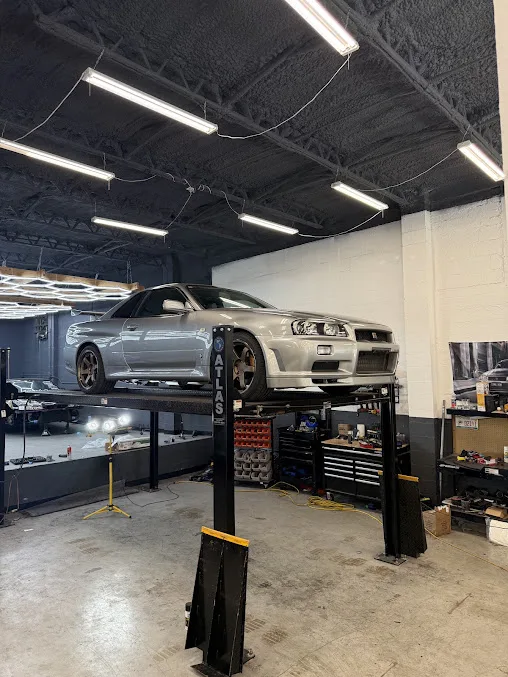
Most of what we clean around The Crossings is equipment somebody cannot afford to damage.
The practical side
The compressor runs off the truck, so there is no wash pad to find and no runoff to manage. Which means no downtime spent in transit and no risk of damage moving it out of The Crossings and back.
Because the media disappears on impact, there is nothing abrasive left in a bearing and nothing to shovel up afterward. Whatever came off the surface is ours to gather before we leave.
What we clean
The work we take on around The Crossings
Nearby
Also working across Miami-Dade County
Questions from The Crossings
What is the first step?
A short description and a couple of pictures is enough to start. An owner rings you back.
Will you travel to The Crossings?
Yes, The Crossings is well within range, and the compressor comes on the truck with everything else.
Do you need anything set up before you arrive?
Just access and parking. There is no tap to find, no drain to use and nothing of yours to plug into.
Can you come outside business hours?
Often yes, a lot of industrial work happens overnight or during a planned outage. Give us the window and we will say straight away whether it is realistic.
What do most jobs look like?
It ranges from a single restoration project to a plant maintenance window. The method does not change much.
Does distance affect the price?
Distance can factor in. You will hear about it up front, not on the invoice.
The local conditions
Afternoon storms mean equipment that lives outside is wet, then hot, then wet again. It is also why an abrasive method costs you twice: once in the cleaning, again in the finish you removed.
Residential garages and small shops sit alongside the commercial work on any given week. Whatever the setting, the rig arrives with its own compressor and containment, so nothing about the site has to change to accommodate us.
Because the media sublimates, there is no slurry running toward a storm drain and no grit left in a machine. On a tight site in Miami-Dade County that is often the deciding factor.
What comes off
What comes off, and why
What the method removes depends less on the deposit and more on how it is attached. Here is what we take off most often, and why the cold works on each.
- Resin and mold release
Cured process residue on a mold or fixture. The surface has to come out dimensionally unchanged, which rules out anything abrasive.
- Paint and coatings
Taken off in a controlled way when what is underneath matters more than speed.
- Salt and corrosion product
A constant in South Florida. Removing it without stripping the protective finish is the whole trick.
- Ink and printing residue
Dried ink and coating build-up on rollers and press components, where the surface texture is the product.
- Food residue
Carbonized product build-up in a plant where neither standing water nor a chemical film is acceptable.
- Grease and oil
Oil film is the layer everything else sticks to. Remove it and half the job is already done.
- Carbon and soot
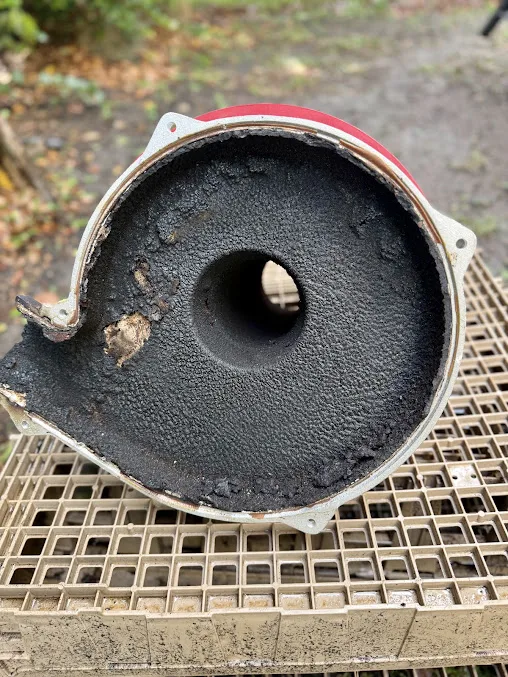
The crust that builds on anything near a flame or a weld. Cold makes it contract and lose its grip on the metal, so it lifts off in flakes.
How a job runs
Nothing about this should be a surprise
Nobody should have to guess what they booked. This is every stage of a job in the order it happens.
- You describe the job
Send images if you can, they settle most of the questions. A wrong-tool verdict comes on that first call, not after the invoice.
- We look at access and containment
Access drives the plan: reach, siting, masking, and the route the removed material takes off the job. It is the part customers think about least and we think about most.
- We test a small area
Nothing visible gets blasted until the settings have been tried on a hidden area. What suits heavy steel can be too much for a thin or soft part, and the test catches that.
- We blast, then clean up
One mess instead of two: the pellet vanishes and we take away what it removed.
- You look before we pack up
Inspect it with the rig still set up. Anything you are not happy with gets another go before we leave.
The comparison
Why not just pressure wash it
- Hand scraping
It is the fallback when nothing else is available, and it shows on the surface afterward.
- Media blasting
Cuts into the substrate by design. Fine on structural steel, wrong on aluminum, plating, machined faces or anything with a tolerance.
- Pressure washing
Pressure pushes moisture past seals and into connectors, and then you wait. Panels and motors rule it out.
- Solvent and degreaser
It dissolves the deposit and often the finish underneath, then leaves a film behind either way.
- Dry ice
Cold breaks the bond and the media vanishes. The substrate is untouched and there is no second mess to clean up.
What to expect on site
The gas the ice turns into is the same carbon dioxide we breathe out, and it leaves nothing on the surface. In a closed room it can crowd out air, though, so we open things up before starting.
The process is loud. Hearing protection is standard for anyone in the working area, which is why you will see ear defenders in most of our photographs.
In humid weather a cold part will sweat as it warms up. That moisture comes out of the air and dries off on its own.
Bring us to the equipment and we handle the rest. The air supply is ours and it travels with us.
Describe what you are dealing with.
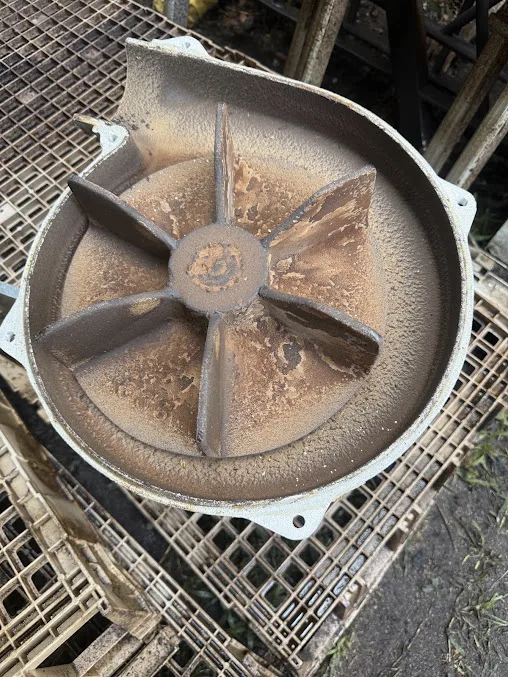
Snap a couple of photos of the dirty area and send them over with a sentence or two. Seeing the buildup tells us more than a long description could.