Home / Service areas / Palm Beach County / Loxahatchee Groves
Palm Beach County · Florida
Loxahatchee Groves dry ice blasting
Most of what we clean around Loxahatchee Groves is equipment somebody cannot afford to damage.
How the work runs here
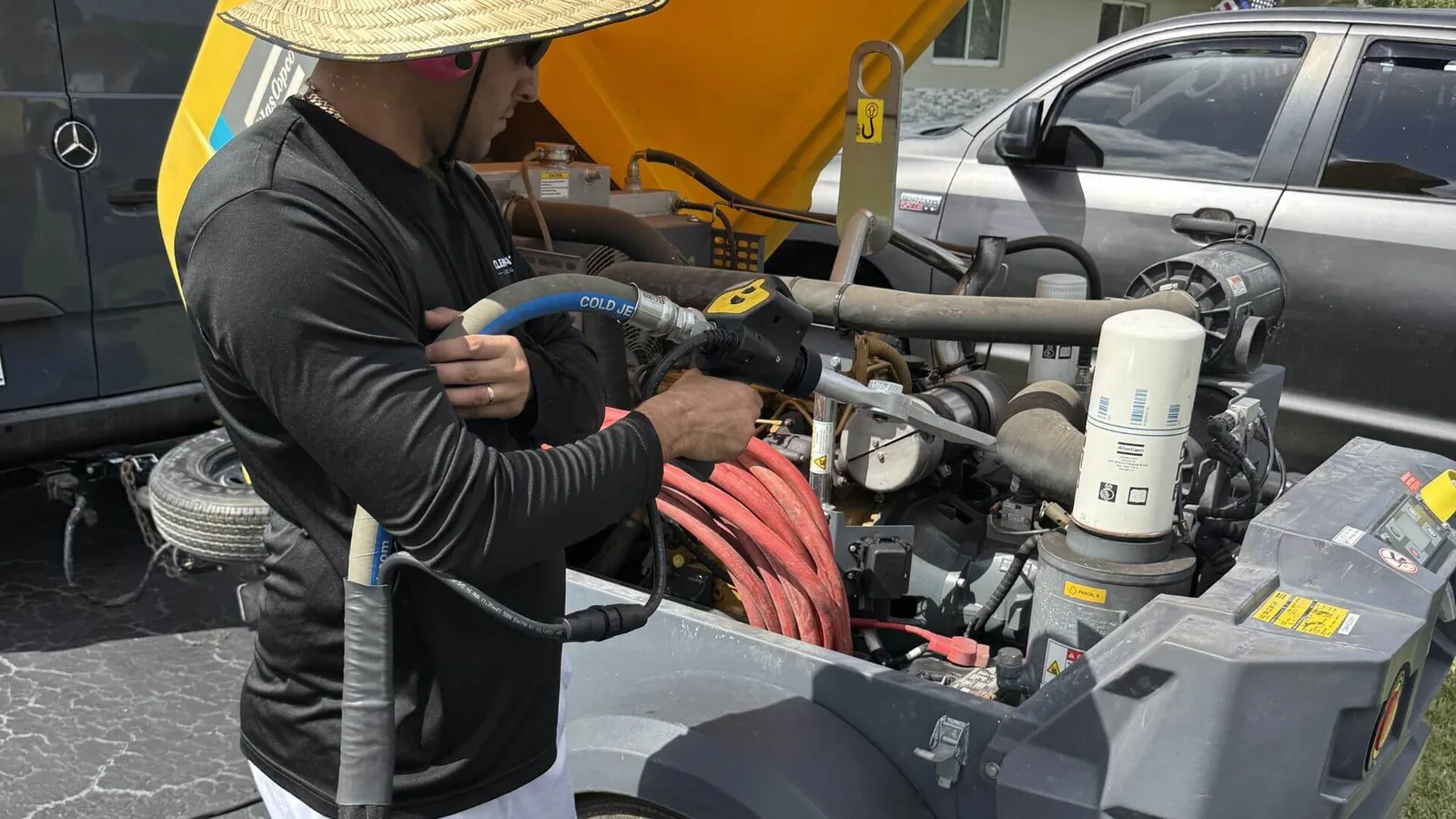
The compressor runs off the truck, so there is no wash pad to find and no runoff to manage. It is also why nothing has to be crated up and driven across town, the work happens where the machine already sits in Loxahatchee Groves.
Nothing of the ice survives the blast. That removes the entire cleanup problem every other method creates, leaving only the deposit that came off the equipment.

What we clean
Where this method earns its keep in Loxahatchee Groves
Nearby
Also working across Palm Beach County
Questions from Loxahatchee Groves
Can you work around our schedule?
Usually. Tell us the window you have, including overnight or a planned shutdown, and we will tell you honestly what fits in it.
Who calls you around here?
It ranges from a single restoration project to a plant maintenance window. The method does not change much.
Is there a travel charge?
It depends how far out the job is. We will be straight with you about it when you describe the work.
How do we book it in?
Send the equipment, the location and a short description with photos if you have them. One of the owners calls you back.
Is Loxahatchee Groves in your area?
Yes, Loxahatchee Groves is well within range, and the compressor comes on the truck with everything else.
What does the site need to have?
Just access and parking. There is no tap to find, no drain to use and nothing of yours to plug into.
Why Loxahatchee Groves equipment ends up like this
Afternoon storms mean equipment that lives outside is wet, then hot, then wet again. It is also why an abrasive method costs you twice: once in the cleaning, again in the finish you removed.
Residential garages and small shops sit alongside the commercial work on any given week. In every case the truck brings its own air and its own containment, so you are not adapting the site to suit the method.
With no slurry to contain and no media to recover, a confined Palm Beach County site stops being a problem.
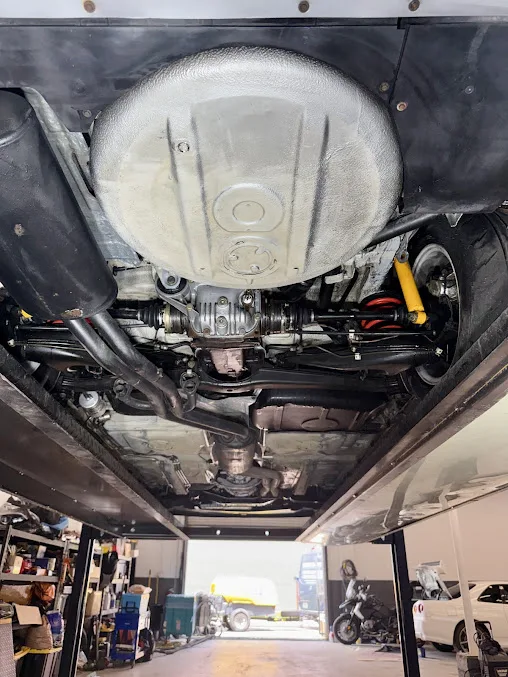
What comes off
The deposits we see most
Most calls involve one of the following. The common factor is a bond between two things that should not be bonded.
- Adhesive and sealant
Cured sealant, old gasket, tape glue and sound deadening, the residue left when something was removed but its bond was not.
- Resin and mold release
Production residue cured onto tooling. Solvent softens it and leaves its own film; the ice lifts it and takes nothing with it.
- Paint and coatings
Taken off in a controlled way when what is underneath matters more than speed.
- Salt and corrosion product
Salt deposit and the oxidation it starts. Anything abrasive removes the protection along with the salt.
- Ink and printing residue
Dried ink and coating build-up on rollers and press components, where the surface texture is the product.
- Food residue
Carbonized product, fat, starch and sugar build-up on processing equipment, cleaned without chemicals touching a food contact surface.
- Grease and oil
The greasy base coat that traps grit and dust. It releases early and takes the loose material with it.
How a job runs
What happens once you call
If you have not seen this done before, the process is worth reading once. Nothing below is hidden in a footnote.
- You describe the job
Describe the equipment and the mess. If it cannot come offline that changes the plan, so say so early.
- We look at access and containment
Access drives the plan: reach, siting, masking, and the route the removed material takes off the job. It is the part customers think about least and we think about most.
- We test a small area
An out-of-sight patch comes first so pressure and pellet size are proven before anything that shows. Soft alloys, older paint and bare metal each want different numbers.
- We blast, then clean up
Nothing is left of the pellet, so the only thing to collect is what was on your equipment. That collection is part of the work we quoted.
- You look before we pack up
Inspect it with the rig still set up. Anything you are not happy with gets another go before we leave.
The comparison
The other ways to do this
- Solvent and degreaser
Good at softening, bad at leaving. There is always a residue and always a drum to get rid of.
- Hand scraping
Hours of work for an inconsistent result, with gouges where the blade slipped.
- Media blasting
It takes the top off whatever it touches. That is the point on rusted plate and the problem everywhere else.
- Pressure washing
Forces water where water should not go, looms, bearings, seams, and then the job stops while it dries.
- Dry ice
The deposit shrinks away from the surface it is stuck to and releases. The ice is gone before it can do any harm.
What happens in your space
The rig needs compressed air, which the truck supplies. There is no hookup to find and nothing of yours to plug into.
We cover what should not be hit before anything gets blasted. It takes minutes and saves arguments.
The media is solid CO2, nothing toxic and nothing left behind, but it pushes oxygen out of a closed room. Ventilation gets planned before the hose is connected.
This is not a quiet method. Ear defenders are standard issue on site for anyone nearby.
Tell us what needs cleaning.
Send the equipment, the location and a short description. Photos help. You will hear back from Giancarlo or Kenny, not a call center.