Home / Service areas / Palm Beach County / Lake Park
Palm Beach County · Florida
Lake Park dry ice blasting
Lake Park calls tend to arrive with a constraint attached, which is exactly where this method earns its keep.
How the work runs here
Nothing about the setup needs a drain, a hookup or a bay. It is also why nothing has to be crated up and driven across town, the work happens where the machine already sits in Lake Park.
Solid to gas on impact. Nothing settles into a bearing, nothing runs toward a drain, and the only residue is what was already on the part.
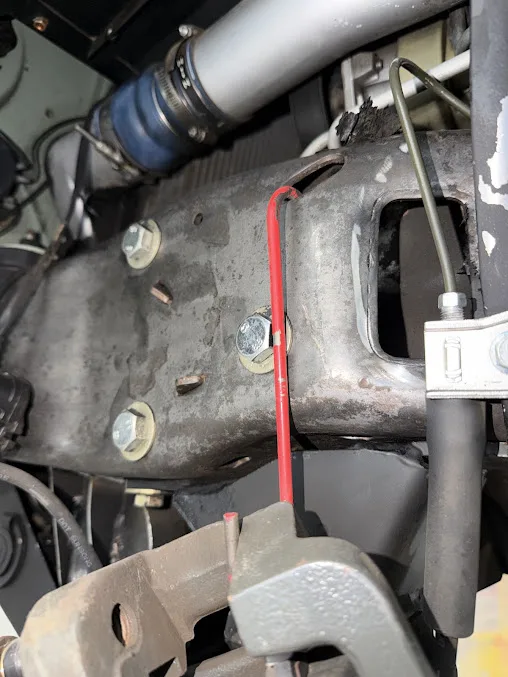
What we clean
Where this method earns its keep in Lake Park
Nearby
Also working across Palm Beach County
Questions from Lake Park
What sort of work do you get called for?
It ranges from a single restoration project to a plant maintenance window. The method does not change much.
Do you charge for the drive?
Sometimes, on the longer runs. Either way it is discussed before anyone commits.
How do I get started?
Send the equipment, the location and a short description with photos if you have them. One of the owners calls you back.
Do you actually come out to Lake Park?
We do. The whole point of a mobile setup is that Lake Park is no further than any other stop on the schedule.
What do you need from us on site?
Just access and parking. There is no tap to find, no drain to use and nothing of yours to plug into.
How flexible are the hours?
Generally yes. Weekend and overnight work is routine, and the limiting factor is usually noise, not us.
What the climate does here
Afternoon storms mean equipment that lives outside is wet, then hot, then wet again. It is also why an abrasive method costs you twice: once in the cleaning, again in the finish you removed.
Residential garages and small shops sit alongside the commercial work on any given week. In every case the truck brings its own air and its own containment, so you are not adapting the site to suit the method.
With no slurry to contain and no media to recover, a confined Palm Beach County site stops being a problem.
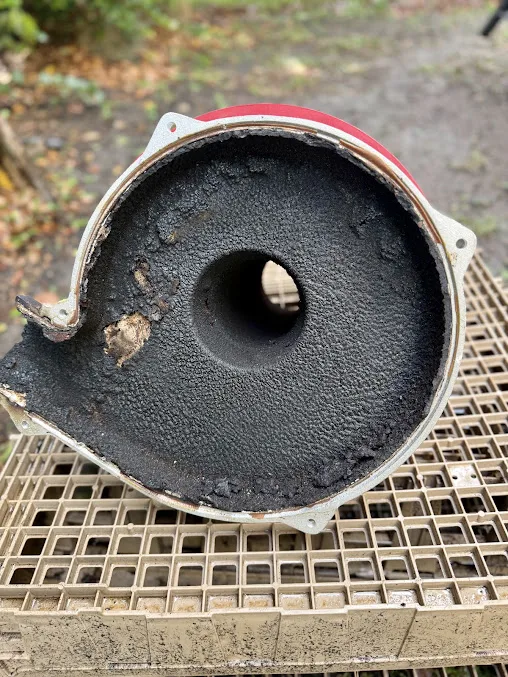
What comes off
The deposits we see most
Most calls involve one of the following. The common factor is a bond between two things that should not be bonded.
- Resin and mold release
Release agent and resin build-up on tooling, where a solvent fix trades one residue for another.
- Paint and coatings
Taken off in a controlled way when what is underneath matters more than speed.
- Salt and corrosion product
Salt deposit and the oxidation it starts. Anything abrasive removes the protection along with the salt.
- Ink and printing residue
Dried ink and coating build-up on rollers and press components, where the surface texture is the product.
- Food residue
Burnt-on product, fat and sugar on processing gear, with no chemical residue left on a contact surface.
- Grease and oil
Oil film is the layer everything else sticks to. Remove it and half the job is already done.
- Carbon and soot
Baked carbon on a manifold, oven or weld fixture. Thermal shock is exactly the wrong thing for the bond holding it on, which is why this works.
How a job runs
What happens once you call
If you have not seen this done before, the process is worth reading once. Nothing below is hidden in a footnote.
- You describe the job
Describe the equipment and the mess. If it cannot come offline that changes the plan, so say so early.
- We look at access and containment
Siting the compressor, masking what must not be touched, and catching what comes off, settled before the first pellet.
- We test a small area
Pressure and pellet size get dialed in on an inconspicuous spot before we touch anything visible. Painted parts, soft alloys and older finishes all behave differently, and the right setting on one is the wrong setting on another.
- We blast, then clean up
There is no spent media to recover, only the deposit, which we collect before packing up.
- You look before we pack up
A second pass while everything is still connected is free in every sense. A return trip is not.
The comparison
What the alternatives actually do
- Hand scraping
It is the fallback when nothing else is available, and it shows on the surface afterward.
- Media blasting
Grit removes material to do its job, so a machined face or a plated part pays for the cleaning.
- Pressure washing
Forces water where water should not go, looms, bearings, seams, and then the job stops while it dries.
- Solvent and degreaser
Good at softening, bad at leaving. There is always a residue and always a drum to get rid of.
- Dry ice
It is the only one on this list where the media stops existing the moment it has worked.
What happens in your space
Masking happens first. Whatever is adjacent and vulnerable gets covered before the hose is picked up.
Solid carbon dioxide leaves no residue at all. What it does do is displace air, so an enclosed space gets ventilated as part of the job rather than as a precaution added later.
The process is loud. Hearing protection is standard for anyone in the working area, which is why you will see ear defenders in most of our photographs.
Surfaces come out cold. On some jobs that means waiting a few minutes before handling, and on others it means condensation as the part returns to ambient temperature.
Send us the job.
A short description and a location is enough to start. Add photos if you can. You will speak to an owner, not a scheduler.