Home / Service areas / Broward County / Weston
Broward County · Florida
Weston dry ice blasting
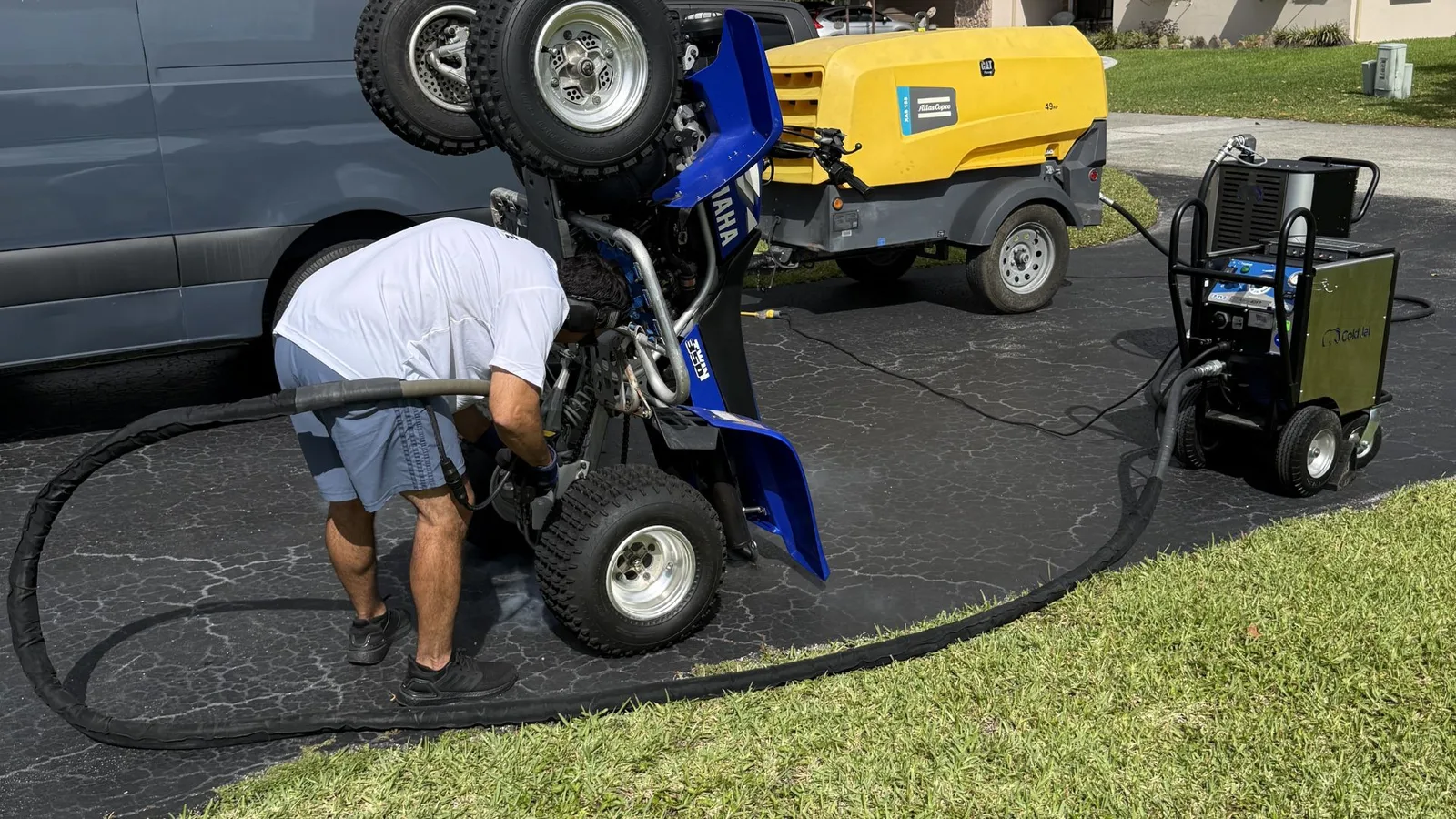
When we take a job in Weston, the rig comes to the machine rather than the other way round.
How the work runs here
We work on driveways, in yards and inside shops that cannot take water on the floor. It is also why nothing has to be crated up and driven across town, the work happens where the machine already sits in Weston.
Nothing of the ice survives the blast. That removes the entire cleanup problem every other method creates, leaving only the deposit that came off the equipment.
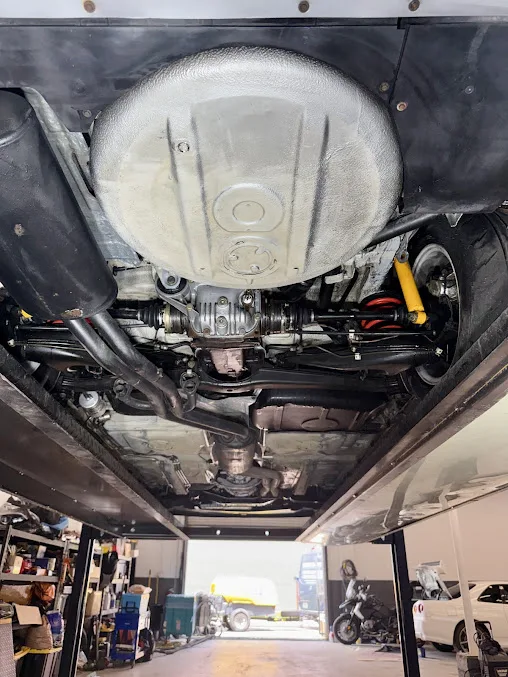
What we clean
Where this method earns its keep in Weston
Nearby
Also working across Broward County
Questions from Weston
Does distance affect the price?
Sometimes, on the longer runs. Either way it is discussed before anyone commits.
What is the first step?
A short description and a couple of pictures is enough to start. An owner rings you back.
Is Weston in your area?
We do. The whole point of a mobile setup is that Weston is no further than any other stop on the schedule.
What does the site need to have?
Space for the rig and a way to reach the machine. Everything else arrives with us.
Can you work around our schedule?
Nearly always. Give us the hours you can spare and we will say what genuinely fits inside them.
Who calls you around here?
It ranges from a single restoration project to a plant maintenance window. The method does not change much.
Why Weston equipment ends up like this
Afternoon storms mean equipment that lives outside is wet, then hot, then wet again. It is also why an abrasive method costs you twice: once in the cleaning, again in the finish you removed.
Residential garages and small shops sit alongside the commercial work on any given week. Driveway or plant floor, the requirement is the same: room for the rig and access to the machine.
With no slurry to contain and no media to recover, a confined Broward County site stops being a problem.
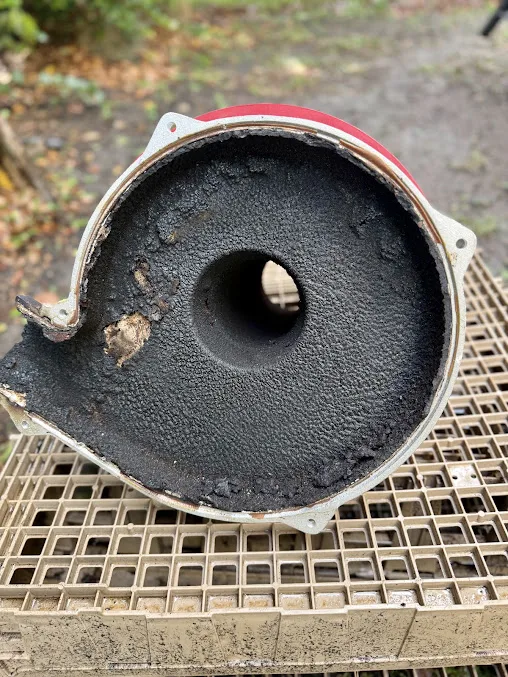
What comes off
The deposits we see most
Most calls involve one of the following. The common factor is a bond between two things that should not be bonded.
- Grease and oil
Oil film is the layer everything else sticks to. Remove it and half the job is already done.
- Carbon and soot
Heat-bonded black deposit. Because heat put it there, a sudden cold front is what breaks its grip.
- Adhesive and sealant
Whatever the last repair left stuck to the mating face: gasket, sealant, deadener or adhesive.
- Resin and mold release
Cured process residue on a mold or fixture. The surface has to come out dimensionally unchanged, which rules out anything abrasive.
- Paint and coatings
Selective removal, layer by layer, on parts where media blasting would cut into the substrate.
- Salt and corrosion product
The year-round problem on the coast. The finish holding corrosion back has to survive the cleaning.
- Ink and printing residue
Dried ink and coating build-up on rollers and press components, where the surface texture is the product.
How a job runs
What happens once you call
If you have not seen this done before, the process is worth reading once. Nothing below is hidden in a footnote.
- We look at access and containment
Siting the compressor, masking what must not be touched, and catching what comes off, settled before the first pellet.
- We test a small area
Settings get proven somewhere nobody looks before they get used somewhere everybody does. What is correct on cast iron will mark aluminum, so the test is not a formality.
- We blast, then clean up
The ice is gone on impact. What is on the floor afterward came off your machine, and clearing it is ours to do.
- You look before we pack up
Inspect it with the rig still set up. Anything you are not happy with gets another go before we leave.
- You describe the job
Send images if you can, they settle most of the questions. A wrong-tool verdict comes on that first call, not after the invoice.
The comparison
The other ways to do this
- Media blasting
Grit removes material to do its job, so a machined face or a plated part pays for the cleaning.
- Pressure washing
Forces water where water should not go, looms, bearings, seams, and then the job stops while it dries.
- Solvent and degreaser
It loosens the mess and leaves its own behind, along with fumes and something to dispose of.
- Hand scraping
Slow enough to be uneconomic on a machine, and the tool always leaves a trace.
- Dry ice
It is the only one on this list where the media stops existing the moment it has worked.
What happens in your space
Cold surfaces are the one aftereffect. Depending on the piece that is either a few minutes of patience or some condensation while it returns to room temperature.
Everything the rig needs arrives with it. No tap, no drain, no outlet.
We cover what should not be hit before anything gets blasted. It takes minutes and saves arguments.
Dry ice is carbon dioxide in solid form. It is non-toxic and leaves no residue, but it does displace oxygen in an enclosed space, so ventilation is part of the setup rather than an afterthought.
Send us the job.
Send the equipment, the location and a short description. Photos help. You will hear back from Giancarlo or Kenny, not a call center.