Home / Service areas / Palm Beach County / Limestone Creek
Palm Beach County · Florida
Limestone Creek dry ice blasting
Limestone Creek work comes to us the same way most of it does: something is coated in build-up and cannot be sanded, soaked or dissolved.
What a job looks like locally
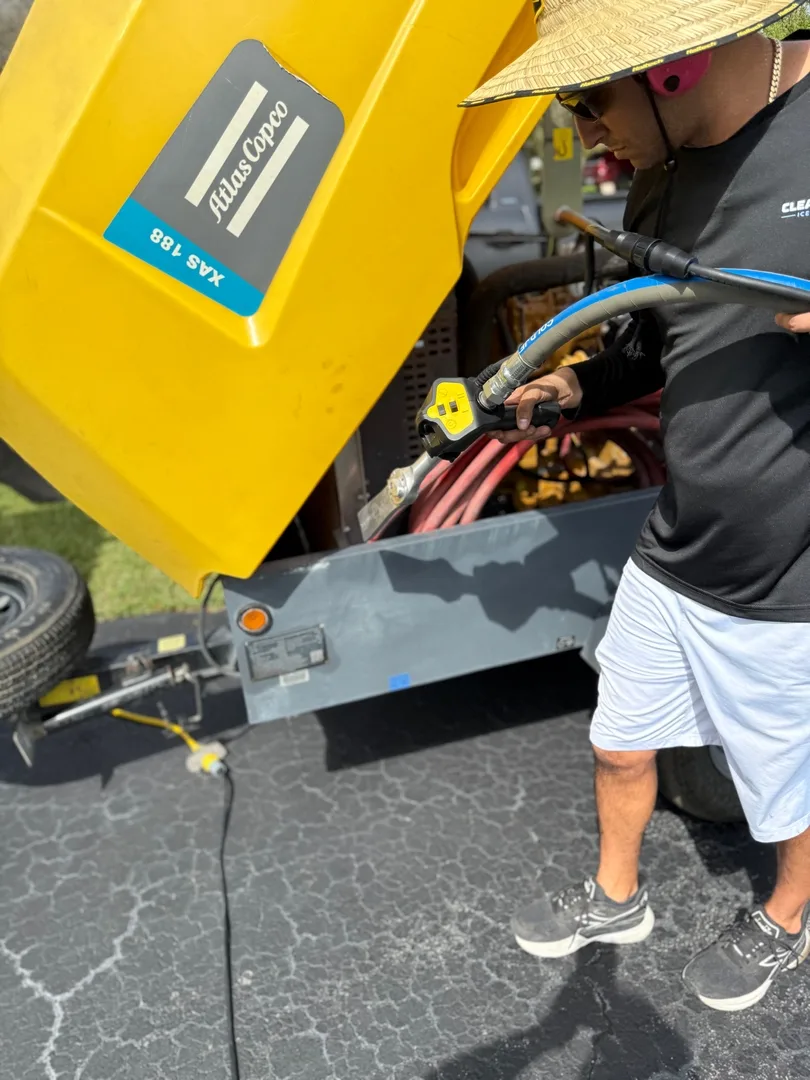
Everything arrives on the van: compressor, hose, operator and containment. That is the practical reason a mobile rig beats hauling equipment somewhere: the machine never leaves Limestone Creek.
Because the media disappears on impact, there is nothing abrasive left in a bearing and nothing to shovel up afterward. Whatever came off the surface is ours to gather before we leave.
What we clean
What we clean in and around Limestone Creek
Nearby
Also working across Palm Beach County
Questions from Limestone Creek
How flexible are the hours?
Yes, within reason. Planned outages are easiest because everybody already knows the window.
What sort of work do you get called for?
It ranges from a single restoration project to a plant maintenance window. The method does not change much.
Does distance affect the price?
Distance can factor in. You will hear about it up front, not on the invoice.
How do we book it in?
Describe the job and send a photo or two. Giancarlo or Kenny will call you, not a scheduler.
Do you actually come out to Limestone Creek?
Yes. Limestone Creek is inside our regular working area, and the rig travels to the job rather than the other way round.
What do you need from us on site?
Just access and parking. There is no tap to find, no drain to use and nothing of yours to plug into.
What the climate does here
Humidity is the constant. Anything bare oxidizes faster than it would almost anywhere else. So the job is usually less about scrubbing harder and more about not making the underlying problem worse.
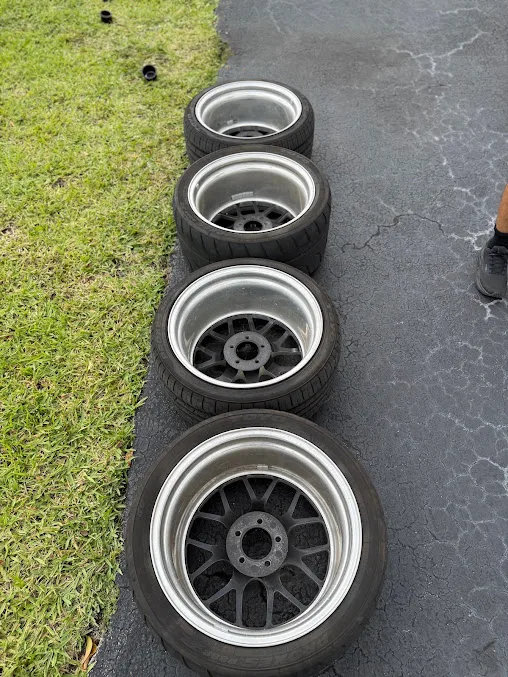
The mix here runs from vehicle work in driveways to production equipment inside industrial units. Site type barely matters when the air, the hose and the collection all arrive together.
No runoff and no residual grit, which matters more than it sounds on a Palm Beach County job with neighbors close by.
What comes off
What this takes off
The method does not care much what the contaminant is, only that it sits on top of something. Here is the usual list.
- Ink and printing residue
Dried ink on precision roller faces, cleaned without altering the cell structure that does the work.
- Food residue
Carbonized product, fat, starch and sugar build-up on processing equipment, cleaned without chemicals touching a food contact surface.
- Grease and oil
The greasy base coat that traps grit and dust. It releases early and takes the loose material with it.
- Carbon and soot
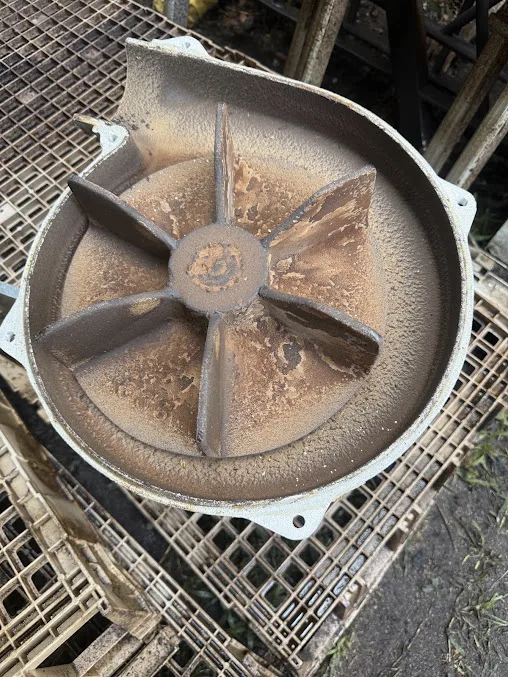
The crust that builds on anything near a flame or a weld. Cold makes it contract and lose its grip on the metal, so it lifts off in flakes.
- Adhesive and sealant
The stubborn film under old tape, or the gasket that tore and left half of itself behind.
- Resin and mold release
Release agent and resin build-up on tooling, where a solvent fix trades one residue for another.
- Paint and coatings
Selective removal, layer by layer, on parts where media blasting would cut into the substrate.
How a job runs
The sequence, start to finish
There is no mystery to how these jobs run, and no part of it we would rather you did not ask about.
- We blast, then clean up
Cleanup is short because there is so little of it. With no blasting media to recover, the work at the end is gathering the contaminant and leaving the space usable.
- You look before we pack up
The job is not finished because we say so. It is finished when you have looked at it.
- You describe the job
Tell us if the equipment can stop and for how long. A machine that can only go down for one shift needs a different plan from a car sitting in a garage all week.
- We look at access and containment
Hard-to-reach spots are where this method earns its keep, but the hose still has to get there. We trace the path in advance and pick the angle that lets us clean without taking things apart.
- We test a small area
The test patch also answers whether the buildup releases at all. Bonded grime usually lets go on the first pass, but if something on your part won’t move, we would rather find out on a hidden corner and tell you.
The comparison
What the alternatives actually do
- Solvent and degreaser
Good at softening, bad at leaving. There is always a residue and always a drum to get rid of.
- Hand scraping
Labor-intensive and uneven, and whatever you scrape with eventually marks what you are scraping.
- Media blasting
It works by removing material, which is the problem. Acceptable on heavy steel, damaging on soft alloy, plating or a machined surface.
- Pressure washing
It is fast and it is wet, which is fine outdoors and unusable on anything with a winding in it.
- Dry ice
Thermal shock breaks the bond. The pellet sublimates, so nothing abrasive touches the part and nothing is left to collect but the contaminant.
Before we turn the rig on
On electrical parts, give a cold surface time to come back to room temperature before power goes on, so any condensation has cleared first.
A driveway works as well as a plant floor. Everything the job needs, air included, arrives with us.
Anything nearby that should not be touched gets masked before we start. That is quicker than explaining it afterward.
There is no chemical in this and nothing to wipe off afterward. The gas from the ice still displaces air in a sealed room, so we keep air moving for as long as we are blasting.
Tell us what needs cleaning.
Keep it short. Describe the job, add a photo if you have one, and expect a call from an owner.