Home / Service areas / Broward County / Flamingo Gardens
Broward County · Florida
Flamingo Gardens dry ice blasting
Most of what we clean around Flamingo Gardens is equipment somebody cannot afford to damage.
What a job looks like locally
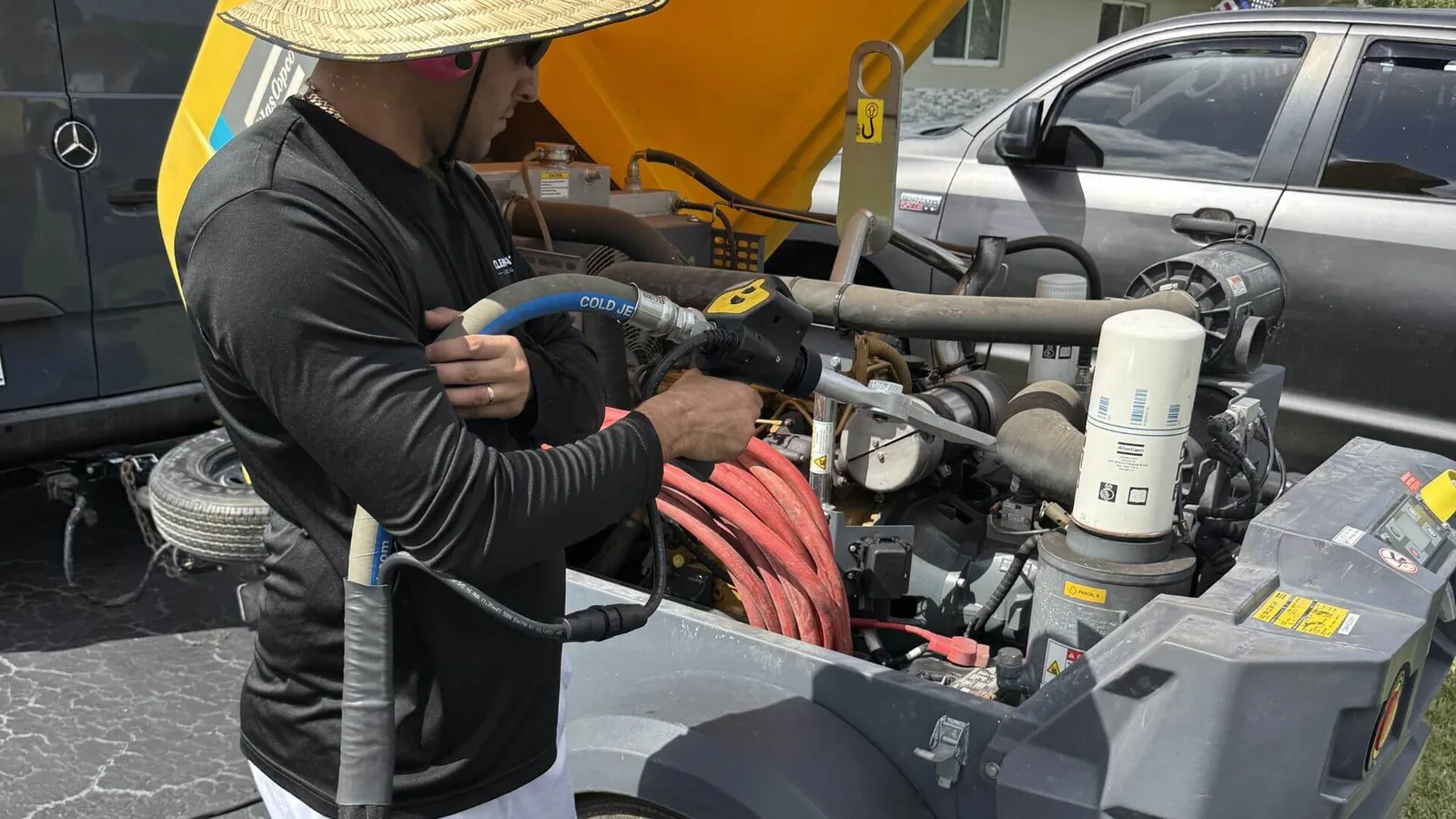
Everything arrives on the van: compressor, hose, operator and containment. That is the practical reason a mobile rig beats hauling equipment somewhere: the machine never leaves Flamingo Gardens.
Dry ice sublimates on contact, so there is no grit, no slurry and no secondary media to sweep up afterward. What is left on the floor is the grease or carbon that came off, and collecting that is part of the job.
What we clean
What we clean in and around Flamingo Gardens
Nearby
Also working across Broward County
Questions from Flamingo Gardens
Who calls you around here?
A mix, vehicle work, shop equipment, marine and light industrial. Same rig, different constraint each time.
Does distance affect the price?
Distance can factor in. You will hear about it up front, not on the invoice.
How do I get started?
Send the equipment, the location and a short description with photos if you have them. One of the owners calls you back.
Is Flamingo Gardens in your area?
We do. The whole point of a mobile setup is that Flamingo Gardens is no further than any other stop on the schedule.
What does the site need to have?
Space for the rig and a way to reach the machine. Everything else arrives with us.
Can you work around our schedule?
Most of the time. Shutdowns and after-hours work are normal for us; what matters is knowing the window early.
Why Flamingo Gardens equipment ends up like this
Salt carries a long way inland here, and it keeps working on metal every day of the year. Which is exactly the situation where a non-abrasive, low-moisture method is worth the call.
Shops, marine yards, warehouses and home garages all end up with the same problem in different forms. Site type barely matters when the air, the hose and the collection all arrive together.
No runoff and no residual grit, which matters more than it sounds on a Broward County job with neighbors close by.
What comes off
What this takes off
The method does not care much what the contaminant is, only that it sits on top of something. Here is the usual list.
- Carbon and soot
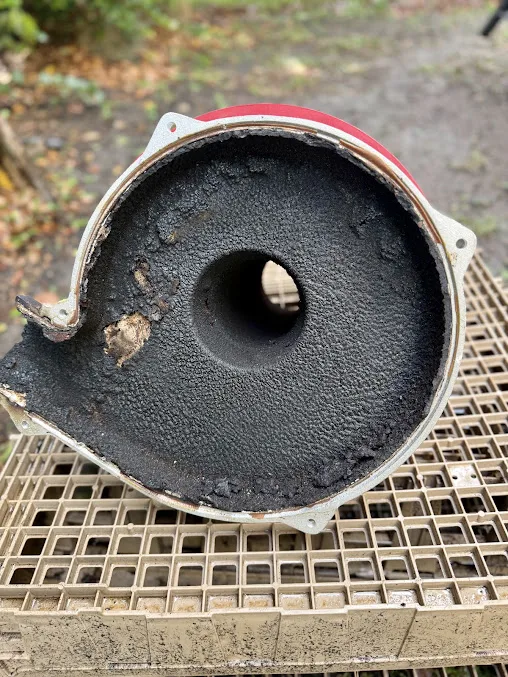
Baked carbon on a manifold, oven or weld fixture. Thermal shock is exactly the wrong thing for the bond holding it on, which is why this works.
- Adhesive and sealant
Cured sealant, old gasket, tape glue and sound deadening, the residue left when something was removed but its bond was not.
- Resin and mold release
Release agent and resin build-up on tooling, where a solvent fix trades one residue for another.
- Paint and coatings
Taken off in a controlled way when what is underneath matters more than speed.
- Salt and corrosion product
A constant in South Florida. Removing it without stripping the protective finish is the whole trick.
- Ink and printing residue
Dried ink and coating build-up on rollers and press components, where the surface texture is the product.
- Food residue
Carbonized product build-up in a plant where neither standing water nor a chemical film is acceptable.
How a job runs
The sequence, start to finish
There is no mystery to how these jobs run, and no part of it we would rather you did not ask about.
- We look at access and containment
Where the compressor sits, how far the hose has to reach, what gets masked or moved, and where the removed contaminant ends up. On food and electrical work this is most of the planning.
- We test a small area
Settings get proven somewhere nobody looks before they get used somewhere everybody does. What is correct on cast iron will mark aluminum, so the test is not a formality.
- We blast, then clean up
The ice is gone on impact. What is on the floor afterward came off your machine, and clearing it is ours to do.
- You look before we pack up
Inspect it with the rig still set up. Anything you are not happy with gets another go before we leave.
- You describe the job
We start with what it is and what is on it. Whether it can come offline matters as much as the contaminant, and a wrong-tool answer is one we give up front rather than after the invoice.
The comparison
The other ways to do this
- Pressure washing
It is fast and it is wet, which is fine outdoors and unusable on anything with a winding in it.
- Solvent and degreaser
Trades the deposit for a residue, plus ventilation and waste to deal with, and it is hard on the finish.
- Hand scraping
Slow, inconsistent, and the tool marks the surface. Fine for a small area, unworkable across a machine.
- Media blasting
It works by removing material, which is the problem. Acceptable on heavy steel, damaging on soft alloy, plating or a machined surface.
- Dry ice
Thermal shock breaks the bond. The pellet sublimates, so nothing abrasive touches the part and nothing is left to collect but the contaminant.
Before we turn the rig on
Air comes from our own compressor. You do not need to provide power, water or a connection of any kind.
Masking happens first. Whatever is adjacent and vulnerable gets covered before the hose is picked up.
Solid carbon dioxide leaves no residue at all. What it does do is displace air, so an enclosed space gets ventilated as part of the job rather than as a precaution added later.
Expect noise. Everybody inside the working area wears hearing protection, us included.
Describe what you are dealing with.
Send the equipment, the location and a short description. Photos help. You will hear back from Giancarlo or Kenny, not a call center.