Home / Service areas / Palm Beach County / Greenacres
Palm Beach County · Florida
Greenacres dry ice blasting
Most of what we clean around Greenacres is equipment somebody cannot afford to damage.
The practical side
Everything arrives on the van: compressor, hose, operator and containment. Which means no downtime spent in transit and no risk of damage moving it out of Greenacres and back.
Because the media disappears on impact, there is nothing abrasive left in a bearing and nothing to shovel up afterward. Whatever came off the surface is ours to gather before we leave.
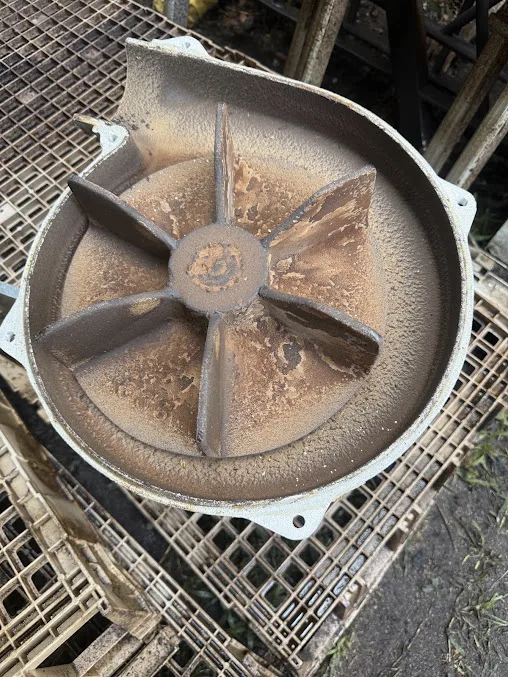
What we clean
The work we take on around Greenacres
Nearby
Also working across Palm Beach County
Questions from Greenacres
Is there a travel charge?
Distance can factor in. You will hear about it up front, not on the invoice.
How do I get started?
Send the equipment, the location and a short description with photos if you have them. One of the owners calls you back.
Do you actually come out to Greenacres?
Yes, Greenacres is well within range, and the compressor comes on the truck with everything else.
What do you need from us on site?
Space for the rig and a way to reach the machine. Everything else arrives with us.
How flexible are the hours?
Generally yes. Weekend and overnight work is routine, and the limiting factor is usually noise, not us.
What sort of work do you get called for?
A mix, vehicle work, shop equipment, marine and light industrial. Same rig, different constraint each time.
What the climate does here
Salt carries a long way inland here, and it keeps working on metal every day of the year. Which is exactly the situation where a non-abrasive, low-moisture method is worth the call.
Shops, marine yards, warehouses and home garages all end up with the same problem in different forms. Whatever the setting, the rig arrives with its own compressor and containment, so nothing about the site has to change to accommodate us.
Because the media sublimates, there is no slurry running toward a storm drain and no grit left in a machine. On a tight site in Palm Beach County that is often the deciding factor.
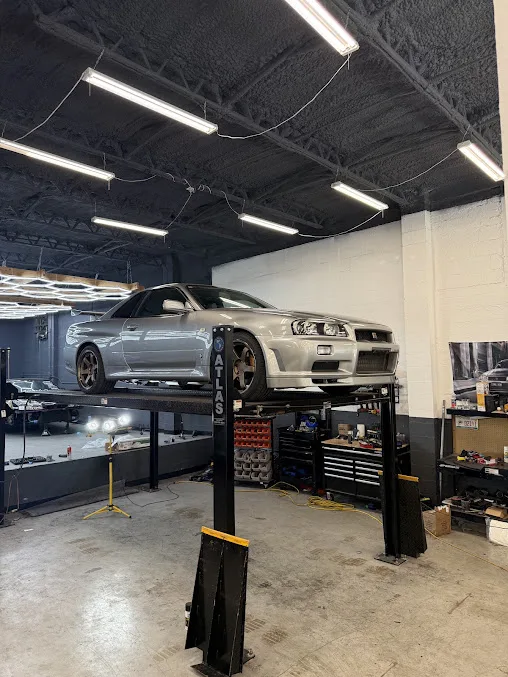
What comes off
What comes off, and why
If it is bonded to the surface rather than part of it, there is a good chance this takes it off. The list below covers most of what we are called out for.
- Ink and printing residue
Dried ink on precision roller faces, cleaned without altering the cell structure that does the work.
- Food residue
Carbonized product, fat, starch and sugar build-up on processing equipment, cleaned without chemicals touching a food contact surface.
- Grease and oil
The greasy base coat that traps grit and dust. It releases early and takes the loose material with it.
- Carbon and soot
Heat-bonded black deposit. Because heat put it there, a sudden cold front is what breaks its grip.
- Adhesive and sealant
Bonded material that outlived whatever it was bonding, usually harder to shift than the part it is on.
- Resin and mold release
Cured process residue on a mold or fixture. The surface has to come out dimensionally unchanged, which rules out anything abrasive.
- Paint and coatings
Selective removal, layer by layer, on parts where media blasting would cut into the substrate.
How a job runs
Nothing about this should be a surprise
Nobody should have to guess what they booked. This is every stage of a job in the order it happens.
- You look before we pack up
If something needs another pass we do it then, on site, while the rig is still running. That is a better outcome for everyone than a callback.
- You describe the job
The machine, the deposit and the downtime you can afford. Those three things decide the whole job, and we would rather know all of them before quoting.
- We look at access and containment
How close the truck can get, how far the hose must run, what needs covering, and where the debris goes. That is the bulk of the planning on a tight site.
- We test a small area
Settings get proven somewhere nobody looks before they get used somewhere everybody does. What is correct on cast iron will mark aluminum, so the test is not a formality.
- We blast, then clean up
The ice is gone the moment it does its work. What stays behind is the grease or carbon that came off, and collecting that is part of the job, not an extra.
The comparison
What the alternatives actually do
- Solvent and degreaser
Good at softening, bad at leaving. There is always a residue and always a drum to get rid of.
- Hand scraping
Slow, inconsistent, and the tool marks the surface. Fine for a small area, unworkable across a machine.
- Media blasting
Abrasive by definition. Anything with a tolerance or a finish worth keeping comes out changed.
- Pressure washing
Drives water into harnesses, bearings, panels and seams, then everything waits to dry. On electrical work it is simply not an option.
- Dry ice
The pellet is soft and the mechanism is temperature, not abrasion. It turns to gas on impact, so the only thing left to sweep up is what came off.
What to expect on site
The part will be cold when we finish. Sometimes that means a short wait before handling; sometimes it means a film of condensation as it warms back up.
The rig needs compressed air, which the truck supplies. There is no hookup to find and nothing of yours to plug into.
Anything nearby that should not be touched gets masked before we start. That is quicker than explaining it afterward.
The media is solid CO2, nothing toxic and nothing left behind, but it pushes oxygen out of a closed room. Ventilation gets planned before the hose is connected.

Tell us what needs cleaning.
A short description and a location is enough to start. Add photos if you can. You will speak to an owner, not a scheduler.