Home / Service areas / Palm Beach County / Gulf Stream
Palm Beach County · Florida
Gulf Stream dry ice blasting
Gulf Stream work comes to us the same way most of it does: something is coated in build-up and cannot be sanded, soaked or dissolved.
What a job looks like locally
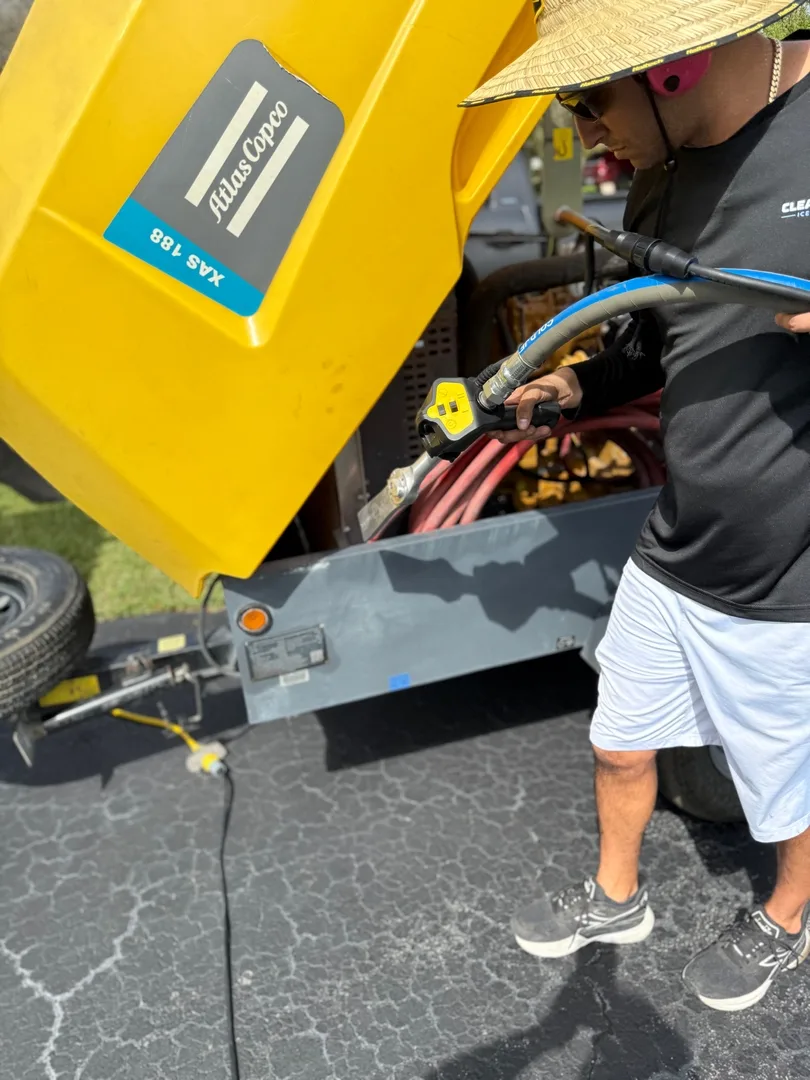
The compressor runs off the truck, so there is no wash pad to find and no runoff to manage. That is the practical reason a mobile rig beats hauling equipment somewhere: the machine never leaves Gulf Stream.
Dry ice sublimates on contact, so there is no grit, no slurry and no secondary media to sweep up afterward. What is left on the floor is the grease or carbon that came off, and collecting that is part of the job.
What we clean
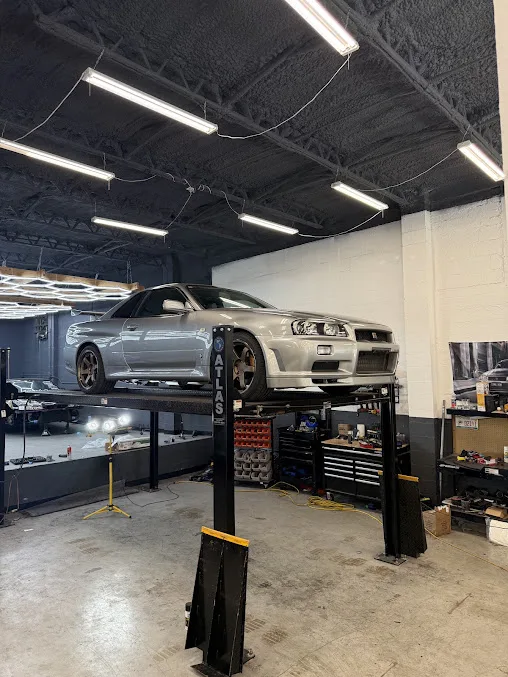
What we clean in and around Gulf Stream
Nearby
Also working across Palm Beach County
Questions from Gulf Stream
Can you come outside business hours?
Yes, within reason. Planned outages are easiest because everybody already knows the window.
What do most jobs look like?
Everything from an engine bay in a driveway to a production line at shutdown. The process is the same, pointed at a different problem.
Does distance affect the price?
It depends how far out the job is. We will be straight with you about it when you describe the work.
How do we book it in?
A short description and a couple of pictures is enough to start. An owner rings you back.
Will you travel to Gulf Stream?
Yes. Gulf Stream is inside our regular working area, and the rig travels to the job rather than the other way round.
Do you need anything set up before you arrive?
Space for the rig and a way to reach the machine. Everything else arrives with us.
The local conditions
Afternoon storms mean equipment that lives outside is wet, then hot, then wet again. It is also why an abrasive method costs you twice: once in the cleaning, again in the finish you removed.
Residential garages and small shops sit alongside the commercial work on any given week. None of those settings need modifying: the compressor, hose and collection all come with us.
No runoff and no residual grit, which matters more than it sounds on a Palm Beach County job with neighbors close by.
What comes off
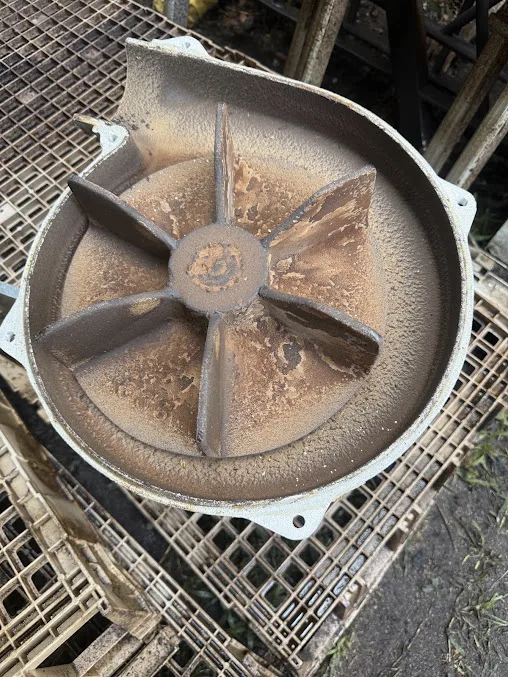
What this takes off
The method does not care much what the contaminant is, only that it sits on top of something. Here is the usual list.
- Paint and coatings
Taken off in a controlled way when what is underneath matters more than speed.
- Salt and corrosion product
The year-round problem on the coast. The finish holding corrosion back has to survive the cleaning.
- Ink and printing residue
Dried ink on precision roller faces, cleaned without altering the cell structure that does the work.
- Food residue
Burnt-on product, fat and sugar on processing gear, with no chemical residue left on a contact surface.
- Grease and oil
Thick grease that has been sitting for years comes off too, it just takes more passes. Fresh oil film is quicker, and both leave nothing behind but the grime itself.
- Carbon and soot
The layer of black on anything that runs hot, from an engine to a fryer. Scraping it gouges the surface; the cold pops it off instead.
- Adhesive and sealant
Sealant squeezed out and cured where it was never supposed to set.
How a job runs
The sequence, start to finish
There is no mystery to how these jobs run, and no part of it we would rather you did not ask about.
- You describe the job
Tell us the machine, the mess and the constraint. A couple of photos answers more than a long description, and if the honest answer is that something else suits it better, we say so.
- We look at access and containment
If your people are still working nearby, we plan around them. That means deciding where the noise and the debris go, and keeping a clear line between the work area and everyone else.
- We test a small area
Settings get proven somewhere nobody looks before they get used somewhere everybody does. What is correct on cast iron will mark aluminum, so the test is not a formality.
- We blast, then clean up
The media disappears on contact; the contaminant does not. Gathering what came off is included, not a line added afterward.
- You look before we pack up
Inspect it with the rig still set up. Anything you are not happy with gets another go before we leave.
The comparison
Why not just pressure wash it
- Media blasting
Effective and indiscriminate. On soft metal or a finished surface it does damage you then have to fix.
- Pressure washing
Drives water into harnesses, bearings, panels and seams, then everything waits to dry. On electrical work it is simply not an option.
- Solvent and degreaser
Softens the contaminant but leaves a film, fumes and a disposal problem, and attacks finishes you meant to keep.
- Hand scraping
Slow enough to be uneconomic on a machine, and the tool always leaves a trace.
- Dry ice
Thermal shock breaks the bond. The pellet sublimates, so nothing abrasive touches the part and nothing is left to collect but the contaminant.
Before we turn the rig on
Anything nearby that should not be touched gets masked before we start. That is quicker than explaining it afterward.
If the space has no windows and no door that opens to the outside, tell us before the visit. Airflow in a closed room is settled before the first pellet goes in.
Expect noise. Everybody inside the working area wears hearing protection, us included.
Mostly what you notice afterward is the temperature. Wait a few minutes before touching the part, and expect some moisture on it as it comes back up to room temperature.
Send us the job.
Tell us what the machine is, where it is and what is on it. A photo or two speeds it up. One of the owners calls you back.