Home / Services / Construction / Paving Equipment
Construction · Miami, FL
Paving Equipment Ice Blasting
When people call about paving equipment, the constraint is usually the same. We clean it without water, without chemicals and without anything abrasive touching the surface.
What builds up, and why it matters
On this kind of work the problem is hardened concrete slurry, asphalt, hydraulic oil, clay and general site build-up. Heavy equipment is usually cleaned with pressure and chemicals, which drives water into pins, bearings and electrics and leaves runoff to deal with.
Machines are cleaned at the yard or on site, without a wash pad. The people who call us about paving equipment are usually equipment managers and owner-operators, and the thing they are actually worried about is water forced into bearings and electrical connections.
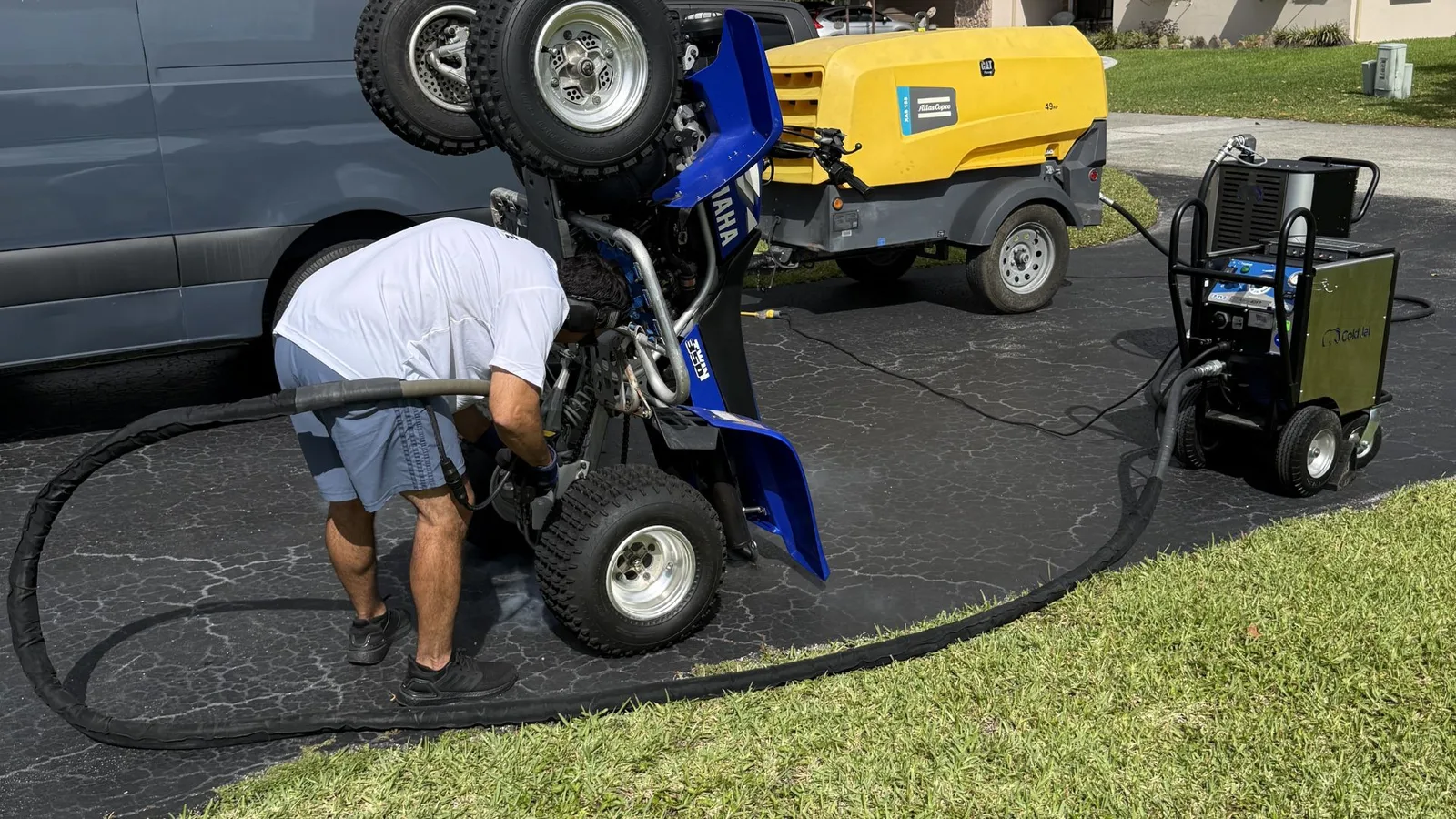
The method
Why dry ice and not the alternatives
- Non-abrasive
There is no grit in the stream, only ice that turns to gas on impact. That is why finishes and machined surfaces come through without scratching.
- Low moisture
Bearings and wiring hate water. The ice turns to gas instead of liquid, so there is none to work its way inside.
- No secondary waste
Abrasive media has to be contained, swept and thrown away. With dry ice there is nothing to recover except what came off your equipment.
- Often no teardown
We clean most equipment where it stands. Taking things apart and putting them back is the expensive part of any cleaning job, and here it is usually skipped.
More construction work
Related jobs we get called for
Questions we get asked first
Will it damage the surface underneath?
Done right, no. The risk is in the wrong settings, which is why we start gentle on a test spot and work up instead of opening up on the part itself.
Do you have to take the equipment apart for paving equipment?
Not often. Because nothing wet goes in, there is no reason to pull covers or remove parts to protect them from water. Where something does need to come off for access, we tell you ahead of time.
How much mess does it make?
Customers are usually surprised at how little there is. Without blasting media to recover, the pile at the end is small, and we take care of it.
Do you come to us?
Yes, and nothing of yours needs to move. The equipment rides with us, and we travel across South Florida from Miami, out to about the hundred-mile mark.
What does a job cost?
Honestly, it depends, and we would rather not quote blind. A few photos and a sentence about the access usually give us enough to price it properly.
How soon can you look at it?
A plant that is down and losing money is a different call from a car project in a garage. Tell us which one you have and we will be upfront about where it fits.
The comparison
What the alternatives actually do
- Hand scraping
Slow, inconsistent, and the tool marks the surface. Fine for a small area, unworkable across a machine.
- Media blasting
Abrasive by definition. Anything with a tolerance or a finish worth keeping comes out changed.
- Pressure washing
Pressure pushes moisture past seals and into connectors, and then you wait. Panels and motors rule it out.
- Solvent and degreaser
Softens the contaminant but leaves a film, fumes and a disposal problem, and attacks finishes you meant to keep.
- Dry ice
The deposit shrinks away from the surface it is stuck to and releases. The ice is gone before it can do any harm.
What comes off
The deposits we see most
This list covers the bulk of what people ask us about. All of it is buildup sitting on top of something worth keeping.
- Resin and mold release
Release agent and resin build-up on tooling, where a solvent fix trades one residue for another.
- Paint and coatings
Selective removal, layer by layer, on parts where media blasting would cut into the substrate.
- Salt and corrosion product
A constant in South Florida. Removing it without stripping the protective finish is the whole trick.
- Ink and printing residue
Dried ink and coating build-up on rollers and press components, where the surface texture is the product.
- Food residue
Carbonized product, fat, starch and sugar build-up on processing equipment, cleaned without chemicals touching a food contact surface.
- Grease and oil
Oil film is the layer everything else sticks to. Remove it and half the job is already done.
- Carbon and soot
Heat-bonded black deposit. Because heat put it there, a sudden cold front is what breaks its grip.
How a job runs
What happens once you call
There are no surprises built into how we work. Read the steps once and you will know what to expect on the day.
- We look at access and containment
Where the compressor sits, how far the hose has to reach, what gets masked or moved, and where the removed contaminant ends up. On food and electrical work this is most of the planning.
- We test a small area
The rig gets tuned to your surface, never the last job’s. We try it on a concealed spot, look closely, and change pressure or pellet size before going anywhere obvious.
- We blast, then clean up
One mess instead of two: the pellet vanishes and we take away what it removed.
- You look before we pack up
Walk it with us before the hose goes away. A second pass while the compressor is still running costs nothing; a return visit costs us both.
- You describe the job
Start with the machine and what is caked on it. A phone photo from a couple of angles saves a lot of back and forth. Tell us whether it can come offline and for how long, because that shapes the whole plan, and if another method suits it better you hear that first.
What happens in your space
Expect noise. Everybody inside the working area wears hearing protection, us included.
Some dampness on the surface after we stop is normal. It is the part coming back to air temperature, and it clears without wiping.
Power, water and air are not things you need to provide. The truck covers the air, and the process needs no water at all.
Anything nearby that should not be touched gets masked before we start. That is quicker than explaining it afterward.
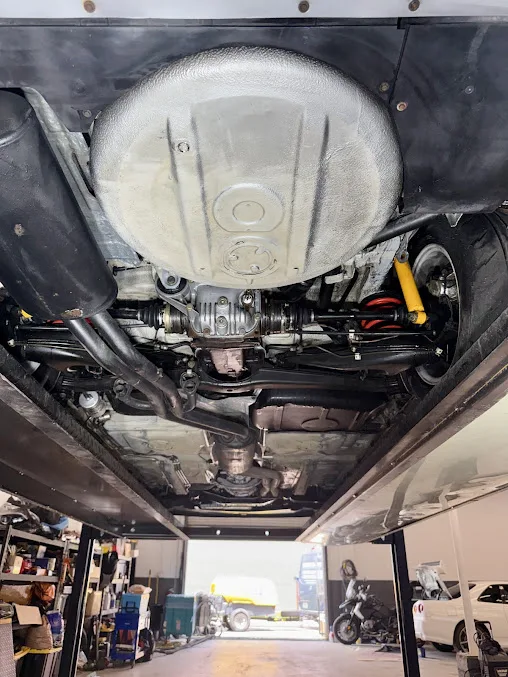
Tell us what needs cleaning.
Car or commercial, the first step is the same: tell us what it is and where. We take it from there.