Home / Service areas / Miami-Dade County / Florida City
Miami-Dade County · Florida
Florida City dry ice blasting
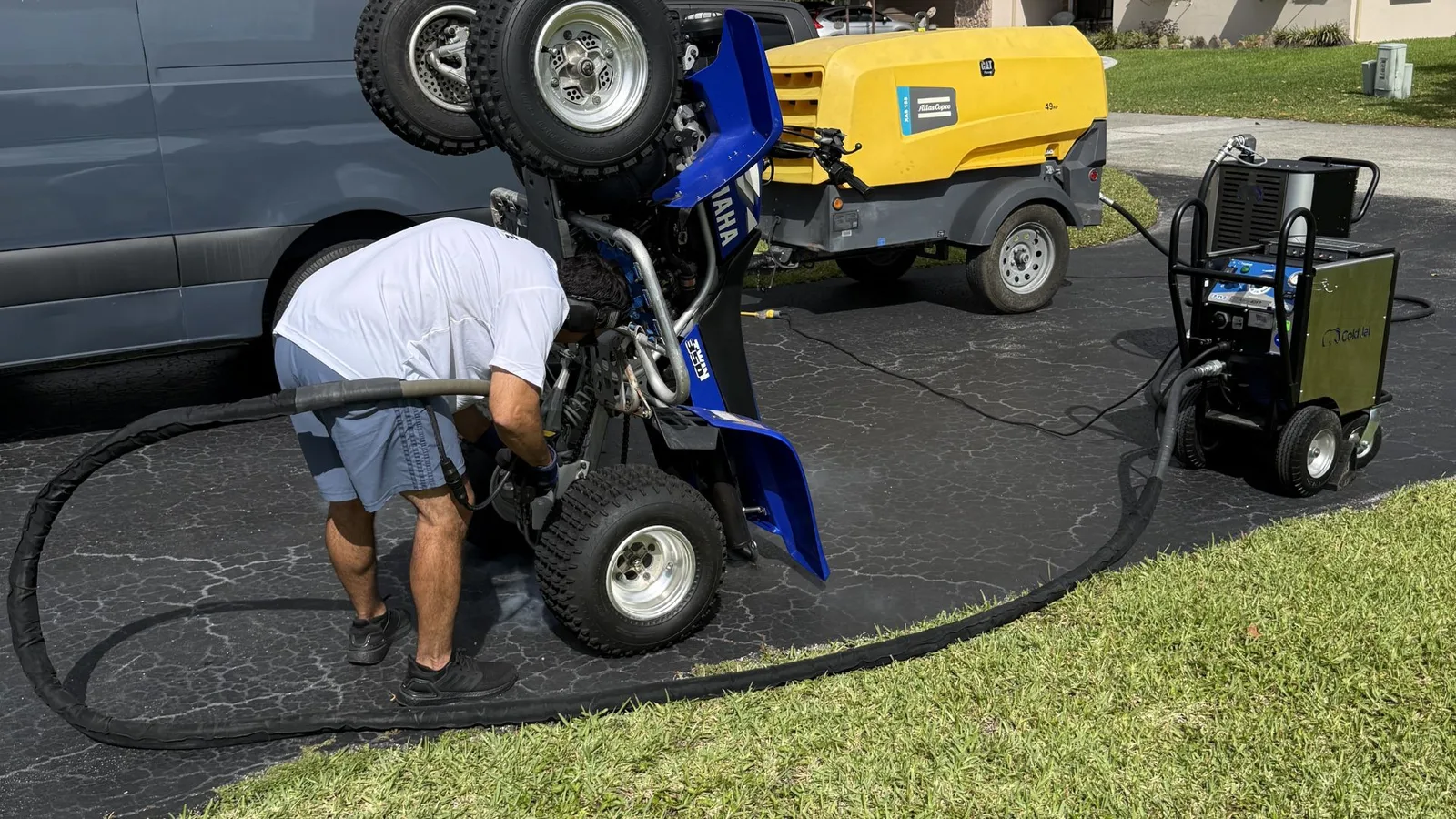
When we take a job in Florida City, the rig comes to the machine rather than the other way round.
How we work in this area
Nothing about the setup needs a drain, a hookup or a bay. So the equipment stays put. Everything that has to move arrives on the truck instead.
The pellet turns straight to gas when it hits, which means no sand in the machine and no sludge on the floor. The only thing to collect is the contaminant itself, and that is included.
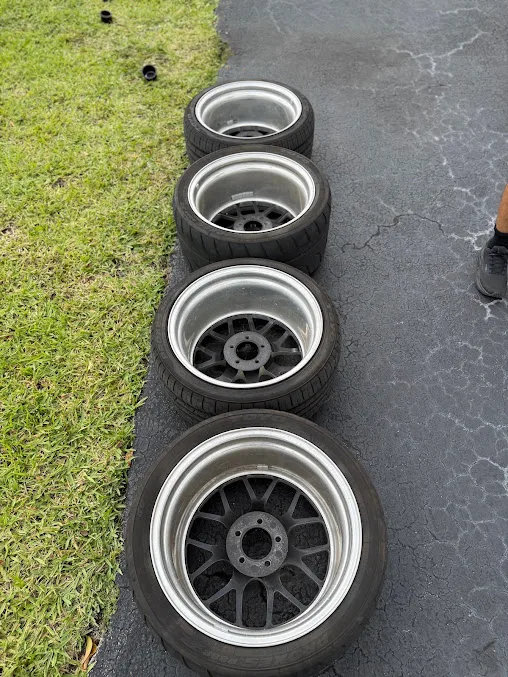
What we clean
What we get called for in Florida City
Nearby
Also working across Miami-Dade County
Questions from Florida City
How do we book it in?
A short description and a couple of pictures is enough to start. An owner rings you back.
Do you actually come out to Florida City?
We do. The whole point of a mobile setup is that Florida City is no further than any other stop on the schedule.
What do you need from us on site?
Just access and parking. There is no tap to find, no drain to use and nothing of yours to plug into.
How flexible are the hours?
Generally yes. Weekend and overnight work is routine, and the limiting factor is usually noise, not us.
What sort of work do you get called for?
A mix, vehicle work, shop equipment, marine and light industrial. Same rig, different constraint each time.
Does distance affect the price?
Sometimes, on the longer runs. Either way it is discussed before anyone commits.
What the climate does here
Afternoon storms mean equipment that lives outside is wet, then hot, then wet again. It is also why an abrasive method costs you twice: once in the cleaning, again in the finish you removed.
Residential garages and small shops sit alongside the commercial work on any given week. In every case the truck brings its own air and its own containment, so you are not adapting the site to suit the method.
The pellet turns to gas, so nothing runs off toward a drain and nothing abrasive stays behind in a bearing. On a cramped Miami-Dade County site that usually decides it.
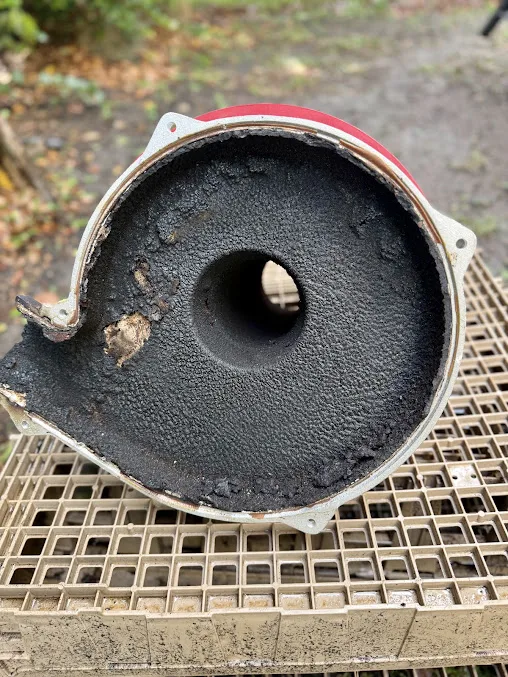
What comes off
What dry ice actually removes
The rule of thumb is simple: anything stuck on rather than built in. These are the deposits we see most.
- Food residue
Carbonized product build-up in a plant where neither standing water nor a chemical film is acceptable.
- Grease and oil
The soft film that holds dust and swarf against metal. It is what makes a part feel dirty long after it looks clean, and it comes off first.
- Carbon and soot
Heat-bonded black deposit. Because heat put it there, a sudden cold front is what breaks its grip.
- Adhesive and sealant
Bonded material that outlived whatever it was bonding, usually harder to shift than the part it is on.
- Resin and mold release
Production residue cured onto tooling. Solvent softens it and leaves its own film; the ice lifts it and takes nothing with it.
- Paint and coatings
Removed selectively where the substrate underneath has to survive, which rules out most abrasive approaches.
- Salt and corrosion product
A constant in South Florida. Removing it without stripping the protective finish is the whole trick.
How a job runs
How a job actually runs
Most people have never watched dry ice blasting happen and are not sure what they are agreeing to. Here is the whole sequence, start to finish.
- You look before we pack up
We would rather you find the missed spot while we are standing there than a week later. Another pass on the day is the cheapest fix available.
- You describe the job
The machine, the deposit and the downtime you can afford. Those three things decide the whole job, and we would rather know all of them before quoting.
- We look at access and containment
Hose run, compressor position, what needs masking, and where the contaminant is collected. For food and electrical jobs the containment plan takes longer to settle than the blasting does.
- We test a small area
Pressure and pellet size get dialed in on an inconspicuous spot before we touch anything visible. Painted parts, soft alloys and older finishes all behave differently, and the right setting on one is the wrong setting on another.
- We blast, then clean up
One mess instead of two: the pellet vanishes and we take away what it removed.
The comparison
What the alternatives actually do
- Hand scraping
Slow, inconsistent, and the tool marks the surface. Fine for a small area, unworkable across a machine.
- Media blasting
Abrasive by definition. Anything with a tolerance or a finish worth keeping comes out changed.
- Pressure washing
The water has to go somewhere, and on most equipment that somewhere is inside it.
- Solvent and degreaser
Trades the deposit for a residue, plus ventilation and waste to deal with, and it is hard on the finish.
- Dry ice
The deposit shrinks away from the surface it is stuck to and releases. The ice is gone before it can do any harm.
What the job is like to stand next to
Everything the rig needs arrives with it. No tap, no drain, no outlet.
Anything nearby that should not be touched gets masked before we start. That is quicker than explaining it afterward.
The media is solid CO2, nothing toxic and nothing left behind, but it pushes oxygen out of a closed room. Ventilation gets planned before the hose is connected.
This is not a quiet method. Ear defenders are standard issue on site for anyone nearby.
Describe what you are dealing with.
A short description and a location is enough to start. Add photos if you can. You will speak to an owner, not a scheduler.