Home / Service areas / Broward County / Hillsboro Pines
Broward County · Florida
Hillsboro Pines dry ice blasting
Most of what we clean around Hillsboro Pines is equipment somebody cannot afford to damage.
How the work runs here
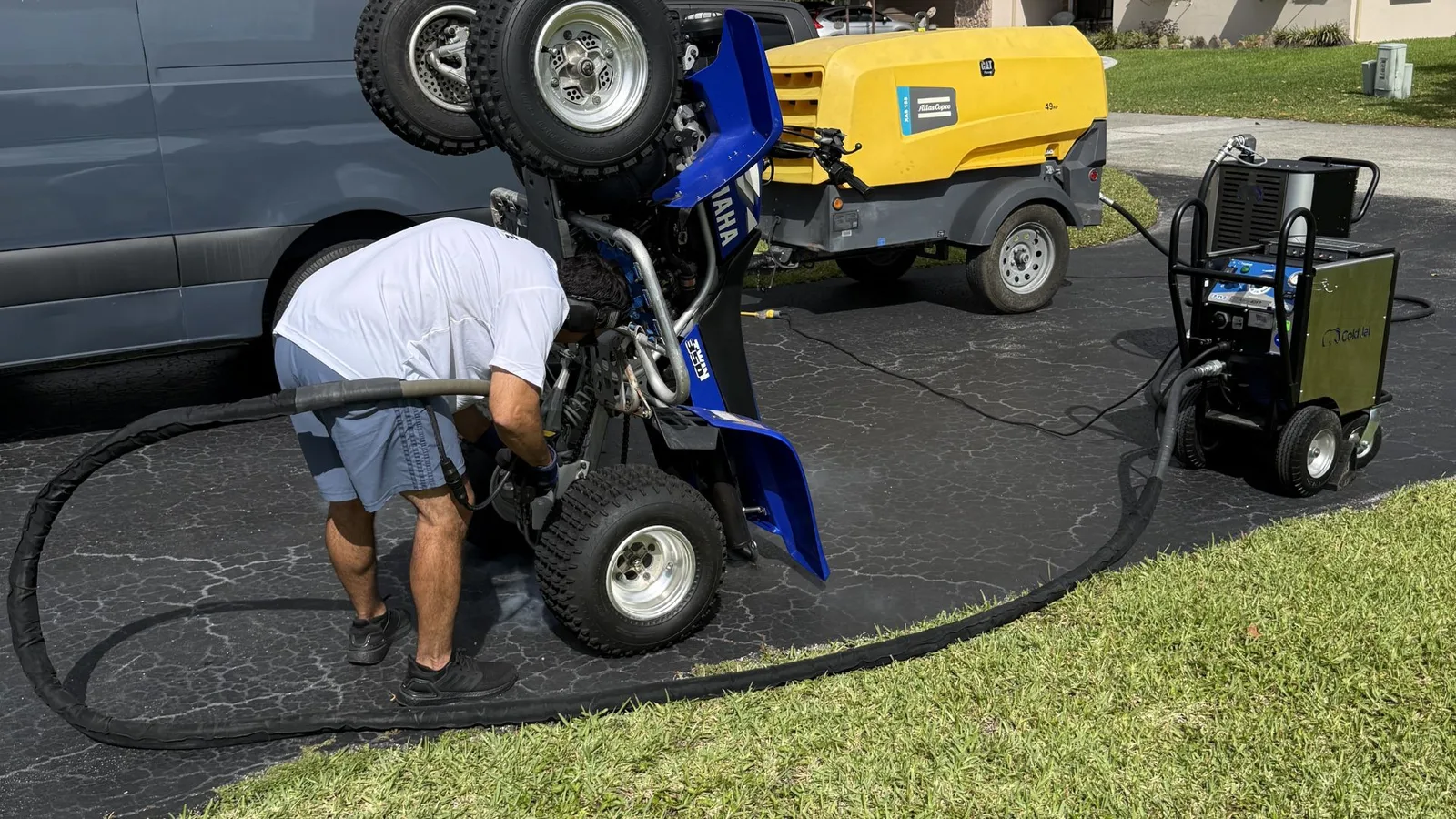
Nothing about the setup needs a drain, a hookup or a bay. It is also why nothing has to be crated up and driven across town, the work happens where the machine already sits in Hillsboro Pines.
The pellet turns straight to gas when it hits, which means no sand in the machine and no sludge on the floor. The only thing to collect is the contaminant itself, and that is included.

What we clean
Where this method earns its keep in Hillsboro Pines
Nearby
Also working across Broward County
Questions from Hillsboro Pines
What sort of work do you get called for?
It ranges from a single restoration project to a plant maintenance window. The method does not change much.
Does distance affect the price?
Sometimes, on the longer runs. Either way it is discussed before anyone commits.
How do we book it in?
Describe the job and send a photo or two. Giancarlo or Kenny will call you, not a scheduler.
Do you actually come out to Hillsboro Pines?
Yes, Hillsboro Pines is well within range, and the compressor comes on the truck with everything else.
What do you need from us on site?
Access to the equipment and somewhere to park the compressor. No water hookup, no drain and no wash bay.
How flexible are the hours?
Generally yes. Weekend and overnight work is routine, and the limiting factor is usually noise, not us.
What the climate does here
Salt carries a long way inland here, and it keeps working on metal every day of the year. Which is exactly the situation where a non-abrasive, low-moisture method is worth the call.
Shops, marine yards, warehouses and home garages all end up with the same problem in different forms. Driveway or plant floor, the requirement is the same: room for the rig and access to the machine.
With no slurry to contain and no media to recover, a confined Broward County site stops being a problem.
What comes off
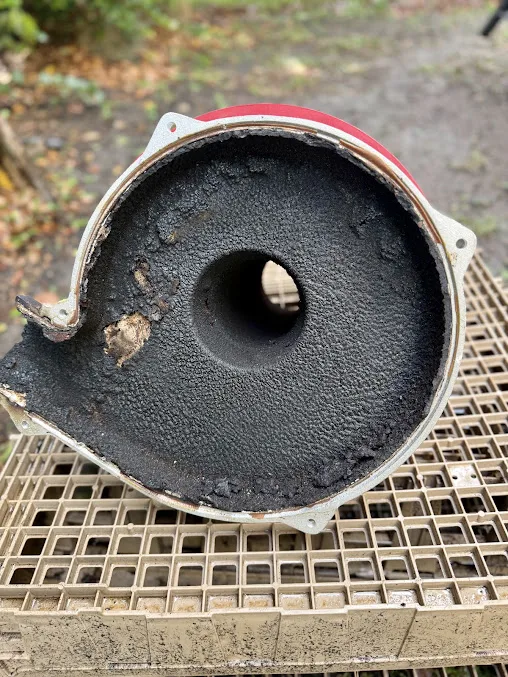
The deposits we see most
Most calls involve one of the following. The common factor is a bond between two things that should not be bonded.
- Carbon and soot
Heat-bonded black deposit. Because heat put it there, a sudden cold front is what breaks its grip.
- Adhesive and sealant
Sealant squeezed out and cured where it was never supposed to set.
- Resin and mold release
Cured resin clings to fixtures and tooling. Grit would wear the tool as it cleaned, which is why this needs something softer.
- Paint and coatings
Selective removal, layer by layer, on parts where media blasting would cut into the substrate.
- Salt and corrosion product
A constant in South Florida. Removing it without stripping the protective finish is the whole trick.
- Ink and printing residue
Dried ink on precision roller faces, cleaned without altering the cell structure that does the work.
- Food residue
Carbonized product build-up in a plant where neither standing water nor a chemical film is acceptable.
How a job runs
What happens once you call
We explain the whole job up front. If something below does not make sense, ask, and one of the owners will walk you through it.
- We look at access and containment
Hose run, compressor position, what needs masking, and where the contaminant is collected. For food and electrical jobs the containment plan takes longer to settle than the blasting does.
- We test a small area
The first pellets go somewhere you will never see. Once that spot comes clean without marking, we know what pressure to use on the rest.
- We blast, then clean up
One mess instead of two: the pellet vanishes and we take away what it removed.
- You look before we pack up
The job is not finished because we say so. It is finished when you have looked at it.
- You describe the job
Give us the basics: the machine or vehicle, the buildup, and where it sits. From that we can usually tell you on the phone whether dry ice is the right call or whether you should be looking elsewhere.
The comparison
What the alternatives actually do
- Pressure washing
Water gets into everything and has to come out again before the equipment runs. Around electrics it is off the table entirely.
- Solvent and degreaser
Trades the deposit for a residue, plus ventilation and waste to deal with, and it is hard on the finish.
- Hand scraping
Fine on a patch, hopeless on a machine, and the blade leaves its own evidence.
- Media blasting
Cuts into the substrate by design. Fine on structural steel, wrong on aluminum, plating, machined faces or anything with a tolerance.
- Dry ice
Cold breaks the bond and the media vanishes. The substrate is untouched and there is no second mess to clean up.
What happens in your space
The gas the ice turns into is the same carbon dioxide we breathe out, and it leaves nothing on the surface. In a closed room it can crowd out air, though, so we open things up before starting.
Expect noise. Everybody inside the working area wears hearing protection, us included.
Cleaned surfaces will be cold. We mention it so nobody grabs a part straight off the nozzle, and so a little moisture as it warms does not look like a problem. It is not.
Everything the rig needs arrives with it. No tap, no drain, no outlet.
Describe what you are dealing with.
If you are not sure dry ice is the answer, ask anyway. We will tell you straight if it is the wrong method.