Home / Service areas / Glades County
4 communities · Florida
Dry ice blasting across Glades County
We are mobile, so the job site is wherever the machine is. The compressor, hose and operator come to you anywhere in Glades County.
Working in Glades County
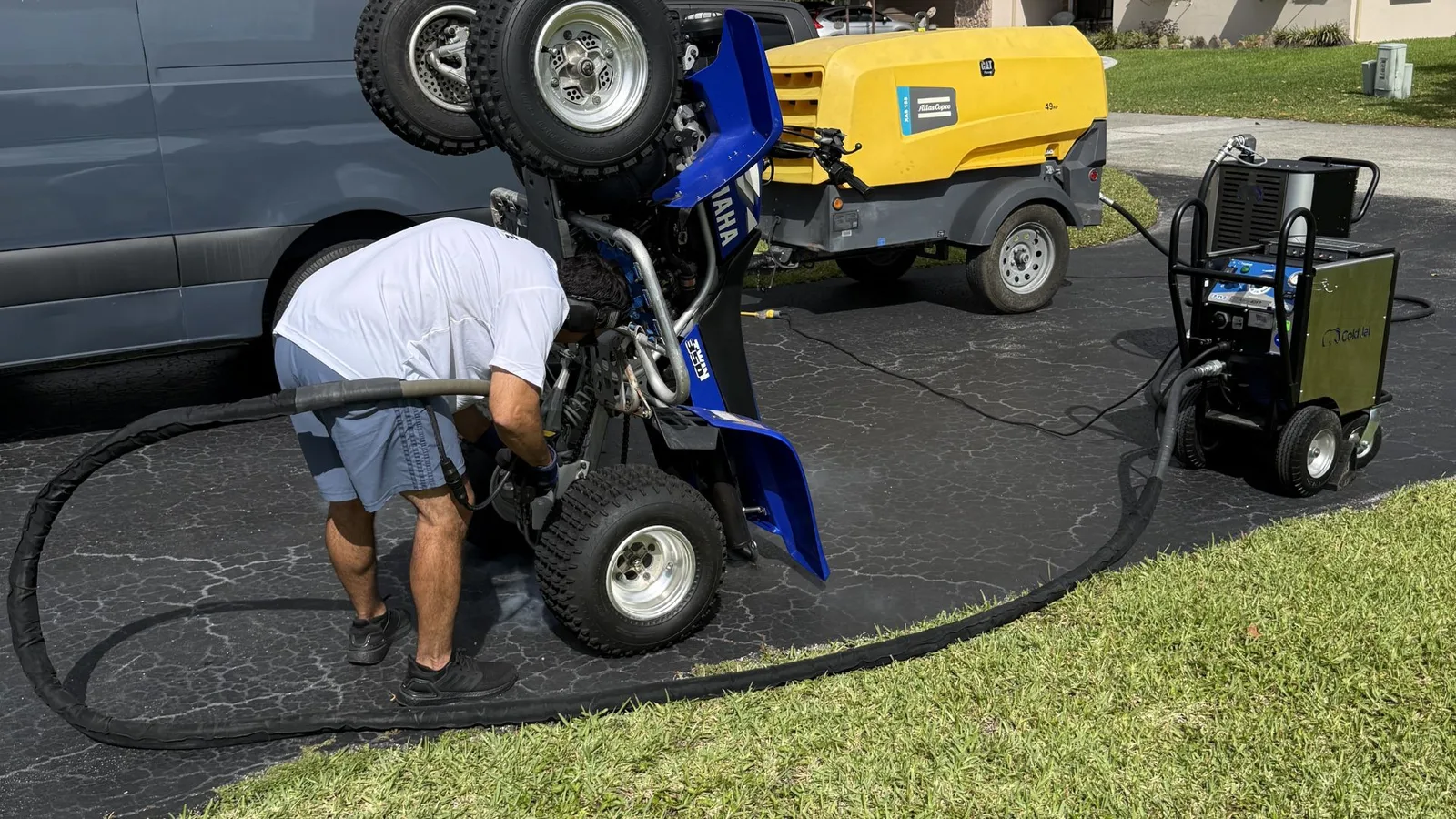
Everything we do runs off our own compressor, so there is no wash pad to find and no drain to worry about. That matters in Glades County, where a lot of the work happens on a driveway, in a yard, or inside a shop that cannot be flooded.
South Florida salt air keeps corrosion moving all year, which is why so much of the work here is about removing what has bonded to a surface without taking the surface with it.
Questions we get from around here
Is Glades County in your area?
Yes, Glades County is well within range, and the compressor comes on the truck with everything else.
What does the site need to have?
Space for the rig and a way to reach the machine. Everything else arrives with us.
Can you work around our schedule?
Usually. Tell us the window you have, including overnight or a planned shutdown, and we will tell you honestly what fits in it.
Who calls you around here?
It ranges from a single restoration project to a plant maintenance window. The method does not change much.
Is there a travel charge?
It depends how far out the job is. We will be straight with you about it when you describe the work.
How do I get started?
Describe the job and send a photo or two. Giancarlo or Kenny will call you, not a scheduler.
What comes off
The deposits we see most
Most calls involve one of the following. The common factor is a bond between two things that should not be bonded.
- Adhesive and sealant
Sound deadening, tape residue, gasket material and sealant that has cured onto a face it was never meant to stay on.
- Resin and mold release
Release agent and resin build-up on tooling, where a solvent fix trades one residue for another.
- Paint and coatings
Taken off in a controlled way when what is underneath matters more than speed.
- Salt and corrosion product
A constant in South Florida. Removing it without stripping the protective finish is the whole trick.
- Ink and printing residue
Ink and coating on anilox and press rollers, surfaces where changing the texture changes the print.
- Food residue
Burnt-on product, fat and sugar on processing gear, with no chemical residue left on a contact surface.
- Grease and oil
The greasy base coat that traps grit and dust. It releases early and takes the loose material with it.
How a job runs
What happens once you call
If you have not seen this done before, the process is worth reading once. Nothing below is hidden in a footnote.
- We blast, then clean up
The ice is gone on impact. What is on the floor afterward came off your machine, and clearing it is ours to do.
- You look before we pack up
The job is not finished because we say so. It is finished when you have looked at it.
- You describe the job
Tell us the machine, the mess and the constraint. A couple of photos answers more than a long description, and if the honest answer is that something else suits it better, we say so.
- We look at access and containment
Access drives the plan: reach, siting, masking, and the route the removed material takes off the job. It is the part customers think about least and we think about most.
- We test a small area
Settings get proven somewhere nobody looks before they get used somewhere everybody does. What is correct on cast iron will mark aluminum, so the test is not a formality.
The comparison
The other ways to do this
- Solvent and degreaser
It dissolves the deposit and often the finish underneath, then leaves a film behind either way.
- Hand scraping
Hours of work for an inconsistent result, with gouges where the blade slipped.
- Media blasting
Effective and indiscriminate. On soft metal or a finished surface it does damage you then have to fix.
- Pressure washing
It is fast and it is wet, which is fine outdoors and unusable on anything with a winding in it.
- Dry ice
Thermal shock breaks the bond. The pellet sublimates, so nothing abrasive touches the part and nothing is left to collect but the contaminant.
Why us
How we do business
- You speak to an owner
The person who picks up is the person doing the work. Nothing gets lost between the quote and the job.
- We will tell you no
If dry ice is the wrong tool for what you have, we say so on the first call rather than finding out on your equipment. Honest beats a quick buck.
- We test before we commit
Every substrate reacts differently, so settings get proven on a spot nobody sees first.
- The rig comes to you
Shop, yard, driveway or dockside, the van carries the whole setup, so nothing has to be moved.
- We clean up after ourselves
The media disappears, but the contaminant does not. Collecting it is part of the job, not an extra line.
- Firefighter owned and operated
Both founders came up in the fire service. That background is about preparation, accountability and performing under pressure, and it is how every job gets approached.
What happens in your space
Everything the rig needs arrives with it. No tap, no drain, no outlet.
Masking happens first. Whatever is adjacent and vulnerable gets covered before the hose is picked up.
The media is solid CO2, nothing toxic and nothing left behind, but it pushes oxygen out of a closed room. Ventilation gets planned before the hose is connected.
The process is loud. Hearing protection is standard for anyone in the working area, which is why you will see ear defenders in most of our photographs.
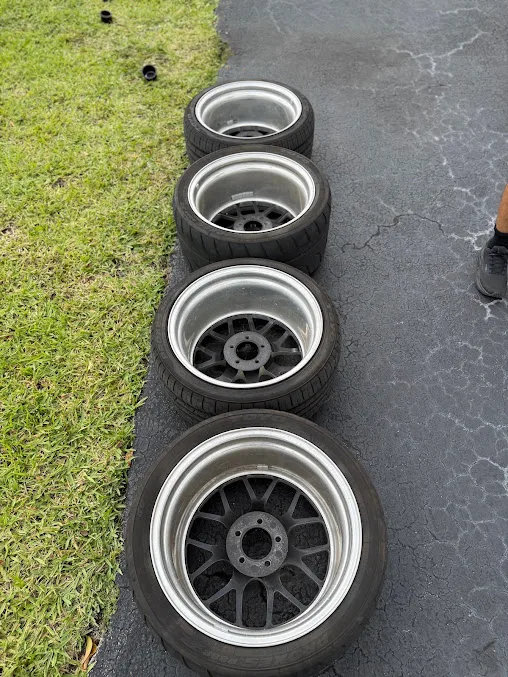
Describe what you are dealing with.
Send the equipment, the location and a short description. Photos help. You will hear back from Giancarlo or Kenny, not a call center.