Home / Services / Pharmaceutical / Microelectronics Equipment
Pharmaceutical · Miami, FL
Microelectronics Equipment Ice Blasting
Microelectronics Equipment comes to us when the usual cleaning methods are too harsh for the part. We clean it without water, without chemicals and without anything abrasive touching the surface.
What builds up, and why it matters
On this kind of work the problem is process residue, flux, particulate and film on sensitive equipment. These environments have documented cleaning requirements and very low tolerance for residue, moisture or abrasive media. Dry ice leaves nothing behind because the media is gone.
Work is scoped against the facility's own procedures and containment requirements. The people who call us about microelectronics equipment are usually facilities and validation teams, and the thing they are actually worried about is introducing a contaminant while removing one.
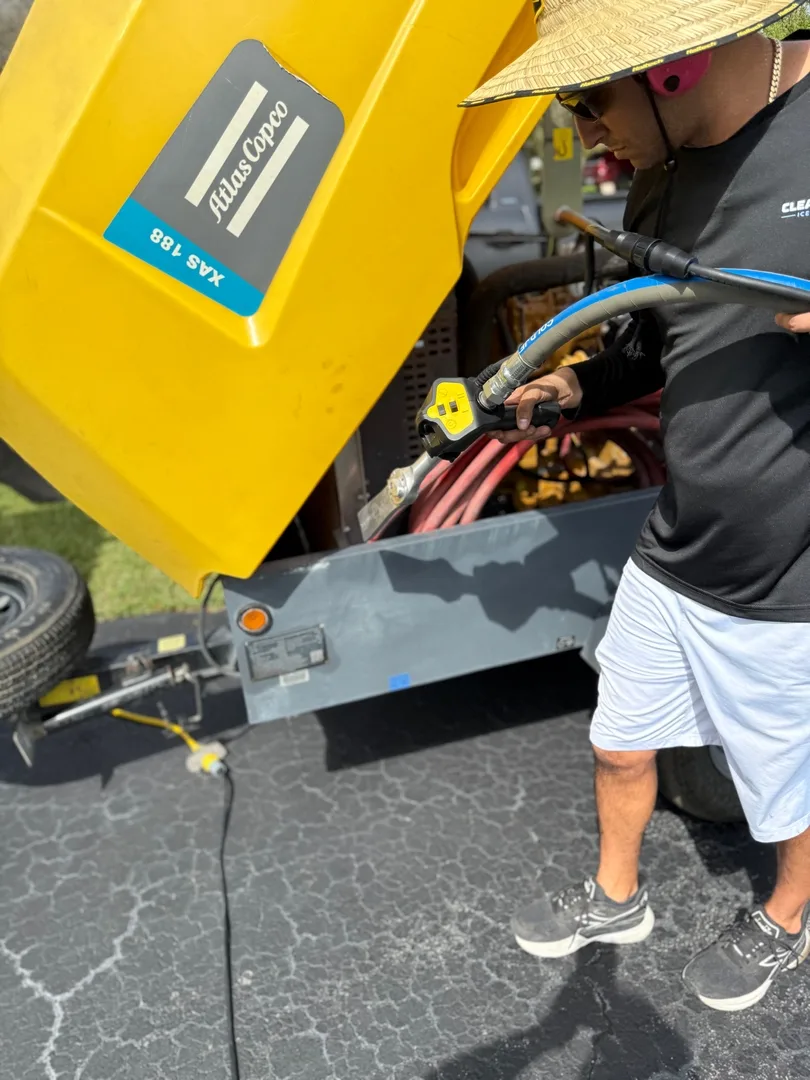
The method
Why dry ice and not the alternatives
- Non-abrasive
The pellet is soft and sublimates on impact, so the work is thermal rather than mechanical. Machined faces, plating, paint and gaskets survive it.
- Low moisture
Nothing is left wet, so no water sits in seams, channels or behind covers. The equipment goes back into service dry.
- No secondary waste
Other blast media becomes a second mess. Dry ice sublimates on contact, so nothing extra is left to dispose of.
- Often no teardown
Disassembly is where the labor hides. With dry ice, much of it is not needed, which is where most of the saving shows up.
More pharmaceutical work
Related jobs we get called for
Questions we get asked first
Will it damage the surface underneath?
Dry ice is soft compared with most blasting media and leaves the substrate as it found it. We still check an inconspicuous area first, because an honest answer beats a surprise.
Do you have to take the equipment apart for microelectronics equipment?
For most jobs, no. Reassembly is where time and money normally go, and cleaning in place skips both. If a part has to come off, we raise it when we look at the job, never halfway through.
How much mess does it make?
It depends on how much is caked on, since that is all that comes off. The ice adds nothing to the pile, and we clean up what is there.
Do you come to us?
We come to you. Moving a machine is usually the expensive part, so we skip it and bring the cleaning to the machine instead, anywhere across South Florida within about a hundred miles of Miami.
What does a job cost?
We do not publish prices, and that is deliberate. The contaminant, how hard it is to reach and whether we need to contain the work all change the time involved. Describe the job and you will get a straight number.
How soon can you look at it?
Most of the delay is waiting on details. Once we know what the part is made of and what is stuck to it, we can tell you when we can come and whether dry ice is right for it.
The comparison
How this compares to the usual methods
- Pressure washing
Water gets into everything and has to come out again before the equipment runs. Around electrics it is off the table entirely.
- Solvent and degreaser
It loosens the mess and leaves its own behind, along with fumes and something to dispose of.
- Hand scraping
Hours of work for an inconsistent result, with gouges where the blade slipped.
- Media blasting
It takes the top off whatever it touches. That is the point on rusted plate and the problem everywhere else.
- Dry ice
Thermal contraction cracks the bond between deposit and surface, then the pellet gasses off. Nothing abrasive, nothing wet, nothing left.
What comes off
What this takes off
The method does not care much what the contaminant is, only that it sits on top of something. Here is the usual list.
- Salt and corrosion product
A constant in South Florida. Removing it without stripping the protective finish is the whole trick.
- Ink and printing residue
Dried ink and coating build-up on rollers and press components, where the surface texture is the product.
- Food residue
Carbonized product build-up in a plant where neither standing water nor a chemical film is acceptable.
- Grease and oil
Grease traps whatever dust and grit lands on it and hardens into a sticky crust. The cold cracks it loose and it usually comes away cleanly.
- Carbon and soot
Black, crusty and heat-set, on burners, manifolds and fixtures. Thermal shock breaks the grip early in the job.
- Adhesive and sealant
The stubborn film under old tape, or the gasket that tore and left half of itself behind.
- Resin and mold release
Release agent and resin build-up on tooling, where a solvent fix trades one residue for another.
How a job runs
The sequence, start to finish
There is no mystery to how these jobs run, and no part of it we would rather you did not ask about.
- We look at access and containment
Anything that should not be blasted gets covered first. On a control cabinet that might be a few components, and on a food line it might be most of what surrounds the area we are cleaning.
- We test a small area
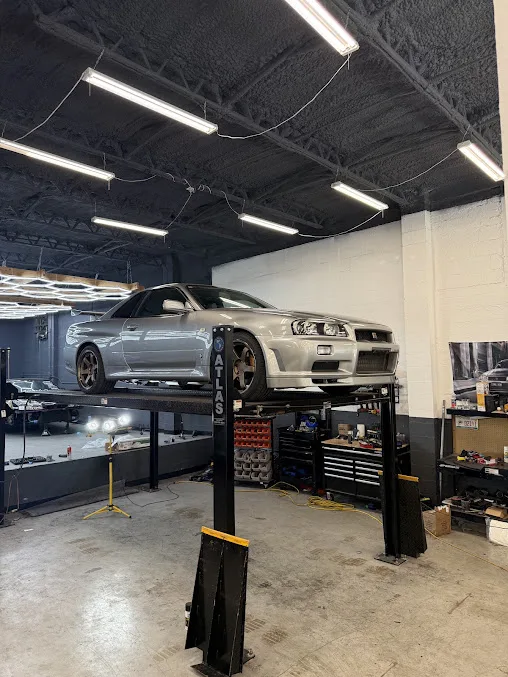
We are car people ourselves, so we know what a finish means to the person who paid for it. That is why every job opens with a small hidden test before we set the pressure for the rest.
- We blast, then clean up
The ice is gone on impact. What is on the floor afterward came off your machine, and clearing it is ours to do.
- You look before we pack up
Inspect it with the rig still set up. Anything you are not happy with gets another go before we leave.
- You describe the job
Nobody needs a technical description. Something like ‘grease on a conveyor in a warehouse, can stop Sunday’ is plenty to start with, and a photo fills in the rest. If what you describe is better handled another way, we say so on the first call.
Before we turn the rig on
The media is solid CO2, nothing toxic and nothing left behind, but it pushes oxygen out of a closed room. Ventilation gets planned before the hose is connected.
The process is loud. Hearing protection is standard for anyone in the working area, which is why you will see ear defenders in most of our photographs.
Nothing wet goes onto your equipment, but cold metal in warm air can still pick up condensation. It clears as the part comes back up to temperature.
Everything the rig needs arrives with it. No tap, no drain, no outlet.
Tell us what needs cleaning.
Tell us what you have and where it is. If you can snap a picture, send it. Giancarlo or Kenny will be the one who calls.