Home / Services / Industrial / Mixer
Industrial · Miami, FL
Mixer Ice Blasting
Mixer is one of the jobs dry ice blasting was made for. We clean it without water, without chemicals and without anything abrasive touching the surface.
What builds up, and why it matters
On this kind of work the problem is baked-on process residue, oil film, carbon, swarf and release agent. Production equipment is expensive to take apart and expensive to leave down. Solvent means ventilation and disposal; water means waiting; abrasive means grit in a machine you just cleaned.
Most industrial work happens in place, during a shutdown or a maintenance window. The people who call us about mixer are usually maintenance leads and plant managers, and the thing they are actually worried about is that the line does not come back up on schedule.
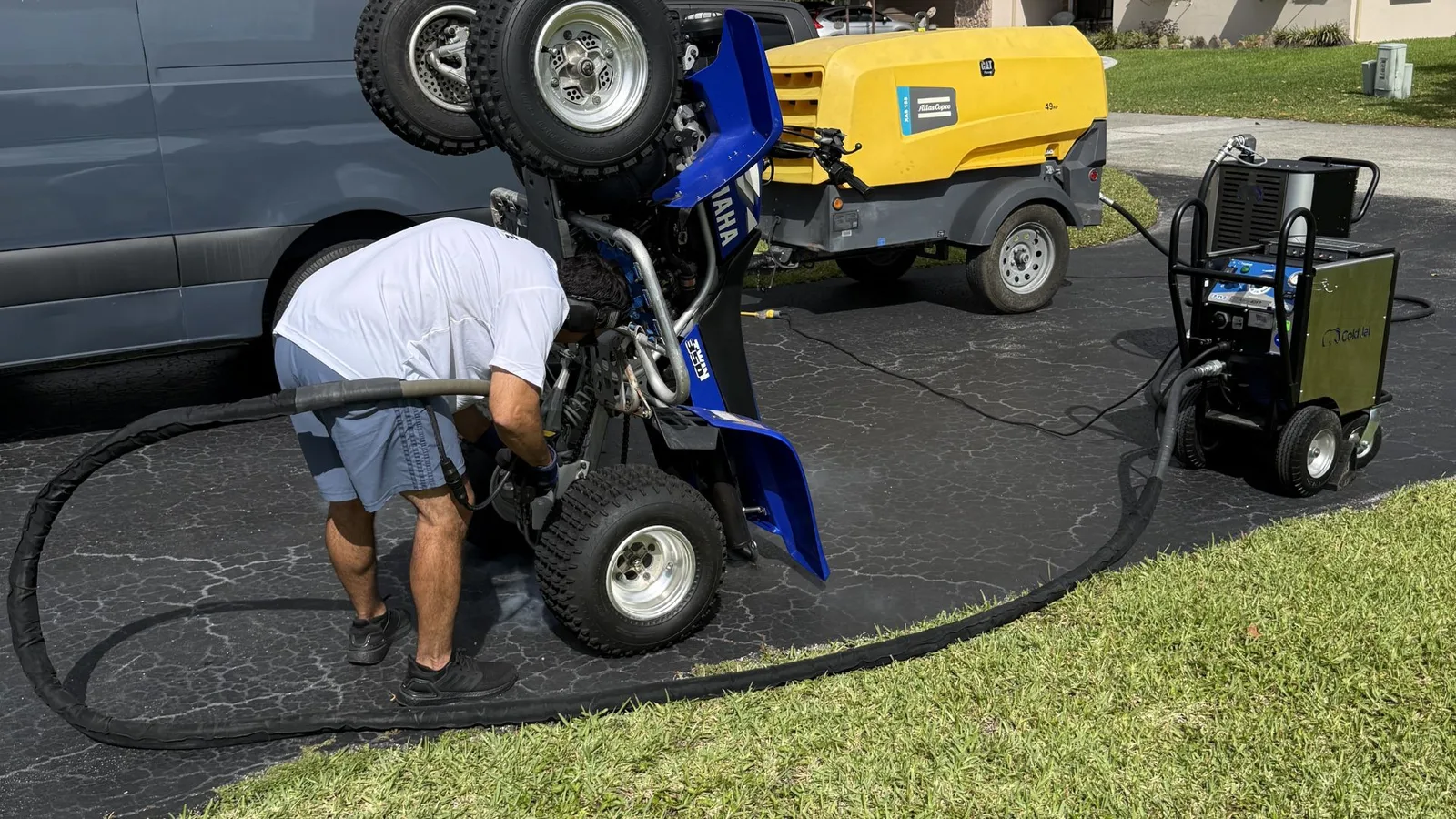
The method
Why dry ice and not the alternatives
- Non-abrasive
The pellets are frozen carbon dioxide, softer than the metal they hit. They break up and vanish, taking the bond with them and leaving the surface intact.
- Low moisture
Because no water goes on, none has to be drained, wiped or blown out of the equipment afterward.
- No secondary waste
Sand, soda and walnut shell all have to be swept and hauled. Dry ice leaves only the contaminant it removed.
- Often no teardown
Leave it bolted together. Most of what we clean stays assembled, and skipping the teardown is usually worth more than the cleaning itself.
More industrial work
Related jobs we get called for
Questions we get asked first
Will it damage the surface underneath?
Not on the vast majority of surfaces. The cleaning comes from the cold breaking the bond, with nothing scraping at the part. Soft or older finishes get a test spot before we commit.
Do you have to take the equipment apart for mixer?
Usually far less than you would expect, and often not at all. Cleaning in place is where most of the saving comes from, because the labor is normally in the teardown and reassembly.
How much mess does it make?
Customers are usually surprised at how little there is. Without blasting media to recover, the pile at the end is small, and we take care of it.
Do you come to us?
Yes. The rig is fully mobile and supplies its own air, so a driveway works as well as a plant floor. Our range runs from Miami out roughly a hundred miles through South Florida.
What does a job cost?
It depends on the equipment, the contaminant and the access, so we will not throw a number at you over the phone without understanding the work. Describe the job and we will give you a real figure.
How soon can you look at it?
Pictures get you an answer fastest. A few clear shots of the equipment and the buildup usually tell us enough to talk timing on the first call, before anyone drives out.
The comparison
What the alternatives actually do
- Pressure washing
Drives water into harnesses, bearings, panels and seams, then everything waits to dry. On electrical work it is simply not an option.
- Solvent and degreaser
It loosens the mess and leaves its own behind, along with fumes and something to dispose of.
- Hand scraping
Slow enough to be uneconomic on a machine, and the tool always leaves a trace.
- Media blasting
It works by removing material, which is the problem. Acceptable on heavy steel, damaging on soft alloy, plating or a machined surface.
- Dry ice
It is the only one on this list where the media stops existing the moment it has worked.
What comes off
What dry ice actually removes
The rule of thumb is simple: anything stuck on rather than built in. These are the deposits we see most.
- Carbon and soot
Baked carbon on a manifold, oven or weld fixture. Thermal shock is exactly the wrong thing for the bond holding it on, which is why this works.
- Adhesive and sealant
Bonded material that outlived whatever it was bonding, usually harder to shift than the part it is on.
- Resin and mold release
Release agent builds up in thin layers until it shows on the finished part. We clean it off the tool without scratching the surface.
- Paint and coatings
Selective removal, layer by layer, on parts where media blasting would cut into the substrate.
- Salt and corrosion product
Salt deposit and the oxidation it starts. Anything abrasive removes the protection along with the salt.
- Ink and printing residue
Ink and coating on anilox and press rollers, surfaces where changing the texture changes the print.
- Food residue
Carbonized product build-up in a plant where neither standing water nor a chemical film is acceptable.
How a job runs
How a job actually runs
Dry ice blasting looks dramatic on video, but the work itself follows a simple order. These are the steps, in sequence.
- We test a small area
The rig gets tuned to your surface, never the last job’s. We try it on a concealed spot, look closely, and change pressure or pellet size before going anywhere obvious.
- We blast, then clean up
One mess instead of two: the pellet vanishes and we take away what it removed.
- You look before we pack up
The job is not finished because we say so. It is finished when you have looked at it.
- You describe the job
The machine, the deposit and the downtime you can afford. Those three things decide the whole job, and we would rather know all of them before quoting.
- We look at access and containment
Access drives the plan: reach, siting, masking, and the route the removed material takes off the job. It is the part customers think about least and we think about most.
What the job is like to stand next to
Tight, low spaces are where this matters most. The gas is heavier than air and settles low, so we keep air moving through the space the whole time we are working.
Dry ice blasting is noisy. Anyone close to the work wears hearing protection, and we will ask you to keep your distance or put some on.
Plan a short pause after we finish. The surface is cold, and depending on the part and the air around it, you may see condensation until it settles back to normal.
Everything the rig needs arrives with it. No tap, no drain, no outlet.
Send us the job.
A short description and a location is enough to start. Add photos if you can. You will speak to an owner, not a scheduler.