Home / Service areas / Miami-Dade County / Richmond West
Miami-Dade County · Florida
Richmond West dry ice blasting
When we take a job in Richmond West, the rig comes to the machine rather than the other way round.
How we work in this area
Nothing about the setup needs a drain, a hookup or a bay. So the equipment stays put. Everything that has to move arrives on the truck instead.
The pellet turns straight to gas when it hits, which means no sand in the machine and no sludge on the floor. The only thing to collect is the contaminant itself, and that is included.
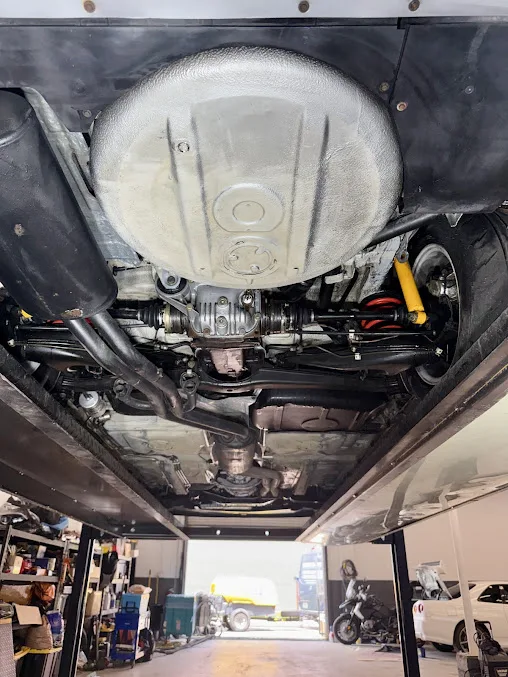
What we clean
What we get called for in Richmond West
Nearby
Also working across Miami-Dade County
Questions from Richmond West
What sort of work do you get called for?
A mix, vehicle work, shop equipment, marine and light industrial. Same rig, different constraint each time.
Do you charge for the drive?
Sometimes, on the longer runs. Either way it is discussed before anyone commits.
How do I get started?
Send the equipment, the location and a short description with photos if you have them. One of the owners calls you back.
Do you actually come out to Richmond West?
We do. The whole point of a mobile setup is that Richmond West is no further than any other stop on the schedule.
What do you need from us on site?
Just access and parking. There is no tap to find, no drain to use and nothing of yours to plug into.
How flexible are the hours?
Often yes, a lot of industrial work happens overnight or during a planned outage. Give us the window and we will say straight away whether it is realistic.
What the climate does here
Salt carries a long way inland here, and it keeps working on metal every day of the year. Which is exactly the situation where a non-abrasive, low-moisture method is worth the call.
Shops, marine yards, warehouses and home garages all end up with the same problem in different forms. Driveway or plant floor, the requirement is the same: room for the rig and access to the machine.
The pellet turns to gas, so nothing runs off toward a drain and nothing abrasive stays behind in a bearing. On a cramped Miami-Dade County site that usually decides it.
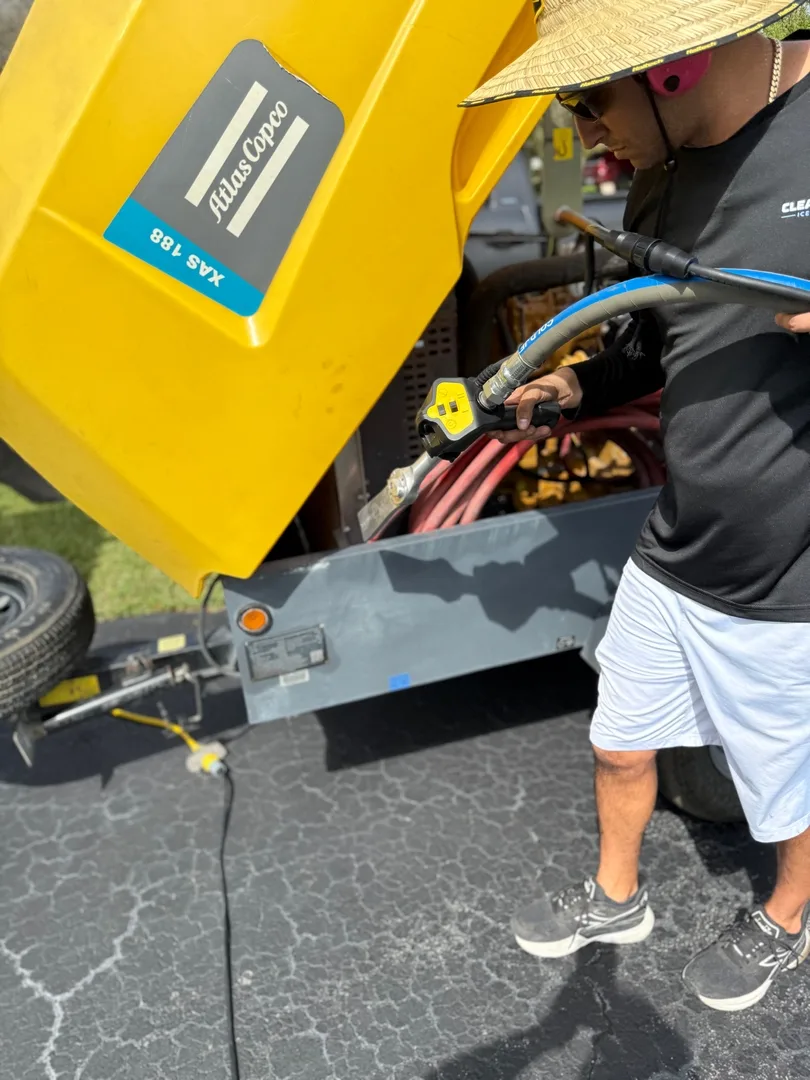
What comes off
What dry ice actually removes
The rule of thumb is simple: anything stuck on rather than built in. These are the deposits we see most.
- Food residue
Burnt-on product, fat and sugar on processing gear, with no chemical residue left on a contact surface.
- Grease and oil
The greasy base coat that traps grit and dust. It releases early and takes the loose material with it.
- Carbon and soot
Heat-bonded black deposit. Because heat put it there, a sudden cold front is what breaks its grip.
- Adhesive and sealant
Sealant squeezed out and cured where it was never supposed to set.
- Resin and mold release
Release agent and resin build-up on tooling, where a solvent fix trades one residue for another.
- Paint and coatings
Removed selectively where the substrate underneath has to survive, which rules out most abrasive approaches.
- Salt and corrosion product
A constant in South Florida. Removing it without stripping the protective finish is the whole trick.
How a job runs
How a job actually runs
Every job follows the same steps, whether it is an engine bay or a production line. Here they are, one at a time.
- You describe the job
Describe the equipment and the mess. If it cannot come offline that changes the plan, so say so early.
- We look at access and containment
Access drives the plan: reach, siting, masking, and the route the removed material takes off the job. It is the part customers think about least and we think about most.
- We test a small area
Aluminum, chrome and painted steel each have their own limits. We find each one’s limit on a corner out of sight, then work the visible areas inside it.
- We blast, then clean up
The ice is gone the moment it does its work. What stays behind is the grease or carbon that came off, and collecting that is part of the job, not an extra.
- You look before we pack up
A second pass while everything is still connected is free in every sense. A return trip is not.
The comparison
What the alternatives actually do
- Hand scraping
Fine on a patch, hopeless on a machine, and the blade leaves its own evidence.
- Media blasting
Abrasive by definition. Anything with a tolerance or a finish worth keeping comes out changed.
- Pressure washing
The water has to go somewhere, and on most equipment that somewhere is inside it.
- Solvent and degreaser
Good at softening, bad at leaving. There is always a residue and always a drum to get rid of.
- Dry ice
Thermal contraction cracks the bond between deposit and surface, then the pellet gasses off. Nothing abrasive, nothing wet, nothing left.
What the job is like to stand next to
In humid weather a cold part will sweat as it warms up. That moisture comes out of the air and dries off on its own.
Everything the rig needs arrives with it. No tap, no drain, no outlet.
We cover what should not be hit before anything gets blasted. It takes minutes and saves arguments.
Tell us if the work is in a small or closed room. The ice itself is non-toxic carbon dioxide and leaves nothing behind, but indoors it displaces oxygen, and we plan ventilation around it from the start.

Tell us what needs cleaning.
If you are not sure dry ice is the answer, ask anyway. We will tell you straight if it is the wrong method.